Precision investment casting
Investment Casting for Complex Metal Parts
Investment casting makes near-net-shape metal parts from a disposable wax pattern and ceramic shell. SR collects quotes from vetted foundries, manages inspection and delivers to your drawing.
- Steel investment casting
- CT4–CT7 tolerance
- 6 material families
- Inspection managed
- Design review firstWall, draft and gate checks before quoting
- Inspection managedDimensional and visual checks coordinated
- Vetted foundriesAlloy and size capability matched to part
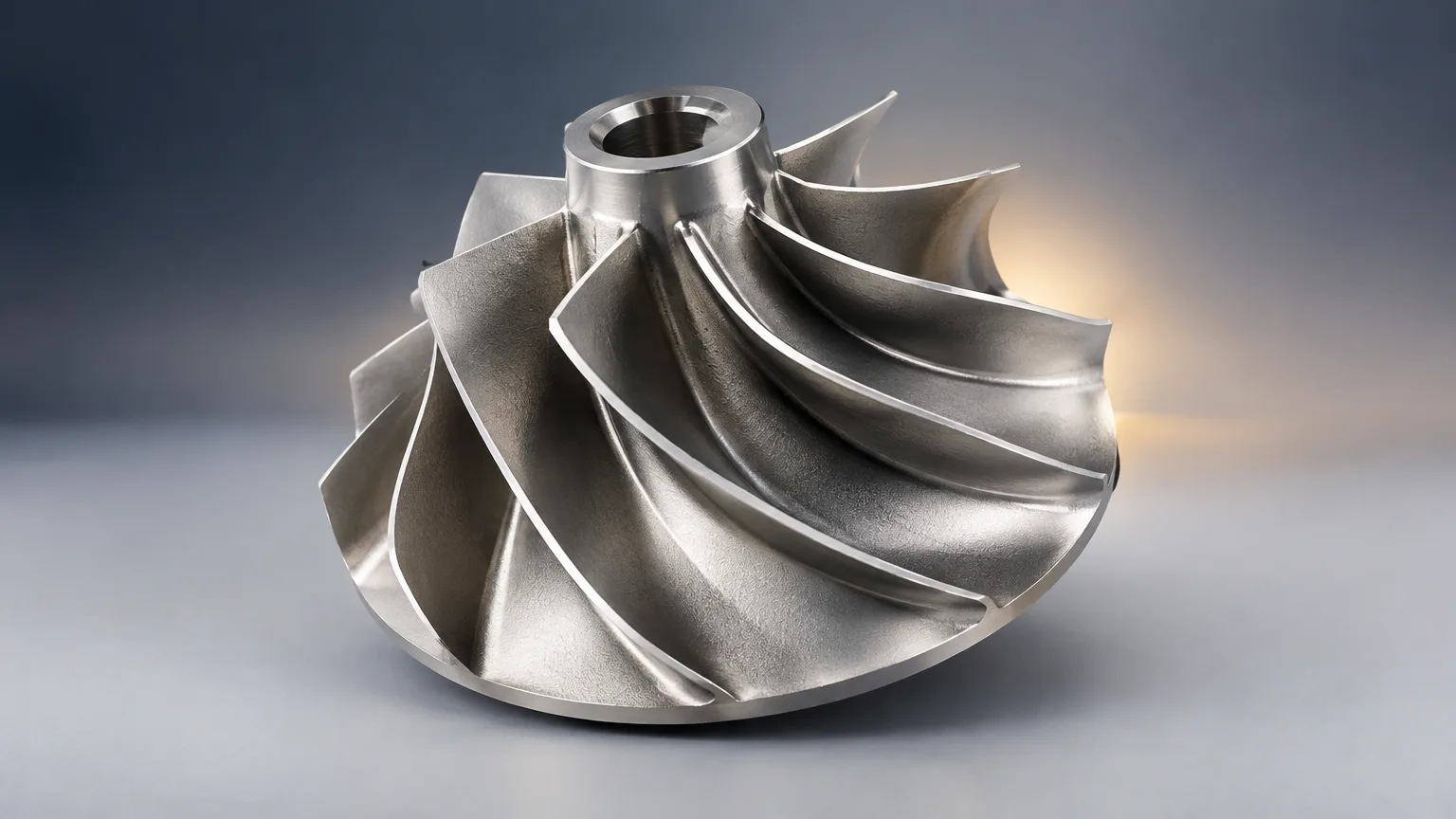
Investment casting, also called precision investment casting or lost-wax casting, forms a disposable wax or polymer pattern, coats it with a ceramic shell, removes the pattern, and pours metal into the cavity. Sourcing Repository collects quotes from vetted investment casting foundries, manages inspection, and delivers near-net-shape steel and alloy parts.
What investment casting is and when to use it
Investment casting is a near-net-shape metalworking process that forms a disposable wax or polymer pattern, coats it with a ceramic shell, removes the pattern, and pours metal into the cavity. It is also called precision investment casting or lost-wax casting. Near-net-shape casting reproduces fine pattern detail, so complex geometry needs limited machining.
When investment casting is the right route
- Complex geometry that would need multiple machining setups.
- Near-net-shape steel components where material waste and machining time matter.
- Small and medium precision parts that need repeatable dimensions across a run.
- Pressure-containing steel components covered by ASTM A985 general requirements.
- Parts that need a broad alloy choice, including carbon, low-alloy, stainless, nickel and cobalt grades.
Investment casting process steps
The investment casting process runs from a disposable pattern through shell building, dewaxing and pouring. Each step affects dimensional stability and surface quality.
- 1. Wax or polymer pattern injection Molten wax or polymer is injected into a metal die to form a pattern that matches the part, including shrinkage allowance.
- 2. Pattern assembly Patterns are attached to a runner and gate tree, with layout reviewed against part geometry.
- 3. Ceramic shell building The tree is dipped in ceramic slurry and stuccoed repeatedly until the shell can hold molten metal.
- 4. Dewax and shell firing The pattern is melted or burned out, and the shell is fired to develop strength.
- 5. Metal pour and solidification Molten alloy is poured into the preheated shell, and cooling control limits porosity and shrinkage defects.
- 6. Knockout, cut-off and finishing The shell is broken away, parts are cut from the tree, and gates and flash are removed.
- 7. Inspection and documentation Dimensional checks, visual inspection and any specified testing are completed before shipment.
Process routes covered
| Route | Pros | Cons |
|---|---|---|
| Wax injection, ceramic shell, dewax, pour | Complex geometry, repeatability, broad alloy selection | Tooling cost, longer lead time, shell and wax defects |
| Ceramic-pattern investment casting | Suitable for large or difficult patterns | Higher pattern expense; supplier-dependent |
| Rapid-prototype pattern casting | Low initial tooling cost, fast prototypes | Pattern surface, stability and economics vary |
Investment casting materials and finishes
Investment casting supports six material families: carbon steel, low-alloy steel, stainless steel, nickel alloy, cobalt alloy, and other alloys such as aluminum, copper, titanium and magnesium. Steel investment casting is covered by ASTM A957 and A732, and grade selection should follow the governing specification and the service environment.
| Material | Grade | Properties | Typical uses |
|---|---|---|---|
| Carbon steel | ASTM A27 grades | General-purpose castability; properties depend on grade and heat treatment | Brackets, housings, valves, machinery |
| Low-alloy steel | ASTM A732 grades | Alloy-dependent strength, toughness, hardenability | Wear-resistant and loaded components |
| Stainless steel | ASTM A743 or A744 grades | Corrosion and heat resistance vary by chemistry | Pumps, valves, food equipment, chemical hardware |
| Nickel alloy | ASTM A494 grades | High-temperature and corrosion performance varies by grade | Chemical, marine, high-temperature equipment |
| Cobalt alloy | ASTM A732 covered grades | High strength at elevated temperatures | Hot-service and wear components |
| Aluminum, copper, titanium, magnesium | Alloy-specific | Properties are alloy-specific | Lightweight, conductive, specialty parts |
Finishes and post-processing
- As-cast finish with gates and flash removed; roughness depends on the supplier and shell system.
- Machining allowance on selected features where tighter control is needed.
- Heat treatment, blasting or tumbling, and inspection as the drawing or standard requires.
Investment casting specifications and tolerances
Investment casting tolerances are typically specified against ISO 8062 casting tolerance grades, with reported capability often CT4–CT7. The applicable grade depends on dimension, geometry, alloy and supplier, so confirm it on the drawing.
| Parameter | Typical range | Standard or source |
|---|---|---|
| Dimensional tolerance | CT4–CT7; about ±0.004–±0.012 in (±0.1–±0.3 mm) on a 0.98 in (25 mm) feature | ISO 8062; reported by Redstone Manufacturing; verify by drawing |
| General wall thickness | Typically 0.079–0.236 in (2–6 mm) | Redstone Manufacturing design guide |
| Reported minimum wall thickness | About 0.030–0.071 in (0.75–1.8 mm) | Redstone Manufacturing; alloy, geometry and length dependent |
| Surface roughness and machining allowance | Supplier-, shell-system- and drawing-dependent | ZOLLERN guidelines and ISO 8062; numerical value unverified |
| Draft | Typically 0–2 degrees, geometry-dependent | Redstone Manufacturing; zero draft may be possible on some exterior surfaces |
Size limits and lead time
Investment casting is generally used for small and medium precision parts, and the practical size limit depends on the foundry's shell and furnace capacity. Lead time is confirmed per project, because tooling, sampling and inspection add time before production.
Investment casting design tips that lower cost
Most investment casting cost is fixed at the design stage. These DFM points reduce tooling complexity, scrap risk and machining time without changing part function.
- Keep walls within the general 0.079–0.236 in [2–6 mm] range where possible. Thinner sections down to approximately 0.030–0.071 in [0.75–1.8 mm] are reported, but they are alloy, geometry and length dependent and raise scrap risk.
- Use uniform wall thickness. Sudden changes create hot spots and shrinkage porosity, which drive rework and rejection.
- Add draft of 0–2 degrees where geometry allows. Zero draft may be possible on some exterior surfaces, but draft simplifies pattern withdrawal and shell building.
- Design generous fillets and radii at internal corners. Sharp corners concentrate stress and can cause shell cracking during dewax.
- Avoid deep, narrow blind holes and undercuts that require extra cores or manual shell work.
- Specify machining allowance only where it is needed. Extra stock on every surface increases machining time and cost.
- Tolerances should match function. Applying CT4 to every dimension when CT6 or CT7 would work adds inspection and process cost.
Typical investment casting applications
Investment casting is typically used where complex geometry, alloy choice and repeatability matter more than the lowest piece price. Automotive and industrial equipment are common sectors, along with pump, valve and chemical hardware.
- Automotive brackets, housings and linkages in carbon and low-alloy steel.
- Pump and valve bodies, impellers and trim in stainless steel and nickel alloy.
- Food equipment and chemical hardware where corrosion resistance is specified.
- Hot-service and wear components in cobalt alloy.
- Lightweight, conductive or specialty parts in aluminum, copper, titanium and magnesium.
How investment casting compares with other processes
| Compared with | Key differences |
|---|---|
| Sand casting | Investment casting generally gives finer detail, tighter dimensions and better finish; sand casting usually suits larger parts at lower tooling cost. |
| Die casting | Investment casting supports more alloys and complex geometry; die casting is typically faster and cheaper at high volume but needs permanent dies. |
| Forging | Forging can give directional strength and low porosity; investment casting makes more complex near-net shapes with less waste. |
| CNC machining | Investment casting reduces material removal; machining controls selected features more tightly but may add cost and lead time. |
| Metal injection molding | Investment casting handles larger parts and more alloys; metal injection molding favors small, high-volume parts. |
What drives investment casting cost
Investment casting cost is driven by tooling, alloy, part size, yield, shell complexity, heat treatment, machining, inspection, volume and scrap risk. No single factor dominates, and the balance shifts as volume rises.
- Tooling: pattern dies are a fixed upfront cost that is amortized over the production volume.
- Alloy: nickel and cobalt grades generally cost more than carbon and low-alloy steel, and melt practice affects price.
- Part size and weight: larger parts need more metal, larger shells and more furnace capacity.
- Yield: gate and runner design determines how much poured metal becomes saleable parts.
- Shell complexity: cores, deep cavities and thin sections increase shell materials and labor.
- Post-processing: heat treatment, machining, blasting and inspection each add cost.
- Volume: higher volumes spread tooling and setup cost across more parts.
- Scrap risk: tight tolerances, thin walls and difficult alloys raise the expected rejection rate.
Why order investment casting through SR
Ordering investment casting through SR gives you one point of contact instead of several foundries. Sourcing Repository is a manufacturing broker and does not own factories or machines. It collects quotes from a vetted supplier network, manages quality and inspection, and delivers parts to your drawing.
What SR does
- Collects quotes from vetted investment casting foundries matched to alloy and size.
- Reviews the drawing for DFM issues before quoting.
- Manages quality and inspection through the production run.
- Coordinates delivery of finished parts.
What SR does not do
- SR does not own factories or machines.
- SR does not cast parts in-house.
How quoting works
- Send the drawing, alloy, volume and inspection requirements.
- SR reviews the part for manufacturability and confirms the process route.
- SR collects quotes from suitable foundries in the vetted network.
- You receive a consolidated quote, then production, inspection and delivery run through one contact.
Quote turnaround is typically 5–7 working days. Contact killol@sourcingrepository.com or write to 201 SG Mall, Ahmedabad to start a quote.
Have a drawing to quote?
Upload it with quantity and material to start a quote.
FAQ
Common questions
When is investment casting economical?
It is generally attractive when geometry is complex, machining would be extensive, and production volume justifies pattern and process costs. At very low volume with simple shapes, sand casting or machining from stock is often cheaper.
What is investment casting?
Investment casting is a lost-wax process that forms a disposable wax or polymer pattern, coats it with a ceramic shell, removes the pattern, and pours metal into the cavity to produce near-net-shape parts.
Is steel investment casting available?
Yes. ASTM A957/A957M covers common requirements for steel and alloy investment castings, ASTM A732/A732M covers carbon and low-alloy steel, and ASTM A985/A985M covers pressure-containing steel investment castings.
How accurate is investment casting?
Reported capability is often ISO 8062 CT4–CT7, roughly ±0.004–±0.012 in [±0.1–±0.3 mm] on a 0.98 in [25 mm] feature. Actual tolerance depends on size, geometry, alloy and supplier, so confirm the grade on the drawing.
Related resources
Keep reading
Ready when you are
Get an investment casting quote
Send your drawing, alloy, volume and inspection requirements. SR reviews the part, collects quotes from vetted foundries and manages inspection through delivery.
Your files stay confidential. NDA available on request.