
Automotive die casting service
Automotive Die Casting for Aluminum, Zinc and Magnesium Parts
Sourcing Repository brokers automotive die casting for aluminum, zinc and magnesium parts. Send a drawing, and we collect quotes from a vetted supplier network, manage quality and inspection, and deliver parts.
- Aluminum, zinc, magnesium
- Near-net-shape parts
- IATF 16949 supplier options
- Inspection managed by SR
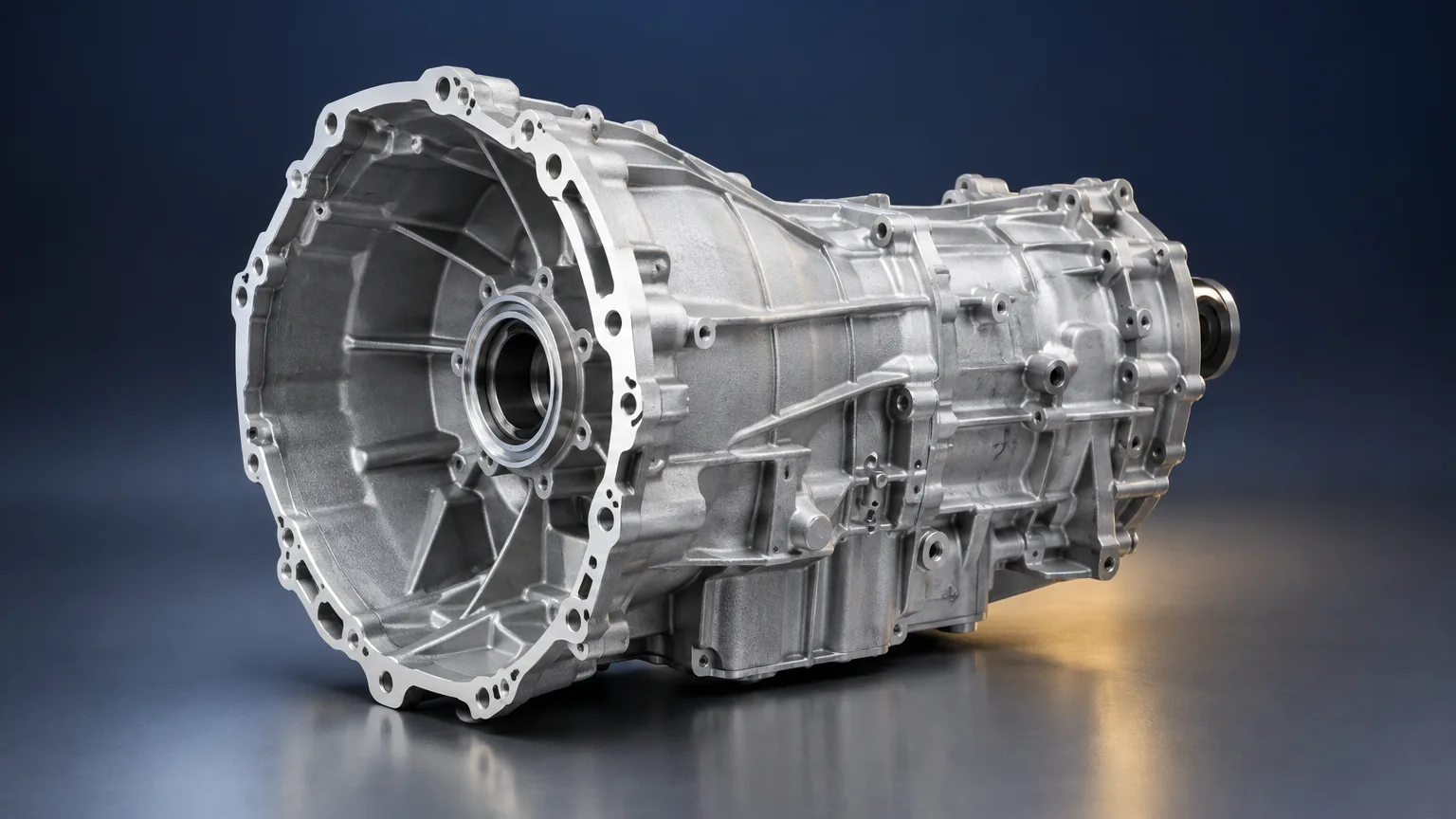
- Drawing review firstDraft, wall thickness and porosity risk checked.
- Inspection managedFirst article and dimensional reports coordinated.
- 5-7 working day quotesOne contact collects and compares supplier quotes.
Automotive die casting is a high-volume process that injects molten aluminum, zinc or magnesium into a steel die to form near-net-shape vehicle components. Sourcing Repository is a manufacturing broker: it collects quotes from a vetted supplier network, manages quality and inspection, and delivers finished automotive castings without owning factories or machines.
What automotive die casting is and when to use it
Automotive die casting is a manufacturing process that forces molten metal into a hardened steel die under pressure to produce near-net-shape components. It is used for aluminum, zinc and magnesium parts where repeatability and cycle time matter more than one-off flexibility.
The service fits engineers, procurement managers and founders who need production volumes of automotive castings: housings, brackets, structural nodes and small hardware. It is the right route when a part has a stable design, moderate-to-high annual volume, and features that would be expensive to machine from billet.
Die casting is less suitable for very low volumes, very large single parts, or geometries with extreme undercuts. In those cases, CNC machining, forging or additive manufacturing may be a better fit. The fact pack notes that die casting produces near-net-shape parts quickly, but porosity, tooling cost and alloy limits require control.
Automotive die casting process steps
Automotive die casting is a process that injects molten aluminum, zinc or magnesium into a steel die under pressure to make near-net-shape automotive components. It suits complex, repeatable parts, but porosity, tooling cost and alloy limits require control.
The same sequence applies across auto parts manufacturing, car parts manufacturing and vehicle parts manufacturing programs. Each step produces evidence the next step depends on, so the quote request should include the full requirement set.
- 1. Drawing and requirement review SR reviews the CAD model, drawing revision, material callout, tolerances, finish and annual volume. Missing details are flagged before quoting so suppliers price the same scope.
- 2. DFM and alloy selection The supplier checks draft angles, wall thickness, parting line, gate location and porosity risk. The alloy is confirmed against the drawing and the part's function.
- 3. Tooling design and build A die is designed and machined for the chosen alloy and machine size. Tooling cost and lead time depend on part size, complexity, cavities and expected die life.
- 4. First article and approval Sample castings are produced and measured. Dimensional reports, material certification and, where required, PPAP evidence are reviewed before production release.
- 5. Production casting Molten metal is injected into the die, solidified under pressure and ejected. Cycle time, die temperature and shot parameters are controlled to hold repeatability.
- 6. Trimming, finishing and machining Flash, runners and gates are removed. Secondary operations such as CNC machining, deburring, anodizing or powder coating are applied as specified.
- 7. Inspection and delivery Critical features are inspected against the control plan. SR coordinates inspection evidence and delivery to the agreed destination.
Materials and finishes for automotive castings
Aluminum, zinc and magnesium are the three die-casting metals used for automotive castings. Each balances weight, castability, corrosion behavior and surface finish differently, so the alloy callout should come from the drawing and the function of the automotive components.
| Material | Grade | Properties | Typical uses |
|---|---|---|---|
| Aluminum alloys | Aluminum grade is set by the drawing callout | Low density, corrosion resistance, machinability, and castability | Brackets, housings, wheels, engine and transmission components |
| Zinc alloys | Zinc grade is set by the drawing callout | Good die-castability, dimensional repeatability, and surface finish | Handles, latches, housings, and small hardware |
| Magnesium alloys | Magnesium grade is set by the drawing callout | Very low density and good castability; corrosion protection is often required | Lightweight housings, brackets, seat frames, and instrument-panel structures |
Finishes and secondary operations
- As-cast with deburring and tumbling for non-cosmetic internal parts.
- CNC machining of sealing faces, bores, threads and mounting holes.
- Anodizing or conversion coating for aluminum corrosion resistance and wear.
- Powder coating or e-coating for visible or exposed castings.
- Impregnation or sealing where porosity could affect pressure tightness.
Specs and tolerances for automotive die casting
Tolerances, size limits and lead time depend on alloy, part geometry, die design and supplier capability. The table lists the parameters that must be defined on the drawing or in the quote package; numerical values are confirmed per part by the supplier's capability study.
| Parameter | Typical range | Standard or source |
|---|---|---|
| Dimensional tolerance | Unverified; depends on process, size, material, and drawing | Part drawing and supplier capability study required |
| Geometric tolerancing | Unverified; specify datum scheme and GD&T callouts | ASME Y14.5 or applicable ISO GPS standard; exact edition unverified |
| Surface roughness | Unverified; specify Ra or other required parameter | Drawing requirement; applicable surface-texture standard unverified |
| Hardness and strength | Unverified; defined by material and heat-treatment specification | Material specification and test method required |
| Capability | Cp/Cpk targets are customer- and feature-specific | IATF 16949, control plan, SPC, and customer-specific requirements |
| Part approval | Submission level and evidence vary by customer | AIAG PPAP and applicable customer-specific requirements |
Size limits and lead time
Maximum part size is set by the die-casting machine's tonnage and the supplier's equipment list, so confirm it per project. Lead time is also project-specific: tooling build, first article approval and production scheduling each add time. SR's quote turnaround is 5-7 working days from a complete RFQ package.
Design tips that lower automotive die casting cost
Most die-casting cost is locked in at the design stage. These DFM rules reduce tooling complexity, scrap rate and secondary machining on automotive castings.
- Use uniform wall thickness and avoid thick-to-thin transitions, which cause shrinkage porosity and longer cycle times.
- Add draft on all surfaces parallel to the die draw; insufficient draft forces manual work and raises piece cost.
- Keep the parting line simple and place it where flash removal is easy and cosmetic surfaces stay clean.
- Design generous fillets and radii at corners to improve metal flow and reduce die erosion.
- Avoid undercuts that require slides or lifters unless the function truly needs them; each moving die element adds tooling cost and maintenance.
- Specify machining allowance only where a machined surface is required, and keep critical tolerances on as few features as possible.
- Choose the lightest alloy that meets the structural and thermal requirement, since magnesium and aluminum reduce weight but change coating and cost profiles.
Typical automotive die casting applications
Die-cast automotive castings appear across powertrain, body, interior and electrical systems. The examples below show where aluminum, zinc and magnesium are commonly used.
- Powertrain and engine: aluminum housings, covers, brackets and transmission components.
- Structural and chassis: mounting brackets, nodes and reinforcement parts where weight matters.
- Interior systems: magnesium seat frames, instrument-panel structures and small zinc hardware such as latches and handles.
- Electrical and electronic: enclosures, heat sinks and connector housings that need dimensional repeatability.
- Thermal and fluid handling: pump housings, valve bodies and covers that may require pressure tightness.
- Aftermarket and performance: low-to-moderate volume castings for service, replacement and performance parts.
Good fit for die casting
- Stable design with moderate-to-high annual volume
- Complex 3D shape that would be costly to machine
- Aluminum, zinc or magnesium alloy specified
- Repeatability and cycle time are priorities
Consider another route
- Very low volume or one-off prototypes
- Extreme undercuts or very large single parts
- Tight tolerances on many features at once
- Material must be steel or a non-castable alloy
What drives automotive die casting cost
Die-casting price is built from tooling, material, machine time, finishing and inspection. No universal price exists, and any quote that ignores one of these factors is incomplete.
- Tooling: die size, number of cavities, slides, expected die life and whether a prototype tool is needed.
- Material: alloy choice, grade, availability and buy-to-fly ratio, which the fact pack identifies as a cost driver.
- Part geometry: wall thickness, projected area, draft and porosity risk affect cycle time and scrap rate.
- Machine time: tonnage required, cycle time and annual volume determine how tooling is amortized.
- Secondary operations: CNC machining, deburring, coating, anodizing or impregnation add cost per part.
- Inspection and approval: dimensional reports, material certification and PPAP evidence add engineering time.
- Logistics and packaging: delivery location, protective packaging and freight method affect landed cost.
Why order automotive die casting through Sourcing Repository
Sourcing Repository is a manufacturing broker, not a factory. SR does not own plants, machines or certifications. It collects quotes from a vetted network of automotive component manufacturers, manages quality and inspection, and delivers parts, so buyers get one contact for automotive parts manufacturing instead of a dozen supplier conversations.
- Vetted supplier network: suppliers are screened before they quote automotive castings.
- One contact: SR manages the RFQ, supplier questions, revisions and delivery updates.
- Quote comparison: multiple quotes are collected and compared on the same scope.
- Quality and inspection: first article, dimensional reports and inspection evidence are coordinated by SR.
- Contact: killol@sourcingrepository.com, 201 SG Mall, Ahmedabad.
Have a drawing to quote?
Upload it with quantity and material to start a quote.
FAQ
Common questions
How much do custom auto parts cost?
No reliable universal price exists. Cost depends on geometry, material, process, tooling, quantity, tolerance, finishing, inspection and logistics. For die casting, tooling and annual volume usually have the largest effect on piece price.
What information is needed for a quote?
Provide the CAD model, drawing, revision, material, finish, tolerances, quantity, delivery location, inspection needs and intended application. For die casting, also state the alloy family and whether PPAP evidence is required, so every supplier quotes the same scope.
What is PPAP?
PPAP is an automotive submission process used to demonstrate that production processes can consistently meet approved requirements. Exact customer submission rules vary, and the required evidence level is set by the customer.
What tolerance should be requested?
Request the tightest tolerance needed for function, not the tightest possible tolerance. The supplier should confirm capability for each critical feature, and GD&T should be defined with a clear datum scheme.
Related resources
Keep reading
Ready when you are
Get automotive die casting quotes from vetted suppliers
Send your drawing, alloy, volume and inspection requirements. SR collects quotes from its vetted supplier network, manages quality and inspection, and delivers parts. Quote turnaround is 5-7 working days.
Your files stay confidential. NDA available on request.