
Quick verdict
6061 for fabrication, 7075 for strength and weight.
Aluminum alloy comparison
6061-T6 is the general-purpose choice for welded, corrosion-exposed and cost-sensitive parts. 7075-T6 is roughly twice as strong and suits high-load, non-welded, weight-sensitive components.
6061vs7075 Aluminum
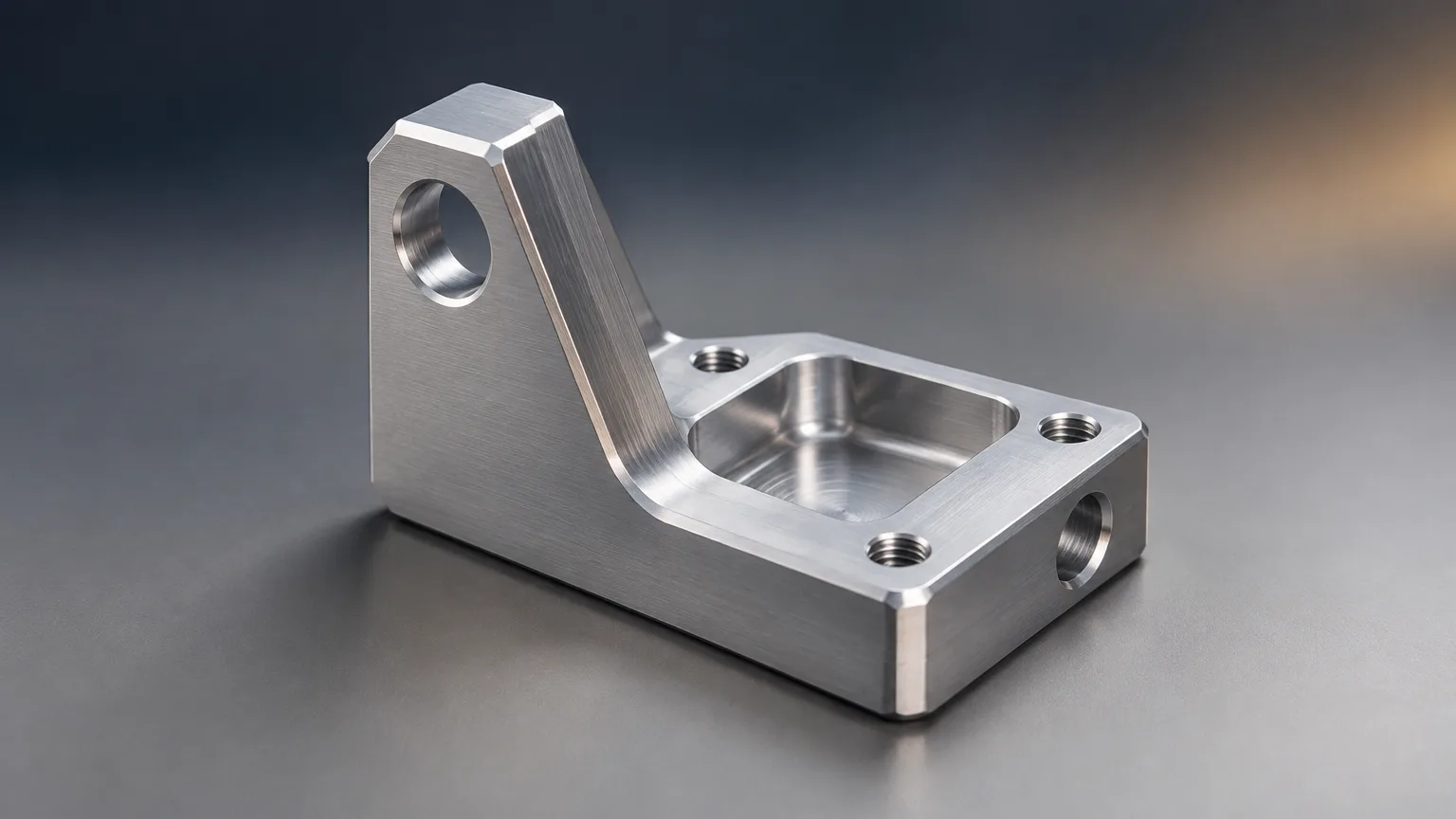
6061 for fabrication, 7075 for strength and weight.
Ten criteria from strength to joining method.
Weldable, corrosion resistant, lower cost.
Roughly double the strength, no welding.
Welded, exposed or cost-sensitive parts.
High-load, non-welded, weight-sensitive parts.
Relative drivers, no fixed multipliers.
Confirm load, joining and environment, then quote.
6061 vs 7075 refers to the choice between two heat-treatable wrought aluminum alloys: 6061-T6 (about 45 ksi, 310 MPa tensile) is easier to weld by TIG or MIG and resists corrosion better, while 7075-T6 (about 83 ksi, 572 MPa) is stronger but generally not welded. Choose 6061 for welded structures and 7075 for high-load, non-welded parts.
Pick 6061-T6 unless the part is strength- or weight-critical. It welds, resists corrosion, machines predictably and usually costs less, which covers most brackets, frames, fixtures and general CNC components.
Pick 7075-T6 when the design is driven by load or mass and the part will not be welded. Its cited tensile strength of about 83 ksi (572 MPa) is roughly double that of 6061-T6, so thinner sections can carry the same load.
If the part must be both welded and highly loaded, 6061 with added section thickness is usually the practical route. Confirm final alloy, temper and product form against your drawing before release.
The table below compares 6061-T6 and 7075-T6 on the criteria that decide most machining projects. Values are typical for the T6 temper and should be verified against the governing specification for your product form.
| Criterion | 6061-T6 | 7075-T6 |
|---|---|---|
| Tensile strength | 45 ksi (310 MPa) | 83 ksi (572 MPa) |
| Yield strength | 40 ksi (276 MPa) | 73 ksi (503 MPa) |
| Density | 2.70 g/cm3 (0.0975 lb/in3) | 2.81 g/cm3 (0.1015 lb/in3) |
| Alloy family | Magnesium-silicon | Zinc-magnesium-copper |
| Weldability | TIG or MIG common; heat-affected zone loses strength | Generally avoided; cracking and strength loss |
| Corrosion resistance | Generally better | Lower; may need anodizing, cladding or coating |
| Machinability | Good general-purpose | Good, with more attention to residual stress |
| Typical cost | Usually lower | Generally higher |
| Typical uses | Frames, brackets, tubing, marine parts | Aircraft structures, high-load fittings |
| Best joining method | Welding or fastening | Mechanical fastening |
6061 is a heat-treatable wrought aluminum alloy built around magnesium and silicon. It is the default alloy for general fabrication because it balances moderate strength with corrosion resistance, weldability and predictable machining.
Typical applications include structural frames, brackets, machinery components, tubing, marine parts and general CNC components. 6061-T6 is the standard pick for general-purpose machined and welded structural parts.
7075 is a heat-treatable wrought aluminum alloy based primarily on zinc, magnesium and copper. It is selected when strength-to-weight ratio drives the design, which is why it is common in aircraft structures and high-load fittings.
Typical applications include aircraft structures, high-load fittings, aerospace components, tooling and weight-sensitive machined parts. 7075-T6 suits high-strength, weight-sensitive parts where welding is avoided.
Choose 6061 when fabrication method, corrosion exposure or cost matters more than maximum strength. The rules below cover most cases.
Choose 7075 when the part is strength- or weight-critical and will not be welded. Confirm the load case and safety factors before committing.
7075 generally costs more than 6061 because of alloying content, supply and aerospace demand. The gap varies by product form, temper, thickness, certification requirements and order quantity, so treat any single multiplier as unreliable.
Lead time follows the same pattern. 6061 is widely stocked in plate, bar and extrusion, which usually supports shorter availability. 7075 is more often tied to aerospace-grade supply chains and specific tempers, which can extend availability.
| Factor | 6061 | 7075 |
|---|---|---|
| Material price | Usually lower | Generally higher |
| Availability | Broad across forms and tempers | Narrower; temper-specific |
| Machining cost | Standard rates | Similar rates; more stress control |
| Finishing | Often optional | Anodizing or coating often needed |
| Total part cost | Lower for most fabricated parts | Justified only by performance need |
Sourcing Repository collects quotes from a vetted supplier network and manages quality and inspection, with a typical quote turnaround of 5-7 working days. Final pricing and lead time depend on your drawing, quantity and material availability.
Default to 6061-T6 for welded, corrosion-exposed or cost-sensitive parts, and to 7075-T6 for high-load, non-welded, weight-sensitive parts. If the part is both welded and highly loaded, redesign in 6061 with more section rather than switching to 7075.
Sourcing Repository does not own factories or machines. It collects quotes from a vetted supplier network, manages quality and inspection, and delivers finished parts to your specification.
Upload it with quantity and material to start a quote.
FAQ
In 6061 vs 7075, 7075 is stronger. Typical 7075-T6 values are about 83/73 ksi (572/503 MPa) tensile/yield, versus about 45/40 ksi (310/276 MPa) for 6061-T6. Confirm values for your product form, such as 7075-T651 plate, and the governing specification, for example ASTM B209.
In 6061 vs 7075 for welding, 6061 is the practical choice. It is commonly joined by TIG or MIG welding, though the heat-affected zone loses strength unless post-weld treated. 7075 production welding is generally avoided because of cracking and strength loss, so mechanical fastening is preferred.
6061 generally resists corrosion better than 7075. For exposed service, 7075 may need anodizing, cladding or coating, or a stress-corrosion-resistant temper such as 7075-T73 or 7075-T7351, which trades some strength for improved stress-corrosion-cracking resistance. Specify the temper on the drawing.
No. In 6061 vs 7075, higher strength does not offset poorer weldability, lower corrosion resistance and typically higher cost in every application. Choose 7075 only when load or mass drives the design and welding is not required; 6061 suits general CNC machining and welded structures.
Related resources
Ready when you are
Share the alloy, temper, quantity and finish. Sourcing Repository collects quotes from a vetted supplier network, manages quality and inspection, and delivers parts to your specification.
Your files stay confidential. NDA available on request.