
Why programs stall
Design, material, process, tooling, quality and supply-chain risks in the transition.
Design risk, material risk, process risk, tooling risk, quality risk.
Sourcing Resources for Custom Parts
Prototype to production is a controlled transition, not a single order. This roadmap covers validation gates, tooling, process qualification and the risk controls that keep a program on schedule.
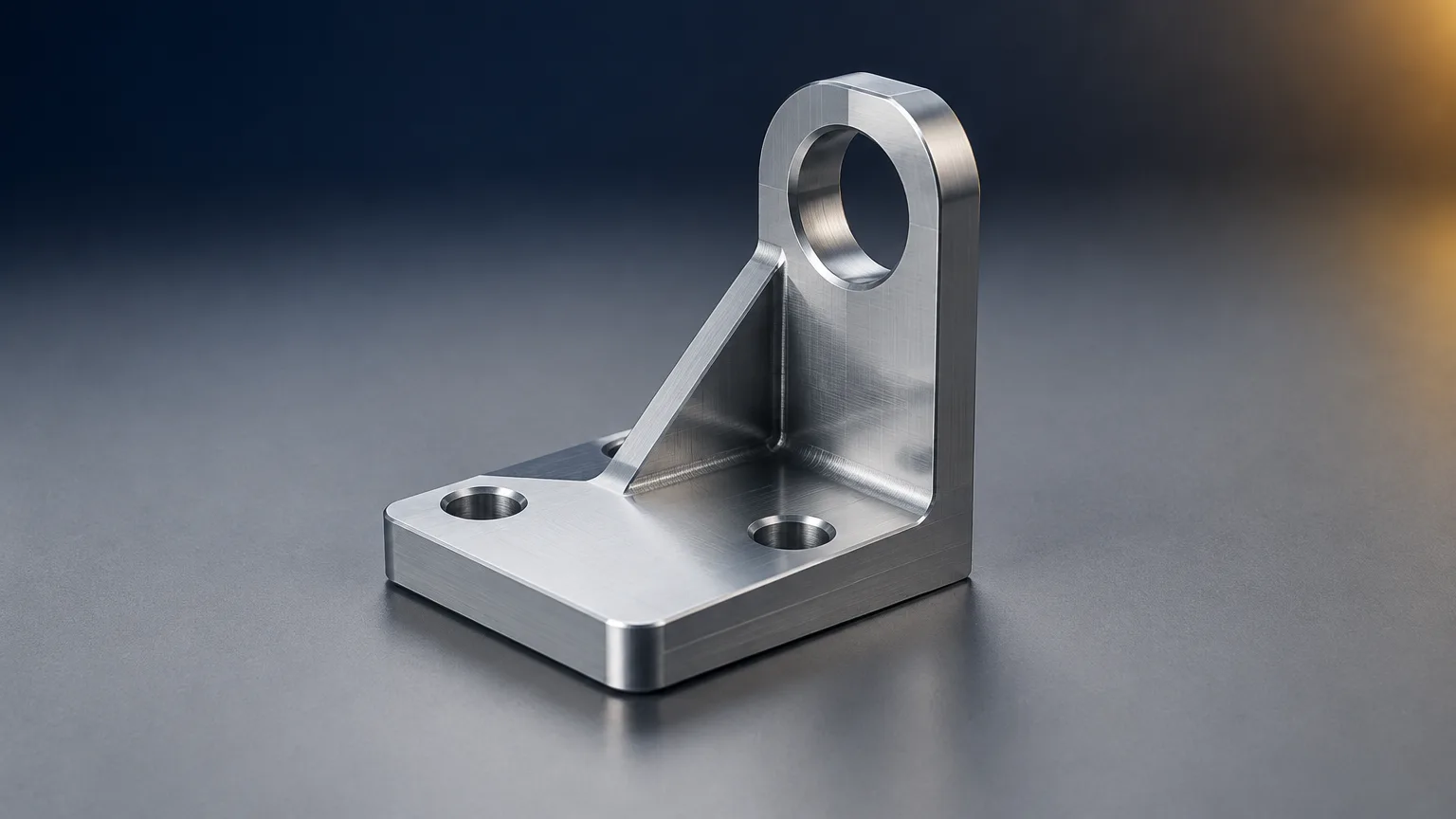
Design, material, process, tooling, quality and supply-chain risks in the transition.
Requirements, route selection, DFM, prototype testing, process validation, approval, launch.
Fourteen items to clear before tooling and before production approval.
Late design freeze, assumed tolerances, undefined finish and undocumented tooling ownership.
How tooling investment, piece cost and iteration speed trade off by route.
Contracts, inspection, IP and payment structure for the transition.
A hypothetical enclosure program from SLA prototypes to approved production.
How to scope a quote that covers prototype and production stages.
Prototype to production is the controlled transition from an early design model to repeatable, qualified series manufacturing. It covers prototype builds, design-for-manufacturing review, validation, process qualification, production approval and scale-up. The transition reduces tooling, quality and supply-chain risk by proving design intent before capital is committed to production equipment.
Most programs do not fail at the concept stage. They fail in the gap between a prototype that works once and a process that works every time. A prototype proves design intent; production proves that the process, tooling, equipment and controls can repeat that intent at volume.
APQP practice makes the same distinction: prototype validation tests the design, while production validation tests the process. Programs that treat them as one activity find the difference after tooling is cut, when changes are slowest and most expensive.
The prototype to production path below follows APQP planning: each step closes a defined risk before the next begins.
| Route | Stage | What it proves | Main limitation |
|---|---|---|---|
| 3D printing (FDM/SLA/SLS) | Concept and functional prototype | Geometry, fit, early function | Properties, finish, anisotropy and scalability may differ from molded parts |
| CNC machining | Functional prototype to moderate volume | Production-like material behavior and repeatability | Material waste, fixturing, tool access and cycle time limit scale |
| Sheet-metal fabrication | Enclosures and brackets | Form, hardware and finishing intent | Bend allowances, springback, hardware and finishing need production validation |
| Low-volume molding (aluminum or soft-steel tooling) | Bridge and pilot production | Production-like parts before steel tooling | Tooling cost and iteration time exceed additive methods |
| Production tooling and molding | Series production | Throughput and repeatability at volume | Requires design freeze, mold investment, shrinkage control and process qualification |
| Die casting | High-volume metal parts | Complex geometry at volume | Tooling, minimum volume, porosity and finishing add risk |
Work this checklist at each gate. Anything unchecked is an open risk that carries into the next stage.
Most of these mistakes are cheap to avoid at the design stage and expensive to correct after tooling.
Molding routes require shrinkage control and process qualification; die casting adds porosity and finishing risk. Both punish late geometry changes. If a feature is still uncertain, prototype it in a route that allows fast iteration, then freeze. Moving to production tooling is a commitment to the drawing as written.
Cost and time behave differently at each stage, and the balance shifts as volume rises. Prototype routes trade tooling investment for higher piece cost; production tooling does the opposite.
| Route | Tooling investment | Piece cost trend | Iteration speed | Scale readiness |
|---|---|---|---|---|
| 3D printing (FDM/SLA/SLS) | None or minimal | High per part | Fastest | Limited; properties and scalability may differ from molded parts |
| CNC machining | Minimal; fixturing only | High per part | Fast | Limited by waste, fixturing, tool access and cycle time |
| Sheet-metal fabrication | Low tooling; forming setup | Moderate per part | Fast | Good after bend, springback and finishing validation |
| Rapid or low-volume injection molding | Moderate; aluminum or soft-steel tooling | Lower per part | Slower than additive | Good for bridge and pilot volumes |
| Production tooling and molding | Highest | Lowest per part at volume | Slowest | High throughput and repeatability |
| Die casting | High | Low per part at volume | Slow | High volume; porosity and finishing add risk |
Actual cutting or molding time is usually a small share of the timeline. Most schedule variance comes from design changes after freeze, incomplete DFM reviews, undefined acceptance criteria and validation that is planned late rather than alongside the build.
Controls exist to make the transition predictable. Put each of them in place before tooling starts, not after a problem appears.
A hardware team needs a sealed enclosure for an automotive-adjacent electronics product. Ten SLA resin prototypes confirm fit and appearance, but the resin's durability and heat behavior differ from the specified production plastic, so the results do not transfer to production.
The team runs a DFM review, which flags draft, wall thickness and a sealing feature, then revises the model. A second build uses CNC-machined parts in a representative engineering thermoplastic so the fastening and seal behavior can be tested with production-like material.
With the design frozen, the team moves to rapid injection molding in aluminum tooling for a pilot run. Samples are measured against the control plan, a surface finish is specified on the drawing, and capability is studied on the critical seal dimension. Production tooling follows, and the required PPAP evidence is submitted for approval before the low-volume launch. Each gate resolved one risk before the next commitment.
A prototype to production program moves faster when the next stage is quoted before the current one finishes. Sourcing Repository collects quotes from a vetted supplier network, manages quality and inspection, and delivers parts against your drawing and control plan.
Send your requirement through the quote request and include the production intent, not just the prototype request. Quote turnaround from the SR supplier network is typically 5-7 working days. Questions can go to killol@sourcingrepository.com or Sourcing Repository, 201 SG Mall, Ahmedabad.
Upload it with quantity and material to start a quote.
FAQ
Move to tooling after design verification, DFM review, material selection and closure of key functional risks. The exact gate is project-specific, and the decision should be recorded as a design freeze so later changes are treated as tool modifications rather than model edits.
Sometimes, but rarely automatically. Confirm the supplier has the equipment, capacity, quality systems, tooling ownership arrangements, inspection capability and production references needed for series work. A fast prototype shop is not evidence of a stable production process.
Ask for separate line items covering engineering, prototypes, tooling, samples, inspection, validation, production units and change orders. Separate pricing shows where cost and risk sit at each stage, and makes tooling changes and validation scope easier to compare between suppliers.
Not necessarily. Printed, machined and molded parts can have different capability, so state the process and required tolerances explicitly on the drawing. Process capability studies during validation demonstrate what the production process can actually hold.
Related resources
Ready when you are
Send your drawing, material and target quantities. SR collects quotes from a vetted supplier network, manages quality and inspection, and delivers parts against your control plan.
Your files stay confidential. NDA available on request.