
Quick verdict
One route for precision, one for geometric freedom.
Prototype process comparison
Choose CNC when accuracy, surface finish and material properties decide acceptance. Choose 3D printing when geometry and fast iteration matter most. Many programs use both.
CNC Machiningvs3D Printing for Prototypes
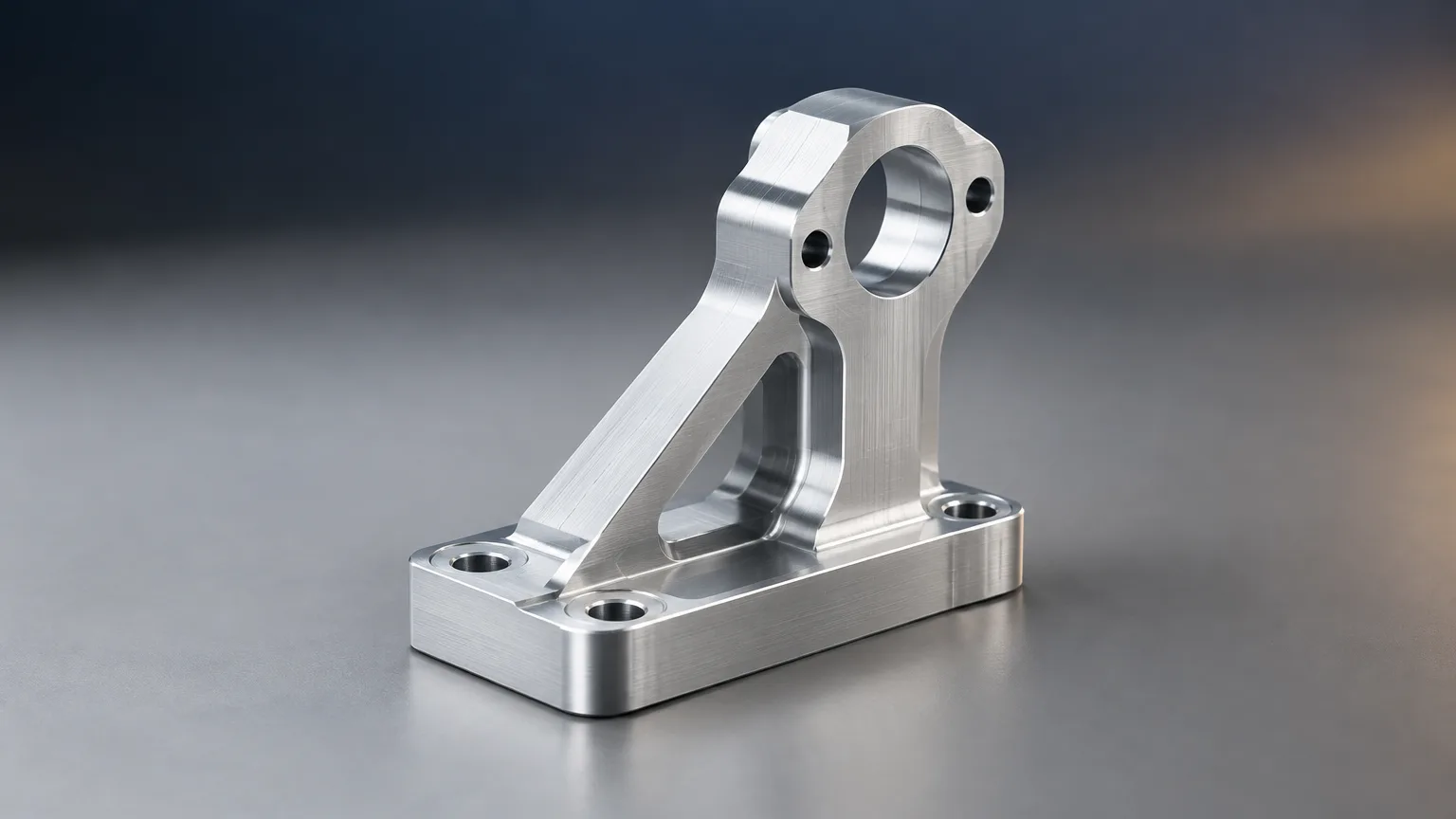
One route for precision, one for geometric freedom.
Ten criteria, including tolerance and materials.
Strengths, limits, cost drivers and best uses.
FDM, SLA, SLS and metal AM for prototypes.
Decision rules for precision prototypes.
Decision rules for fast iteration.
What actually drives the numbers.
Final guidance and how to start.
CNC machining vs 3D printing is a comparison between subtractive cutting of solid stock and additive layer-by-layer building. Choose CNC for tight tolerances, smooth finish and certified materials; choose 3D printing for complex internal geometry and fast early iterations. Printed parts can be finish-machined where critical features need accuracy.
Choose CNC machining for prototypes where dimensional accuracy, surface finish, material properties or repeatability decide whether the part passes. Choose 3D printing for early design verification, complex internal geometry and low-volume customization where speed of iteration outweighs tight tolerances.
A hybrid route is common: print to prove form and fit, then machine datums, bores, threads or sealing faces. The sections below compare both processes on accuracy, geometry, materials, finish, cost drivers and lead time so procurement and engineering can decide from evidence rather than habit.
CNC machining vs 3D printing is a choice between subtractive and additive routes: CNC cuts tighter tolerances and smoother surfaces from stock material, while 3D printing builds complex geometry with less tooling and faster early iterations. The table compares typical values from published guidance, not guaranteed acceptance limits.
| Criterion | CNC machining | 3D printing (AM) |
|---|---|---|
| Dimensional accuracy | Generally tighter; typical routine prototypes about ±0.005 in (±0.127 mm), high-precision work up to ±0.0002 in (±0.005 mm) | Process-dependent; typically starts near ±0.005 in (±0.127 mm) plus 0.001–0.0015 in (0.025–0.038 mm) per inch |
| Geometry freedom | Limited by tool access, fixturing and cutter geometry | Internal channels, lattices and consolidated shapes are practical |
| Materials | Broad range of commercial metals and plastics, e.g. 6061-T6 aluminum, 316L stainless, ABS | Process-specific: ABS, nylon 12, photopolymer resins, some metals |
| Surface finish | Smoother as-machined surfaces; sanding or polishing optional | Visible layer lines common; finishing often required |
| Mechanical properties | Retains stock material properties, subject to machining effects | Varies with orientation, layer bonding, porosity and post-processing |
| Setup and tooling | Programming, fixturing and tooling add cost and time | Low entry cost; no cutting tools or fixtures required |
| Material waste | Chips removed from stock; buy-to-fly ratio matters | Less subtractive waste but supports, powder and resin handling apply |
| Best prototype role | Functional testing, precision interfaces, production-intent parts | Rapid iterations, design verification, complex low-volume parts |
CNC machining removes material from a solid workpiece using computer-controlled cutting tools. In CNC machining vs 3D printing for prototypes, it most closely predicts production behavior, because the material and cutting mechanics match series manufacture.
Specify CNC for functional prototypes, precision interfaces, housings, brackets, fixtures and parts needing a material certificate, tight finish or repeatability. The typical general tolerance band is about ±0.002–0.004 in (±0.05–0.10 mm), with tighter values on selected features. Apply GD&T per ASME Y14.5 so datums and controls are unambiguous.
3D printing is a family of additive manufacturing (AM) processes, defined by ISO/ASTM 52900 as building a part through successive material addition. In CNC machining vs 3D printing, the practical prototype families are FDM/FFF, SLA resin, SLS/MJF polymer and metal powder-bed fusion.
Specify 3D printing for rapid prototypes, design verification, low-volume parts and complex internal channels or lattices. SLA suits fine-detail, relatively high-accuracy prototypes. Metal powder-bed fusion consolidates assemblies into one part but needs powder removal, heat treatment, support removal and often finish machining.
Choose CNC when the drawing's acceptance criteria depend on dimensional accuracy, surface finish, material properties or repeatability. In CNC machining vs 3D printing decisions, these conditions point to CNC:
Choose 3D printing when geometry, customization or short iteration cycles dominate, and when the part does not need production-level tolerances or finish.
In CNC machining vs 3D printing, cost and lead time are driven differently, and neither route is universally cheaper. CNC cost follows buy-to-fly ratio, machine time, tool wear, setup, fixturing, programming and inspection. 3D printing cost follows machine time, part volume, build height, nesting density, material, supports and post-processing.
| Scenario | Relative cost position | Relative lead-time position |
|---|---|---|
| Simple part, tight tolerance | CNC often lower; AM may need finish machining | CNC usually shorter when no supports or post-processing are needed |
| Complex internal geometry, low volume | AM often lower by avoiding tooling and fixturing | AM often shorter for early iterations |
| Several identical prototypes | CNC setup amortizes across units | AM benefit narrows as post-processing repeats per part |
| Metal AM prototype | High equipment and post-processing cost | Powder removal, heat treatment and support removal add steps |
| Hybrid print-then-machine | Adds machining cost to the printed blank | Adds a second operation after printing |
No universal cost-per-part comparison holds across suppliers, geometries, volumes and regions. Treat the table as directional and confirm pricing against your own drawing and quantity.
The recommended next step for your prototype is to start with the acceptance requirement. If the part must hold tight tolerances, a defined material grade or a functional surface finish, route it to CNC; if the question is geometry, form or fit, print it first and iterate faster.
Where both needs exist, CNC machining vs 3D printing does not have to be either/or: print to prove the design, then machine the critical features. Sourcing Repository collects quotes from a vetted supplier network, manages quality and inspection, and delivers parts - we do not own factories or machines. Send the drawing and quantities to start; typical quote turnaround is 5-7 working days.
Upload it with quantity and material to start a quote.
FAQ
Not universally. AM can reduce tooling and setup cost for complex, low-volume parts, while CNC may cost less for simple parts, production quantities or tight-finish requirements. Compare quotes on your own geometry and quantity before deciding.
CNC generally provides tighter tolerances. Stratasys reports ±0.005 in [±0.127 mm] for routine CNC prototypes and 0.0002 in [0.005 mm] for high-precision work, while AM tolerances start near ±0.005 in [±0.127 mm] plus 0.001–0.0015 in [0.025–0.038 mm] per inch.
Yes. Machining printed datums, bores, threads and sealing faces is a common hybrid route, subject to adequate stock allowance and material stability. Confirm wall thickness and support removal before committing to the secondary operation.
AM can shorten early iterations by avoiding tooling, while CNC may be faster for simple parts without support removal or post-processing. On strength there is no universal winner: CNC parts retain stock properties, while printed strength depends on process, material, orientation, porosity and post-processing.
Related resources
Ready when you are
Send the drawing, material and quantity. Sourcing Repository collects quotes from a vetted supplier network, manages quality and inspection, and delivers parts to you. Typical quote turnaround is 5-7 working days.
Your files stay confidential. NDA available on request.