
The problem
Why vague RFQs produce quotes you cannot compare.
Sourcing guide
A manufacturing RFQ is a formal package that asks qualified suppliers to price a defined part or assembly. A complete RFQ gets comparable quotes and fewer change orders.
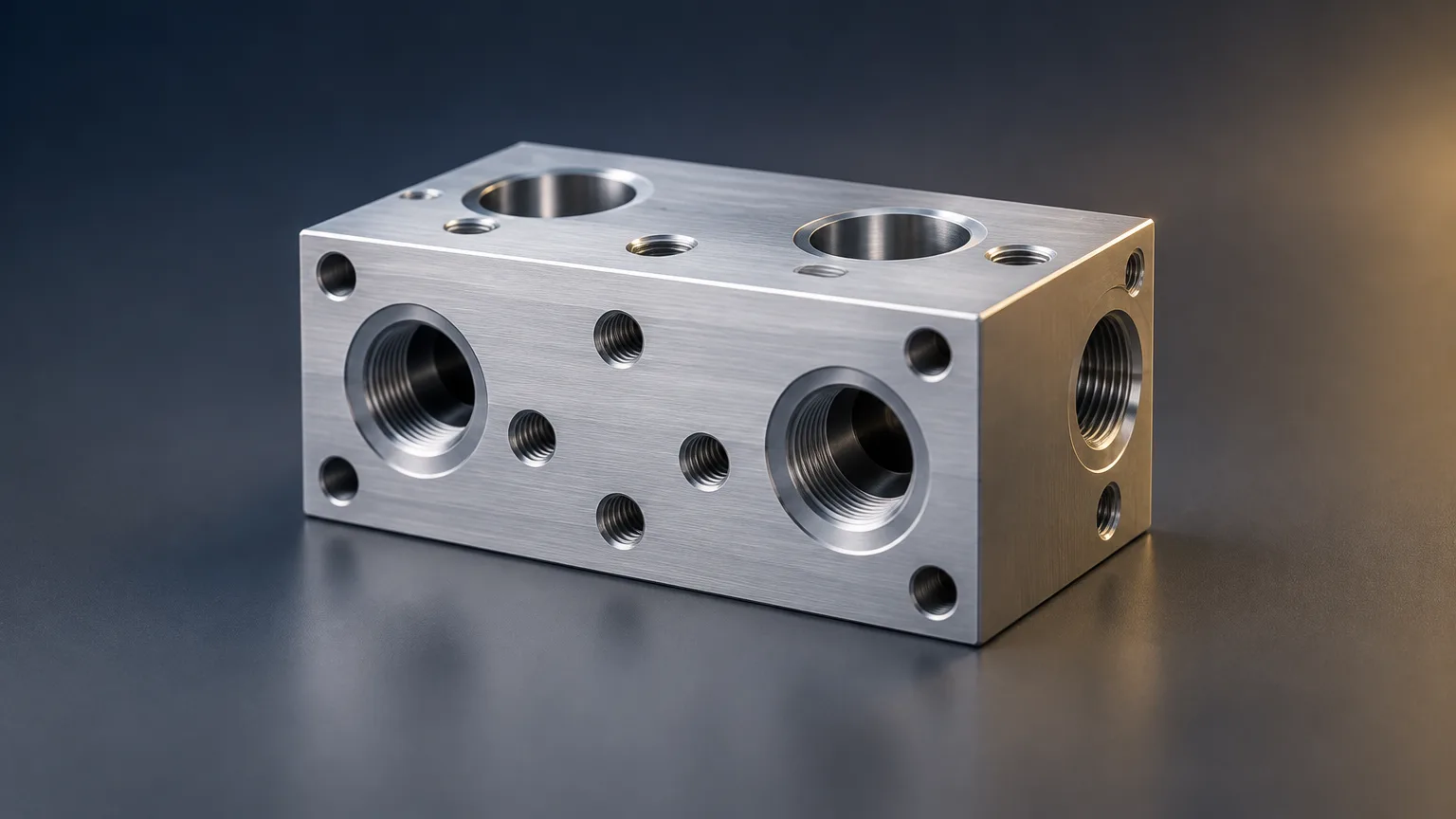
Why vague RFQs produce quotes you cannot compare.
Eight steps from part definition to quote comparison.
Fourteen items to confirm before the RFQ is sent.
Errors that shift risk to suppliers and back into price.
How RFQ quality and process choice affect price and schedule.
Contracts, inspection, IP, and commercial terms.
A hypothetical machined bracket RFQ, before and after.
Issue the package and start collecting quotes.
RFQ manufacturing is a procurement method in which a buyer sends qualified suppliers a formal request for quotation to price a defined part, assembly, material, or service. A complete package includes drawings and CAD, material and finish, tolerances, quantity tiers, quality requirements, delivery, and commercial terms so quotes compare directly.
Vague RFQs create quotes you cannot compare because suppliers fill every gap with their own assumptions. When tolerances, finish, quantity, or delivery are left open, each quote prices a different part. The numbers look comparable on a spreadsheet but are not.
The risk compounds after award. Missing revision control or undefined inspection turns into change orders, rework, and schedule slips, and suppliers price that uncertainty in. A vague RFQ usually costs more, not less.
RFQ manufacturing is the practice of issuing one complete, identical request for quotation to several qualified suppliers so each prices the same part, quantity, quality requirement, and delivery schedule. It turns quotes into like-for-like comparisons.
Build the RFQ in a fixed order so nothing is left to interpretation. Each step below produces one section of the RFQ manufacturing package.
This RFQ manufacturing checklist confirms the package is complete before it leaves your desk. Every unchecked line is a question a supplier will answer with an assumption.
| Parameter | What to state | Source or standard |
|---|---|---|
| Dimensional tolerances | Part-specific; explicit tolerances on critical features | Released engineering drawing; ASME Y14.5 or invoked ISO standard |
| General linear tolerances | Class f, m, c, or v where applicable; no universal value | ISO 2768-1:1989, only when explicitly invoked |
| Geometric tolerancing | Feature-specific position, flatness, profile, and runout values | ASME Y14.5; drawing datums and feature-control frames |
| Surface roughness | Drawing-defined Ra value | Customer drawing or applicable surface-texture standard |
| Material condition | Alloy, grade, temper, form, and governing specification | Buyer drawing and material specification |
| Quantity | Prototype, production quantity tiers, and annual usage | RFQ commercial requirements |
| Delivery | Required date, lead time, and release schedule | RFQ commercial requirements |
These errors appear in most weak RFQs. Each one shifts risk to the supplier, and the supplier prices that risk back into the quote.
Related documents are often confused. An RFI gathers supplier capability or market information. A build-to-print package relies on buyer-controlled drawings and specifications, while design-and-build scope may leave engineering responsibility with the supplier. An RFQ solicits quotations; a purchase order creates the buyer's contractual order after award. Prototype quotes emphasize speed and iteration, while production quotes emphasize repeatability, tooling, capacity, and release schedules.
RFQ quality changes both price and schedule, and the effect is qualitative but consistent. A complete RFQ manufacturing package shortens the quoting cycle because suppliers need fewer clarification rounds. It also reduces the number of suppliers who decline to quote because the scope is unclear.
Process choice sets the cost structure before any negotiation, so state the intended process in the RFQ.
| Process | Advantages | Constraints |
|---|---|---|
| CNC machining | Tight tolerances, prototypes, low-to-medium volumes | Material removal, setups, tooling, long cycle times |
| Sheet-metal fabrication | Brackets, enclosures, formed parts | Bend sequence, tooling, springback, minimum features |
| Injection molding | Low unit cost at high volume, repeatable polymer parts | Mold cost, development time, shrinkage, parting-line limits |
| Casting | Complex shapes, larger near-net-shape components | Pattern or die costs, porosity, draft, machining allowance, finishing |
| Additive manufacturing | Complex geometry, rapid iteration, low-volume production | Anisotropy, surface finish, build orientation, post-processing, size limits |
| Welded fabrication | Large structures and assemblies | Distortion, weld access, fixturing, inspection, operator qualification |
A thin RFQ loses time in three places: clarification emails, re-quotes after scope changes, and first-article disputes. Each adds a full loop to the program, and a complete RFQ manufacturing package removes most of them.
Risk controls belong in the RFQ, not in a later negotiation. State them once, and every supplier prices the same obligations.
Define the drawing revision that governs the order and how changes are handled. A purchase order creates the buyer's contractual order after award, so the RFQ should state that the awarded PO and its referenced revision control the work.
State what is measured, at what frequency, and what documentation ships with the parts. Define acceptance against the drawing and invoked standards. Where the program requires it, state that IATF 16949 and PPAP are supplier requirements.
State that drawings, models, and tooling data remain the buyer's property and cannot be reused or shared. Require revision control so only the released revision is manufactured.
Ask suppliers to quote tooling or setup as a separate line, price by quantity tier, and state quote validity. An identical quote structure keeps RFQ manufacturing comparisons free of rework.
The following scenario is hypothetical and illustrates how the steps fit together. It is not a customer case.
An engineer needs a machined aluminum bracket for an automotive subassembly. The first RFQ draft lists a part name, a 3D model, and a target price. Suppliers respond with widely different prices and two decline to quote.
The revised RFQ adds a dimensioned, toleranced PDF drawing with datums and feature-control frames per ASME Y14.5, and states that the drawing controls requirements while the model supports programming. Material is specified by alloy, temper, and form. Surface finish is given as a drawing Ra value, and anodizing is specified by type and class under MIL-A-8625. Quantity is listed as prototype, two production tiers, and estimated annual usage. Inspection requirements, documentation, packaging, and the required delivery date are stated, along with a release schedule.
The result is a set of quotes with the same line-item structure: unit price per tier, tooling or setup as a separate line, lead time, and quote validity. Clarification questions drop, and the comparison is about capability and price rather than about scope differences.
Issue your RFQ for manufacturing by assembling the package in the order above, running the checklist, and sending the identical RFQ to every supplier you are evaluating. Keep the quote format fixed so comparison stays objective.
Sourcing Repository collects quotes from a vetted supplier network, manages quality and inspection, and delivers parts. Typical quote turnaround is 5-7 working days. Contact killol@sourcingrepository.com or use the quote form to start your RFQ manufacturing project.
Upload it with quantity and material to start a quote.
FAQ
Include drawings, CAD, BOM, material, finish, tolerances, quantities, quality requirements, delivery, packaging, and commercial terms. The drawing and model should be at a stated revision, and quantity should be given as prototype, production tiers, and annual usage so suppliers can price setup and tooling honestly.
Yes. A dimensioned, toleranced PDF controls requirements, while a matching 3D model supports programming and review. The drawing governs inspection and acceptance; the model speeds up quoting and manufacturability feedback. State which revision applies and require revision control on both files.
Tolerance only the features that matter. Use explicit tolerances on critical features and geometric tolerancing per ASME Y14.5 where function depends on position, flatness, profile, or runout. Invoke ISO 2768-1 general tolerances only when intended, and state the class, because there is no universal default.
An RFQ requests pricing for a defined requirement, while an RFP can invite proposed technical and commercial solutions. Use an RFQ when the specification is fixed and you want comparable quotes. Use an RFP when the approach itself is open and suppliers may influence the design.
Related resources
Ready when you are
Send your drawing, 3D model, quantities, and quality requirements. Sourcing Repository collects quotes from a vetted supplier network, manages quality and inspection, and delivers parts.
Your files stay confidential. NDA available on request.