
CNC Machining
Precision CNC Milling for Custom Parts
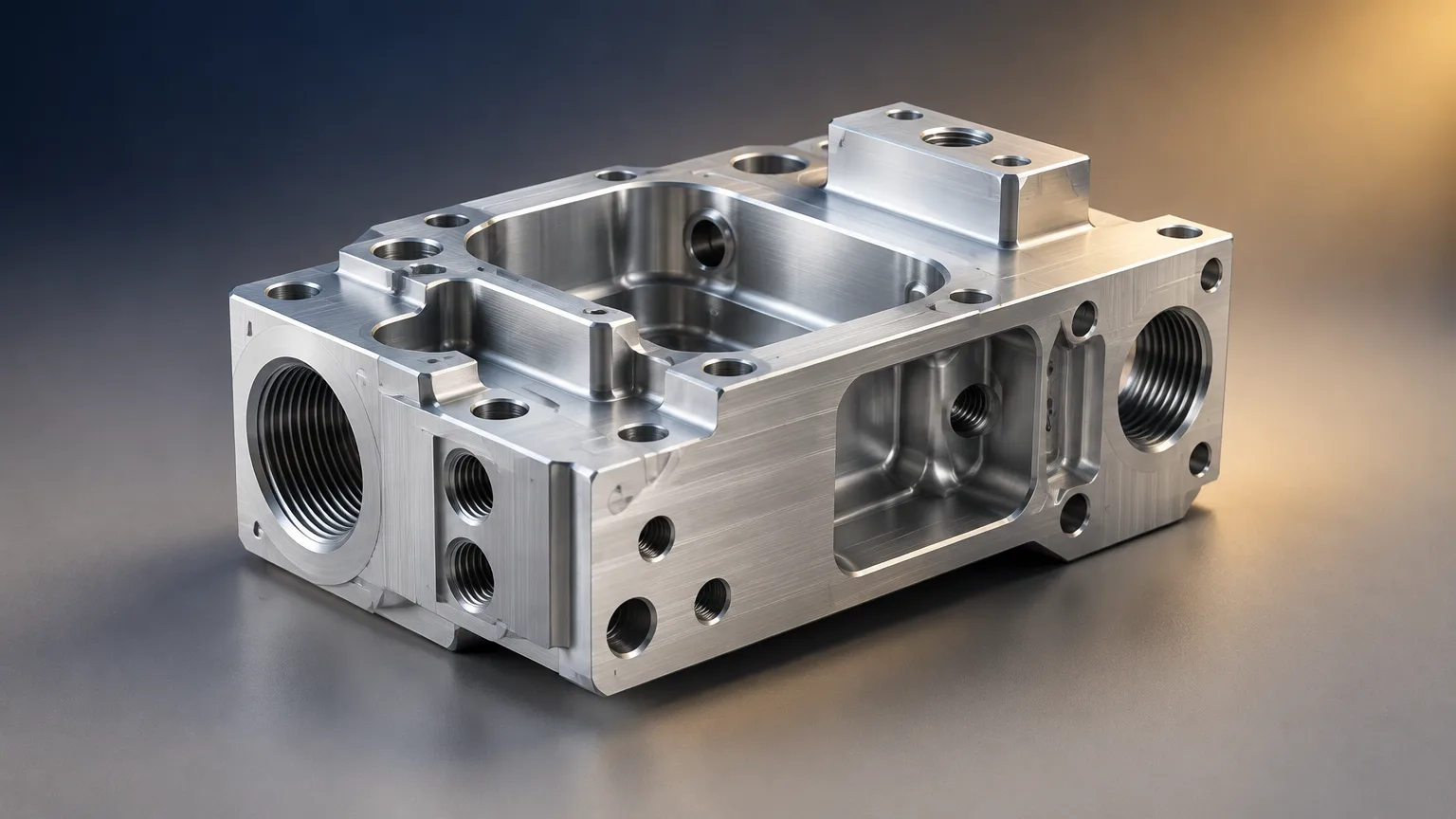
SR brokers precision CNC milling for prototype and production parts. Send your CAD and drawing; we collect quotes from a vetted supplier network, manage quality and inspection, and deliver parts.
- Prototype to production
- ±0.005 in general tolerance
- Metals and plastics
- Inspection managed by SR
- Drawing reviewTolerances and datums checked before quoting
- Vetted suppliersQuotes matched to part geometry and volume
- Inspection managedDimensional reports on request
Precision CNC milling is a computer-controlled process that removes material to produce custom parts to the tolerances stated on the drawing. SR, a manufacturing broker, collects quotes from a vetted supplier network, manages quality and inspection, and delivers parts. Typical general milling tolerance is ±0.002–0.004 in (±0.05–0.10 mm).
What precision CNC milling is and when to use it
Precision CNC milling is computer-controlled removal of material from a workpiece using rotating cutters, where accuracy is achieved through controlled programming, fixturing, tooling, temperature management, and inspection. Required accuracy must be defined on the drawing rather than assumed.
The service suits engineers, procurement managers, and founders who need custom CNC milling parts in metal or plastic, from one-off prototypes to low-volume production. Use it when a part has prismatic geometry, pockets, contours, holes, or multi-axis features that cannot be produced by turning or printing.
Precision CNC milling process steps
The precision CNC milling process runs from drawing review to inspected delivery in six steps.
- 1. Drawing and DFM review SR and the supplier review the CAD file and drawing for material, tolerances, datums, finish, and inspection requirements. Ambiguities are resolved before quoting.
- 2. Quote collection and supplier matching SR routes the package to suppliers whose equipment and capacity fit the part, then consolidates the quotes into one comparison.
- 3. Programming and setup The supplier writes the toolpath, selects cutters, and builds workholding. Setup and programming dominate cost at low quantities.
- 4. Machining Material is removed in roughing and finishing passes. Tight features may need slower feeds and additional finishing passes.
- 5. Inspection Critical dimensions are measured against the drawing. Inspection equipment and reporting scope are agreed before production.
- 6. Finishing and delivery Parts receive any specified finish, then ship. SR remains the single point of contact.
Materials and finishes for custom CNC milling parts
Material choice drives machinability, strength, corrosion resistance, and cost for custom CNC milling parts. Verify properties against the applicable ASTM, EN, or producer datasheet.
| Material | Grade | Properties | Typical uses |
|---|---|---|---|
| Aluminum | 6061-T6 | Lightweight, corrosion-resistant, and generally machinable. | Brackets, housings, prototypes, fixtures, and aerospace parts. |
| Stainless steel | 304 | Corrosion resistance, toughness, and broad availability; work-hardening can increase machining difficulty. | Food, chemical, medical, and general industrial components. |
| Stainless steel | 316 | Improved corrosion resistance relative to 304, especially in chloride environments. | Marine, chemical-processing, medical, and sanitary hardware. |
| Carbon steel | AISI 4140 | Strength and toughness; machinability varies with heat treatment. | Shafts, tooling, fixtures, and mechanically loaded parts. |
| Engineering plastic | POM/Delrin | Low friction, dimensional stability, and good machinability. | Bushings, wear parts, guides, and electrical-mechanical components. |
Finishes
- As-machined: standard milled surface, lowest cost.
- Anodizing: aluminum only; improves corrosion resistance and wear.
- Bead blasting: uniform matte texture; hides tool marks.
- Passivation: stainless steel; removes free iron from the surface.
- Zinc or nickel plating: carbon steel corrosion protection.
- Heat treatment: applied before or after machining, depending on grade and hardness.
Precision CNC milling specs and tolerances
Precision CNC milling holds tighter feature tolerances than standard milling, and the required accuracy must be defined on the drawing rather than assumed. The ranges below are typical supplier capability references, not universal standards. Confirm each range against your drawing and the selected supplier before release.
| Parameter | Typical range | Standard or source |
|---|---|---|
| General CNC dimensional tolerance | ±0.005 in (±0.13 mm) | Reported common/default range; verify with the supplier and drawing. |
| CNC milling, general features | ±0.002–0.004 in (±0.05–0.10 mm) | Supplier capability reference; not a universal standard. |
| CNC milling, tight features | ±0.0004–0.0010 in (±0.01–0.025 mm) | Supplier capability reference; depends on geometry, material, and inspection. |
| CNC turning, general | ±0.001–0.002 in (±0.025–0.05 mm) | Supplier capability reference. |
| CNC turning, precision | ±0.0002–0.0004 in (±0.005–0.01 mm) | Supplier capability reference; must be confirmed for the feature. |
| General unspecified tolerances | ISO 2768-f, -m, -c, or -v classes | ISO 2768 designation; class and applicable part must appear on the drawing. |
| Geometric tolerancing | Feature-specific; no single universal range | ASME Y14.5 or ISO 1101, as specified by the drawing. |
Design tips that lower precision CNC milling cost
Most precision CNC milling cost is fixed at the design stage. These seven changes reduce machining time, setups, and inspection burden.
- Apply tight tolerances only where fit, sealing, alignment, or safety requires them.
- Design for access: deep cavities and thin walls increase cost and distortion risk.
- Use standard drill and thread sizes.
- Keep pocket depth to about four times the cutter diameter where possible.
- Add generous internal fillets so a larger, faster cutter can reach corners.
- Specify the fewest setups and datums that still control critical features.
- Choose a machinable material; work-hardening stainless grades machine more slowly.
Typical precision CNC milling applications
Precision CNC milling covers prismatic and contoured parts across automotive, industrial, medical, and aerospace programs. Automotive work is the most common request SR receives.
- Automotive: brackets, sensor housings, fixture plates, and prototype drivetrain components.
- Industrial equipment: manifolds, mounting plates, gears, and machine guards.
- Medical and laboratory: instrument housings, jigs, and stainless hardware.
- Aerospace: lightweight aluminum brackets, spacers, and structural fittings.
- Electronics: enclosures, heat sinks, and connector bodies.
- Consumer and startup products: prototype housings, mechanisms, and low-volume production runs.
Good fit for milling
- Prismatic parts with pockets and contours
- Holes and multi-axis features
- Flat mating surfaces and slots
- Prototype and low-volume custom parts
Consider another route
- Rotational parts such as shafts and bushings (turning)
- Long slender parts that may deflect
- Complex prototypes where 3D printing reduces tooling
- Hard-material narrow slots (wire EDM)
What drives precision CNC milling cost
Cost is driven by machining time, setup count, and inspection scope. At low quantities, programming and setup dominate; at higher quantities, cycle time and material dominate.
- Tolerance: tighter features require slower cutting, extra passes, and more inspection.
- Geometry: deep cavities, thin walls, and hard-to-reach features add time and risk.
- Material: work-hardening stainless and hardened steels machine more slowly than aluminum.
- Quantity: low quantities carry proportionally higher programming and setup cost.
- Setups: each additional orientation adds fixturing and labor.
- Finish: anodizing, plating, and heat treatment add processing steps.
- Inspection: dimensional reports and first-article documentation add cost.
Why order precision CNC milling through SR
Ordering precision CNC milling through SR means working with one broker that does not own factories or machines. SR collects quotes from a vetted supplier network, manages quality and inspection, and delivers parts to your drawing.
- Vetted network: suppliers are matched to your geometry, material, and volume.
- One contact: you deal with SR, not a rotating list of vendors.
- Quote turnaround: typically 5-7 working days from a complete package.
- Quality and inspection: SR manages inspection scope and reporting on your behalf.
Send your CAD file and controlled drawing to killol@sourcingrepository.com, or request a quote through the site. Include material, grade, tolerances, datums, finish, quantity, and inspection requirements so quotes are comparable.
Have a drawing to quote?
Upload it with quantity and material to start a quote.
FAQ
Common questions
How can buyers reduce custom CNC machining cost?
Relax noncritical tolerances, simplify setups, use standard tools and threads, avoid deep cavities, select machinable materials, and consolidate compatible features. Most savings come from the drawing, not from supplier negotiation.
What is a realistic general CNC tolerance?
A commonly reported default is ±0.005 in (±0.13 mm), but actual capability depends on process, material, geometry, and supplier equipment. Confirm the achievable range for each feature before releasing the drawing.
How does precision CNC machining cost change with tolerance?
Tighter tolerances can require slower cutting, extra passes, controlled environments, and more inspection. One supplier reports non-linear cost increases below ±0.005 in (±0.13 mm), so tightening only critical features usually costs less.
What files should a CNC machining company receive?
Provide a native or neutral CAD file plus a controlled drawing specifying material, grade, tolerances, datums, finish, threads, quantity, and inspection requirements. Missing drawing data is the most common cause of quote delays and disputes.
Related resources
Keep reading
Ready when you are
Send your drawing for a milling quote
Upload your CAD file and controlled drawing. SR reviews the package, collects quotes from vetted suppliers, and returns a comparison within 5-7 working days.
Your files stay confidential. NDA available on request.