
Contract manufacturing services
Contract Manufacturing Services for Custom Parts
Sourcing Repository is a manufacturing broker. We collect quotes from a vetted supplier network, manage quality and inspection, and deliver parts to your drawing.
- Vetted supplier network
- DFM review
- QC and inspection
- Worldwide delivery
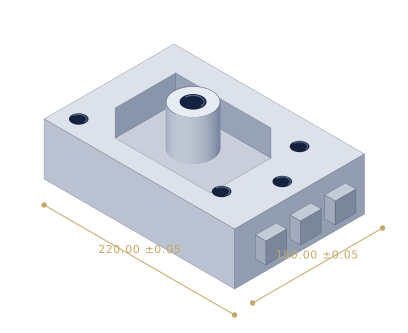
Contract manufacturing is outsourcing part or all of a product's production to a third-party manufacturer under a formal agreement. The customer supplies designs, specifications, quantities and acceptance criteria, while the contract manufacturer provides sourcing, tooling, production, inspection, packaging and logistics.
Contract manufacturing capabilities: what the service covers
Contract manufacturing services cover production of parts and assemblies to customer drawings, from one process step to a finished, packaged product. The customer sets scope and acceptance criteria in the manufacturing services agreement. The contract manufacturer may handle sourcing, tooling, production, inspection, packaging and delivery.[1][3][10]
Sourcing Repository is a broker, not a factory. We do not own plants or machines. We route each project to suppliers whose process fit matches the drawing, collect quotes, and manage inspection and delivery for you.
Manufacturing routes we cover
- Machining: suits prototypes, low-to-medium volumes and tight drawing-controlled features; waste and tooling wear raise unit cost at high volume.
- Injection molding: repeatable, fast polymer parts once tooling is complete; mold cost and lead time apply, and design changes may need mold changes.
- Sheet-metal fabrication: suits enclosures, brackets and panels at moderate volumes; bend allowances, springback and tooling need control.
- Casting: makes complex shapes and can reduce machining at scale; it needs patterns or dies, and porosity and shrinkage are risks.
- Additive manufacturing: fast prototypes and complex low-volume geometry without conventional tooling; build anisotropy and material limits apply.
- Assembly and packaging: combines component integration, testing, labeling and shipment; line balancing and change control add complexity.
Part size and volume range
Part size and volume depend on the process and supplier capacity, so we confirm both per project during quoting. Typical guidance: machining and additive manufacturing suit prototypes and low-to-medium volumes. Sheet-metal fabrication and casting suit moderate volumes. Injection molding pays off after tooling is complete. The cited sources do not verify size or volume limits, so treat these as typical, not guaranteed.
Materials and finishes for contract manufacturing
Material choice is set by the drawing, the process and the service environment, not by a single default. Five families cover most routed work: aluminum, stainless steel, carbon steel, engineering polymers and elastomers. The material specification and purchase requirements define grade, temper or condition, and any required certification.[13]
| Material | Grade | Properties | Typical uses |
|---|---|---|---|
| Aluminum | Unverified; specify an applicable alloy such as 6061-T6 only when required by the drawing. | Grade-dependent strength, corrosion behavior, machinability and heat treatment. | Machined parts, brackets, housings, panels and lightweight assemblies. |
| Stainless steel | Unverified; specify the exact grade, condition and applicable material standard. | Grade-dependent corrosion resistance, strength, weldability and machinability. | Process equipment, medical components, enclosures, fasteners and food-contact hardware. |
| Carbon steel | Unverified; specify grade, chemistry, condition and coating requirements. | Generally high stiffness and strength; corrosion protection may be required. | Frames, brackets, shafts, fabricated structures and general industrial components. |
| Engineering polymers | Unverified; identify resin family, reinforced content, color and applicable specification. | Grade-dependent strength, temperature resistance, chemical resistance, creep and shrinkage. | Molded housings, seals, covers, insulators, wear parts and consumer products. |
| Elastomers | Unverified; specify polymer, hardness, compound and compatibility requirements. | Elasticity, sealing behavior, compression set, temperature range and chemical resistance vary by compound. | Gaskets, seals, vibration isolators, grips and flexible components. |
Finish is controlled the same way. Surface finish is not globally standardized, so state roughness, coating, plating or cosmetic criteria on the drawing, the finish specification and an approved sample where applicable. If a finish is critical to fit or corrosion performance, mark it as a key characteristic so inspection can verify it.
Tolerances and lead times: what to specify
No universal tolerance range applies across contract manufacturing processes. Tolerance depends on the drawing, process, material and feature, so each project states its own limits. The table lists the parameters to define before quoting. Write limits with units in both systems, for example a typical ±0.005 in (0.13 mm), as a format illustration only, not a capability claim.
| Parameter | Typical range | Standard or source |
|---|---|---|
| Dimensional tolerance | Unverified; tolerance is drawing-, process-, material- and feature-dependent. | Customer drawing and controlled specification; process tolerances may be defined in drawings, work instructions or material specifications.[13] |
| Material condition | Unverified; define alloy or resin grade, temper or condition, and certification. | Approved material specification and purchase requirements. |
| Surface finish | Unverified; specify roughness, coating, plating or cosmetic acceptance criteria. | Engineering drawing, finish specification and approved sample where applicable. |
| Inspection sampling | Unverified; define inspection level, sample size and acceptance criteria. | Quality plan, purchase order, customer specification or applicable industry standard. |
| Process parameters | Unverified; establish validated limits for critical steps. | Process specification, control plan, work instructions or quality manual.[13] |
| Lead time and quantity | Unverified; negotiated by product, volume, tooling and capacity. | Manufacturing services agreement, purchase order and production schedule.[1][10] |
Industries and applications
Contract manufacturers serve most industries that buy custom parts, with automotive first for Sourcing Repository. The industry determines which quality framework applies and how much documentation is expected; the part itself determines process and material. Example applications by industry are listed below.
| Industry | Example parts | Quality framework often referenced |
|---|---|---|
| Automotive | Brackets, housings, shafts, fixtures, interior and under-hood components | IATF 16949, the quality management system requirement for automotive production[5] |
| Aerospace and defense | Structural brackets, machined fittings, enclosures and panels | AS9100, the quality management system requirement for aviation, space and defense organizations[12] |
| Medical devices | Instrument housings, process equipment components, seals and consumable hardware | ISO 13485, the medical device quality management system standard[12] |
| Industrial and process equipment | Frames, manifolds, pump components, guards and fabricated structures | Customer quality plan, often with ISO 9001:2015 as a baseline[4][9] |
| Regulated products | Components produced under documented manufacturing controls | cGMP where FDA-controlled manufacturing environments apply[8] |
Frameworks are listed because they shape the quality system a supplier is asked to operate, not because any certificate replaces product inspection or process audits. Industry-specific requirements should be stated in the RFQ so they can be priced and planned.
How ordering works: RFQ to delivery
Ordering follows six steps. The customer issues specifications or an RFQ; the manufacturer reviews manufacturability, quotes, prototypes or tools as needed, produces approved parts, inspects them and ships under agreed requirements.[1][6][10]
- 1. Send the RFQ Include drawings, CAD, revisions, materials, finishes, quantities, forecast, inspection requirements, packaging, delivery location and required certifications. Missing detail is the most common cause of quote revision.
- 2. DFM review Manufacturability is reviewed against the selected process and material. Features that drive scrap, tooling complexity or inspection difficulty are flagged before quoting so you can revise the drawing or accept the cost.
- 3. Quote from the vetted supplier network Sourcing Repository routes your package to suppliers whose process, material and quality fit match the requirements, and returns their quotes. Our quote turnaround is 5-7 working days.
- 4. Order placement On approval, scope, drawings revision, acceptance criteria, inspection level and delivery terms are fixed in the order documentation.
- 5. Production and quality control The supplier produces to the approved specification. Inspection is performed to the agreed quality plan, with first article approval where required before wider production.
- 6. Shipping and delivery Parts are packaged to the agreed requirement and shipped to the delivery location, with inspection records and traceability documentation issued as specified.
Quality and inspection
Quality is defined by the quality plan, not by a generic promise. Inspection level, sample size and acceptance criteria are set in the quality plan, purchase order, customer specification or applicable industry standard. Incoming material is inspected against the material and purchase specifications.[5][9]
- Incoming inspection: verified against material and purchase specifications before production.[5][9]
- First article inspection: documented verification of an initial part or production sample against the drawing and requirements before wider production.[6]
- In-process and final inspection: performed to the agreed inspection level, sample size and acceptance criteria.
- Process parameter control: validated limits established for critical steps, held in the process specification, control plan or work instructions.[13]
- Documented reports: inspection records issued with the shipment as specified in the order.
- Traceability: material and production records maintained so a delivered lot can be traced back through the process.
Requiring ISO 9001:2015 is a reasonable baseline for a supplier quality system, but certification does not replace process audits, product inspection, capability evidence or industry-specific requirements.[4][9] Automotive programs often add IATF 16949 and PPAP-style approval requirements; ask for the evidence your program needs rather than assuming it is implied.
What drives cost in contract manufacturing
Cost is driven by design and specification decisions, most of which are made before quoting. We do not publish prices; every quote is built from your drawing, quantity and quality requirements. The drivers below are the ones buyers can influence.
Cost drivers
- Tolerance: precision requirements beyond function drive cycle time, inspection and scrap.
- Process choice: tooling cost and lead time for molding versus per-part cost for machining.
- Volume: unit cost falls with repeatability once tooling exists, but rises with tooling wear at high volume.
- Material: grade, condition, certification and availability.
- Inspection level: sample size, documentation and first article effort.
- Change control: late design changes can require mold modification or process requalification.
How to reduce cost
- Set functional tolerances from fit and performance, and avoid blanket precision requirements.
- Mark only critical features as key characteristics and tolerate standard limits elsewhere.
- Match the process to volume: prototypes and low-to-medium volumes rarely justify injection tooling.
- Specify a standard, available grade instead of a specialty material with no functional need.
- Freeze the drawing before tooling and batch engineering changes.
- Share a realistic forecast so suppliers can plan capacity and material.
Have a drawing to quote?
Upload it with quantity and material to start a quote.
FAQ
Common questions
How does contract manufacturing work?
The customer issues specifications or an RFQ; the manufacturer reviews manufacturability, quotes, prototypes or tools as needed, produces approved parts, inspects them and ships under agreed requirements.[1][6][10] Responsibilities for sourcing, tooling, inspection and logistics are defined in the agreement, not assumed.
What should an RFQ include?
Include drawings, CAD, revisions, materials, finishes, quantities, forecast, inspection requirements, packaging, delivery location and required certifications. Add any industry-specific quality or approval requirement, such as automotive PPAP-style documentation, so it can be priced and planned in the quote.[5]
Can a contract manufacturer source materials?
Yes. Many providers can source raw materials and coordinate production, packaging and delivery, but responsibilities and approval requirements should be contractual.[3][10] State whether you supply material or free-issue stock, and define who approves grade, condition and certification before purchase.
What is first article inspection?
First article inspection is documented verification of an initial part or production sample against the drawing and requirements before wider production. The cited manufacturer source describes this approval step.[6] Report content and terminology may vary by contract, industry and customer specification, so specify the format you need.
Related resources
Keep reading
Ready when you are
Request a contract manufacturing quote
Send drawings, material, finish, quantity and inspection requirements. We route the package to vetted suppliers and return quotes, then manage inspection and delivery.
Your files stay confidential. NDA available on request.