
Automotive Sourcing Service
EV Components Manufacturing for Battery, Body and Structural Parts
Sourcing Repository collects quotes from a vetted supplier network for electric vehicle parts manufacturing, manages quality and inspection, and delivers parts to your drawing.
- Battery enclosures
- Structural brackets
- Busbars and housings
- Prototype to production
- Quote in 5-7 working daysSend CAD, drawing and quantity
- IATF 16949 suppliersQMS requirement, not a quality guarantee
- Inspection managed by SRDimensional and documentation checks
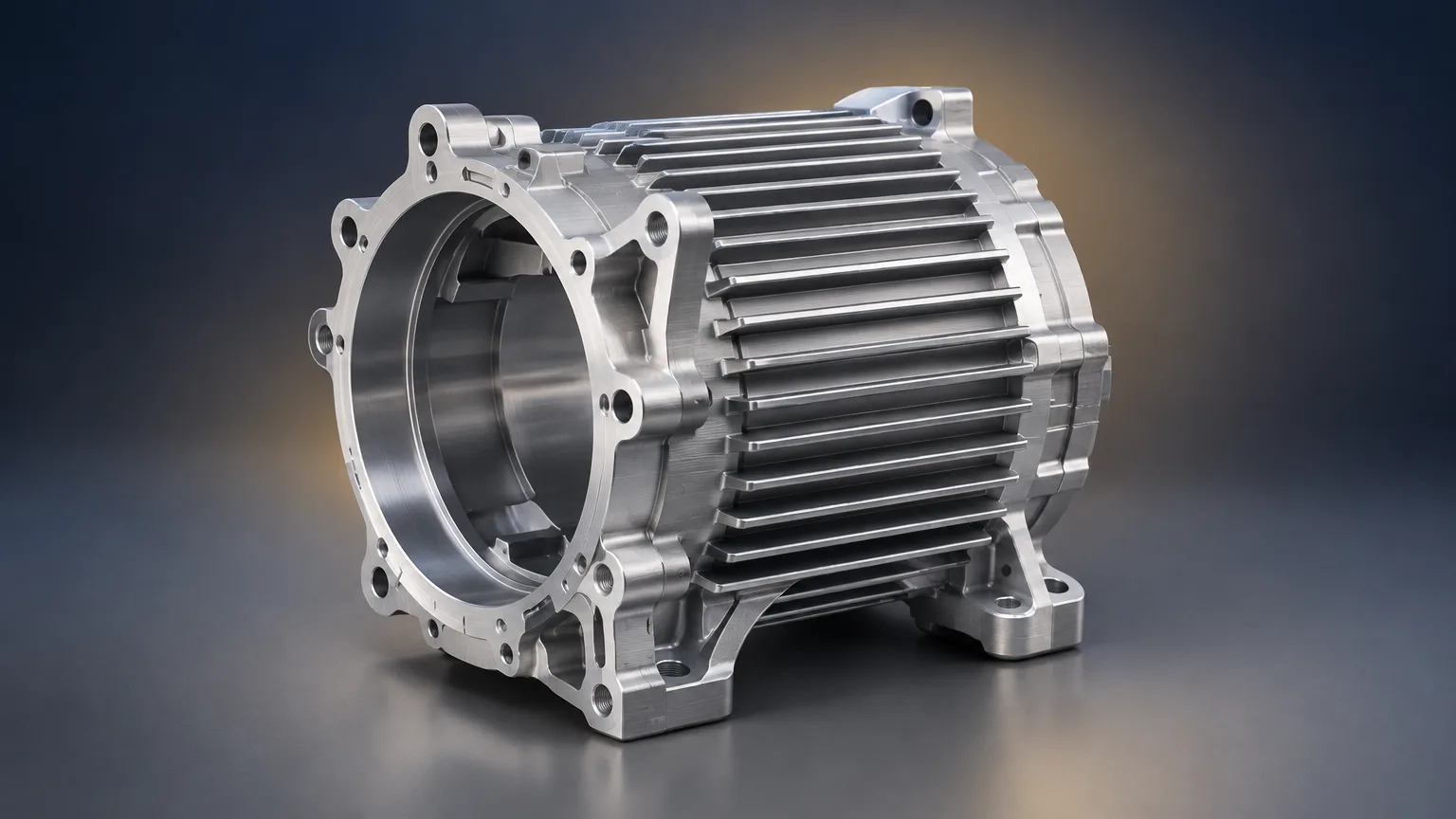
EV components manufacturing is the production of electric vehicle parts such as battery enclosures, structural brackets, housings and busbars. Sourcing Repository is a manufacturing broker: it collects quotes from a vetted supplier network, manages quality and inspection, and delivers parts. It does not own factories or machines.
What EV Components Manufacturing Covers
EV components manufacturing is the production of parts and assemblies used in electric vehicles, including battery enclosures, structural brackets, housings, busbars and thermal-management parts. It uses the same core routes as broader automotive parts manufacturing: metal forming, casting, forging, machining, plastics processing, joining, finishing and inspection.
This service is for engineers, procurement managers and founders who need custom electric vehicle parts manufacturing but do not want to qualify and manage several suppliers themselves. It fits prototype builds, low-volume programs and production volumes where a drawing, material and inspection requirement can be defined.
When to use this service
- You have a CAD model or drawing and need quotes from capable suppliers.
- You need an EV battery enclosure or structural part in aluminum, steel or plastic.
- You want one contact for quoting, quality and delivery instead of managing each process separately.
- You need prototype parts first and a production route later.
- You need inspection evidence and documentation tied to the part number.
EV Components Manufacturing Process Steps
EV components manufacturing at SR runs through eight steps, from drawing review to delivery, the same route used in auto parts manufacturing and car parts manufacturing. Each step has a defined output tied to a drawing revision.
- 1. Requirements review Send CAD, drawing, revision, material, finish, tolerances, quantity, delivery location and inspection needs. SR flags missing requirements before quoting.
- 2. Process route selection Part geometry, volume and tolerance drive the route. CNC machining suits prototypes and low volumes; stamping, die casting, forging and injection molding suit higher volumes. Assembly and joining are added for multi-piece parts.
- 3. Supplier matching and quoting SR routes the package to vetted suppliers whose process, material and capacity fit the part and consolidates the quotes into one comparison. Quote turnaround is typically 5-7 working days.
- 4. Award and pre-production planning You approve the supplier and route. Tooling, fixtures, gauges, control plan and inspection method are agreed before production. For OEM and Tier 1 supplier programs, PPAP submission level and evidence are confirmed here.
- 5. First article and approval First articles are measured against the drawing. Dimensional results, material certificates and required PPAP elements are reviewed before volume release.
- 6. Production and in-process control Production runs under the agreed control plan with in-process checks on critical features. Suppliers operating under IATF 16949 apply defect prevention and process control as a system requirement.
- 7. Final inspection and documentation SR manages final dimensional, visual and finish checks, plus document review against the part number and revision.
- 8. Packing and delivery Parts are packed to protect finishes and features, then shipped with the inspection records that apply to the order.
Materials and Finishes for Electric Vehicle Parts Manufacturing
Material selection for electric vehicle parts is driven by weight, stiffness, thermal behavior, corrosion exposure and joining method. Grades for these automotive components must be specified on the drawing; the table lists the material families and their typical uses.
| Material | Properties | Typical uses |
|---|---|---|
| Aluminum alloys | Low density, corrosion resistance, machinability, castability | Brackets, housings, wheels, engine and transmission components |
| Carbon and alloy steel | High strength, fatigue resistance, hardness; weldability varies by grade | Stampings, shafts, gears, suspension, fasteners, structural parts |
| Magnesium alloys | Very low density, good castability; corrosion protection often required | Lightweight housings, brackets, seat frames, instrument-panel structures |
| Zinc alloys | Good die-castability, dimensional repeatability, surface finish | Handles, latches, housings, small hardware |
| Polypropylene | Low density, chemical resistance, good processability | Trim, ducts, covers, containers, molded interior parts |
| Polyamide | Good strength, wear resistance, temperature capability; moisture affects dimensions | Gears, clips, brackets, connectors, under-hood parts |
| ABS | Impact resistance, dimensional stability, attractive molded surfaces | Interior trim, bezels, housings, instrument-panel parts |
Finishes and secondary operations
- Anodizing and conversion coating for aluminum parts exposed to moisture or road environment.
- Powder coating and e-coating for steel brackets and structural parts.
- Zinc plating and passivation for fasteners and small hardware.
- Machined sealing faces and gasket grooves on battery enclosures, controlled for flatness.
- Welding, riveting, fastening, bonding or overmolding to combine components.
- Laser marking or labels for part number and traceability.
Specs and Tolerances for EV Battery Enclosure and Structural Parts
Tolerances for an EV battery enclosure or structural part are set by the drawing, not by a universal default. A typical drawing callout is written like ±0.005 in (±0.13 mm), but the supplier must confirm capability for each critical feature. The table lists the parameters to define and the standard that applies to each.
| Parameter | Typical range | Standard or source |
|---|---|---|
| Dimensional tolerance | Unverified; depends on process, size, material, and drawing | Part drawing and supplier capability study required |
| Geometric tolerancing | Unverified; specify datum scheme and GD&T callouts | ASME Y14.5 or applicable ISO GPS standard; exact edition unverified |
| Surface roughness | Unverified; specify Ra or other required parameter | Drawing requirement; applicable surface-texture standard unverified |
| Hardness and strength | Unverified; defined by material and heat-treatment specification | Material specification and test method required |
| Capability | Cp/Cpk targets are customer- and feature-specific | IATF 16949, control plan, SPC, and customer-specific requirements |
| Part approval | Submission level and evidence vary by customer | AIAG PPAP and applicable customer-specific requirements |
Size limits and lead time
Size limits depend on the selected process and the supplier's equipment, so they are confirmed per part. Lead time depends on tooling, material availability, finishing and inspection scope. Part approval rules come from the customer, whether an OEM or a Tier 1 supplier.
DFM Tips That Lower EV Components Manufacturing Cost
Design decisions made before quoting have more effect on cost than supplier negotiation. These seven tips reduce tooling, cycle time and inspection burden without weakening the part.
- Specify the tightest tolerance needed for function, not the tightest possible tolerance. Extra precision adds machining time and inspection cost on every part.
- Use a clean datum scheme and consistent GD&T callouts. Ambiguous datums force suppliers to add stock, add operations or quote conservatively.
- Keep wall thickness uniform in cast and molded parts. Sharp transitions cause porosity, sink and distortion that drive scrap.
- Design for the chosen process. Stamping needs simple 3D forms; die casting needs draft and controlled porosity; forging needs machining allowance.
- Standardize materials and finishes across the part family. Fewer grades and coatings reduce setup, minimum material buys and inventory risk.
- Consolidate parts into one assembly where joining is reliable. Fewer part numbers reduce tooling, handling and traceability cost.
- Define inspection scope up front. Naming the critical features and the evidence required avoids full-dimensional inspection on non-critical dimensions.
Typical EV Components Manufacturing Applications
EV components manufacturing covers battery-system, structural, thermal and interior parts. The examples below are typical of the parts quoted through this service.
| Part or assembly | Typical process | Industry |
|---|---|---|
| EV battery enclosure and cover | Die casting, stamping, machining, welding | Electric vehicles, energy storage |
| Battery tray, module frame and busbar | Stamping, machining, extrusion, joining | Electric vehicles, battery manufacturing |
| Structural bracket and mounting plate | Stamping, forging, machining | Automotive, commercial vehicles |
| Motor and inverter housing | Die casting, CNC machining | Electric vehicles, industrial drives |
| Thermal-management and cooling parts | Machining, casting, brazing | Automotive, EV thermal systems |
| Connector, clip and small hardware | Injection molding, die casting, stamping | Automotive, electronics |
| Interior trim, bezel and panel | Injection molding, finishing | Automotive, aftermarket |
| Prototype and performance parts | CNC machining, additive manufacturing | Motorsport, aftermarket, R&D |
Prototype versus production routes
Prototype route
- CNC machining and additive manufacturing minimize tooling
- Short lead time, higher piece cost
- Useful for fit checks and design validation
- Material and process may differ from production
Production route
- Stamping, die casting, forging or injection molding
- Tooling investment amortized over volume
- Optimized for repeatability, cycle time and capability
- Validated under the agreed control plan
What Drives the Cost of Custom Auto Parts
There is no reliable universal price for custom auto parts. Cost is built from the part definition and the route chosen to make it, so two parts with the same envelope can differ substantially.
- Geometry and size: complex 3D forms, deep pockets and large envelopes need more operations or larger equipment.
- Material: alloy, grade and form (plate, sheet, billet, casting) set the base material cost and the scrap rate.
- Process route: machining favors low volume; stamping, die casting, forging and molding favor volume after tooling investment.
- Tooling and fixtures: dedicated dies, molds and gauges are a fixed cost that is amortized over quantity.
- Tolerance and surface finish: tighter tolerances and finer finishes add cycle time and inspection.
- Finishing and coating: anodizing, plating, powder coating and e-coating add process steps and handling.
- Inspection and documentation: capability studies, PPAP evidence and full-dimensional reports add engineering time.
- Quantity and repeatability: setup cost is spread over the order quantity; low volumes carry a higher unit share.
- Logistics and packaging: part size, protection needs and delivery location affect total landed cost.
Why Order EV Components Through Sourcing Repository
For EV components manufacturing, Sourcing Repository is a manufacturing broker: it does not own factories or machines, but collects quotes from a vetted network of automotive component manufacturers, manages quality and inspection, and delivers parts to your drawing.
- Vetted supplier network: suppliers are matched to the process, material and volume the part requires.
- One contact: quoting, technical questions, quality issues and delivery run through a single point of contact.
- Quote comparison: quotes are consolidated so you compare routes and scope, not just numbers.
- Quality and inspection managed: first article, in-process and final inspection are coordinated against the drawing revision.
- Documentation: material certificates and inspection records are collected for the order.
Send your drawing and quantity to start an RFQ. SR reviews the package, routes it to matched suppliers and returns a consolidated quote, typically within 5-7 working days.
Have a drawing to quote?
Upload it with quantity and material to start a quote.
FAQ
Common questions
How much do custom auto parts cost?
No reliable universal price exists. Cost depends on geometry, material, process, tooling, quantity, tolerance, finishing, inspection and logistics. The route matters as much as the part: a machined prototype and a die-cast production part with the same envelope carry very different cost structures.
What information is needed for a quote?
Provide CAD, drawing, revision, material, finish, tolerances, quantity, delivery location, inspection needs and intended application. Naming the critical features and the evidence required speeds up quoting and avoids assumptions about scope.
Does IATF 16949 certification guarantee part quality?
No. IATF 16949 defines a quality-management system for automotive production, service and accessory parts. Part conformity still depends on the specifications, control plan, inspection and customer-specific requirements applied to that part number.
What tolerance should be requested?
Request the tightest tolerance needed for function, not the tightest possible tolerance. The supplier should confirm capability for each critical feature, and capability targets are customer- and feature-specific rather than a single default value.
Related resources
Keep reading
Ready when you are
Get EV components manufacturing quotes
Send CAD, drawing, material, quantity and inspection requirements. SR routes the package to matched suppliers and returns a consolidated quote, typically in 5-7 working days.
Your files stay confidential. NDA available on request.