
Metal stamping explained
Definition, precision stamping and what buyers mean by metal stampings.
Manufacturing guide
Metal stamping is a press-based cold-forming process that cuts and forms sheet or coil stock with dies. This guide covers how it works, die types, materials, tolerances and cost drivers.
What Is Metal Stamping? ProgressivevsTransfer Dies
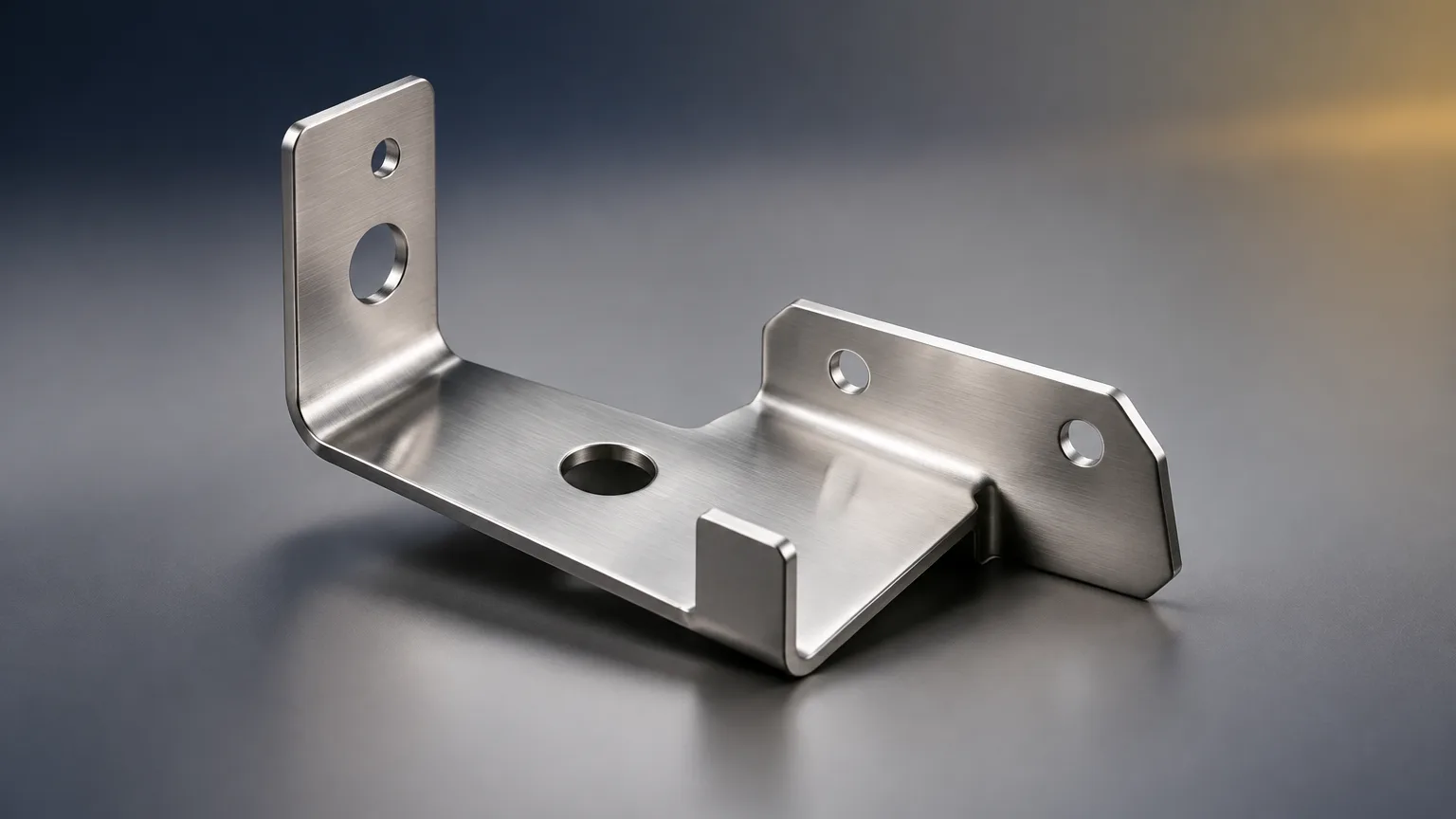
Definition, precision stamping and what buyers mean by metal stampings.
Drawing review, strip layout, die build, stamping, inspection.
Progressive vs transfer dies, compound, deep draw, fineblanking.
Low-carbon steel, stainless, aluminum, copper and brass.
Where stamping wins and where alternatives fit better.
Hole, bend, flatness and burr guidance with typical values.
Automotive, appliance, electronics, medical and industrial parts.
Cost drivers, RFQ inputs and how to request quotes.
Metal stamping is a press-based cold-forming process that cuts and forms sheet or coil stock with dies. Progressive dies run multiple stations in one pass for high volumes, while transfer dies move a part between separate stations. Precision metal stamping adds controlled tooling, inspection and process capability for repeatable parts.
Metal stamping is a press-based cold-forming process that cuts and forms sheet or coil stock with dies. A die is a tool set that holds the cutting and forming geometry; the press supplies force and stroke. Each stroke can blank, pierce, bend, draw or trim, depending on the die design.
Precision metal stamping uses controlled tooling, fixturing, inspection and process capability to produce repeatable parts. Achievable tolerances depend on material, thickness, geometry, tooling and operation, so no single tolerance applies to every part.
Buyers often use the term metal stampings for the finished parts themselves: brackets, clips, contacts, housings and similar thin-sheet components. The process is usually chosen when a flat or formed sheet part must be produced in repeatable volume at a low unit cost after tooling is amortized.
Metal stamping works by feeding sheet or coil stock into a press, where a die cuts and forms the material in one or more strokes. The sequence below reflects a typical tooling-to-production path; the exact steps depend on part geometry and volume.
Metal stamping dies vary by how many operations they perform and how the part moves through the press. Progressive and transfer dies are the two main high-volume routes; single-operation, compound, deep drawing, fineblanking and prototype stamping cover other needs.
| Route | Pros | Cons |
|---|---|---|
| Single-operation or compound die | Lower tooling complexity; suitable for simple blanks or multiple cuts in one stroke. | Less efficient for complex parts; additional operations may be required. |
| Progressive-die stamping | Multiple operations occur across stations; efficient and repeatable for high volumes. | Higher tooling cost, longer design lead time, and greater sensitivity to strip layout. |
| Deep drawing | Produces cups, shells, and housings from blanks. | May require multiple draws, lubrication, draw beads, and careful control of thinning and wrinkling. |
| Fineblanking | Improves edge quality and dimensional control for functional profiles. | Requires specialized presses and tooling; generally costs more than conventional blanking. |
| Prototype stamping | Lower commitment for design validation; can use soft or simplified tooling. | Usually has lower production rate and may not replicate final progressive-die behavior. |
A progressive die keeps the strip connected and performs operations at successive stations in one pass. A transfer die separates the part and moves it between stations or presses, which can suit larger or more complex parts. The choice depends on volume, geometry, press capacity and tooling budget.
Metal stamping uses sheet and coil stock selected for formability, strength, corrosion resistance and cost. The material grade and temper must be specified on the drawing, because they affect bend radius, springback, tooling wear and inspection.
| Material | Grade | Properties | Typical uses |
|---|---|---|---|
| Low-carbon steel | ASTM/AISI grade unverified; specify applicable sheet standard and temper | Good formability, weldability, and relatively low material cost. | Brackets, clips, covers, appliance and automotive stampings. |
| Stainless steel | 304 or 316; source grade certification required | Corrosion resistance; higher work hardening and forming force than mild steel. | Medical, food-processing, chemical, appliance, and corrosion-exposed parts. |
| Aluminum | 5052 or 6061; temper must be specified | Low density and corrosion resistance; springback and bend-radius control are important. | Lightweight housings, brackets, electronics, transportation, and aerospace parts. |
| Copper or brass | Grade unverified; specify alloy and temper | High electrical or thermal conductivity; brass offers good machinability and formability. | Terminals, contacts, connectors, springs, and conductive shields. |
Metal stamping is efficient for repeatable thin-sheet parts once tooling is in place, but it has real limits. The balance below helps decide whether stamping or an alternative process fits the part.
| Alternative | Key differences |
|---|---|
| Laser cutting | Stamping generally offers faster repeat production after tooling; laser cutting avoids dedicated dies and is often better for prototypes or varied low volumes. |
| CNC machining | Stamping is usually efficient for thin-sheet volume parts; machining offers greater 3D flexibility but removes more material and may cost more per part. |
| Waterjet cutting | Waterjet avoids heat-affected zones and hard tooling but is generally slower for repetitive high-volume sheet production. |
| Casting | Stamping starts from sheet and suits thin-wall parts; casting handles volumetric geometry but requires different tooling, alloys, and finishing. |
| Metal forming without cutting | Stamping can combine cutting and forming in one die; dedicated bending may be preferable for low-volume parts with simple bends. |
Good stamping design keeps features within process capability and avoids unnecessary cost. Use the typical values below as starting points and confirm them with the supplier for the specific material and tooling.
| Parameter | Typical range | Source |
|---|---|---|
| Typical conventional dimensional tolerance | ±0.005 in (±0.127 mm) | Fictiv metal stamping guide. |
| Specialized precision tolerance | Approximately ±0.001 in (±0.025 mm) | Fictiv; requires suitable tooling and process control. |
| Hole diameter | About 1.0–1.2× material thickness; verify by grade, tool, and feature function | MFGABC and Eigen Engineering guides. |
| Hole-to-edge distance | About 1.5× material thickness minimum | MFGABC guide. |
| Inside bend radius | About 0.5–1.0× thickness for mild steel; 1.5–2.5× for aluminum | MFGABC guide; actual value depends on alloy and temper. |
| Flatness | Avoid tighter than 0.003 in/in unless functionally required | Eigen Engineering guide. |
| Burr height | Example guide values: 0.004 in (0.10 mm) maximum conventional; 0.002 in (0.05 mm) fineblanked | MFGABC guide. |
Metal stampings appear wherever thin-sheet parts must be produced repeatably at volume. Automotive is a major user, alongside appliances, electronics, medical devices and industrial equipment.
The process suits OEM assemblies that need consistent fit and finish across large batches. Where volumes are low or geometry changes often, laser cutting or CNC machining may be more practical.
Metal stamping cost is driven by material, part geometry, tolerance, tool complexity, volume, press capacity, scrap, secondary operations, inspection and tooling amortization. Tooling is usually the largest upfront item, while unit cost falls as volume spreads that tooling across more parts.
A complete RFQ should include controlled drawings, 3D CAD, material grade and temper, thickness, annual and release volumes, tolerances, surface finish, secondary operations, inspection requirements, packaging and delivery location. Sourcing Repository collects quotes from a vetted supplier network, manages quality and inspection, and delivers parts; it does not own factories or machines. Quote turnaround is typically 5–7 working days.
Upload it with quantity and material to start a quote.
FAQ
The main drivers are material, part geometry, tolerance, tool complexity, volume, press capacity, scrap, secondary operations, inspection, and tooling amortization. Tooling is usually the largest upfront cost, while unit price falls as volume increases.
Progressive stamping is generally most attractive when volume can amortize dedicated tooling and the geometry supports multiple repeatable stations. The supplier should compare tooling and unit cost against alternative routes before committing.
Yes. Suppliers may use soft, short-run, compound, or modified tooling for prototype metal stampings. Confirm whether prototype geometry, material behavior, and tolerances will represent final production tooling.
Provide controlled drawings, 3D CAD, material grade and temper, thickness, annual and release volumes, tolerances, surface finish, secondary operations, inspection requirements, packaging, and delivery location. Clear inputs reduce quoting time and avoid assumptions.
Related resources
Ready when you are
Send drawings, material and volumes. Sourcing Repository collects quotes from a vetted supplier network, manages quality and inspection, and delivers parts. Typical quote turnaround is 5–7 working days.
Your files stay confidential. NDA available on request.