
Quick verdict
316 for chlorides, 304 for general service.
Materials comparison
Both are austenitic chromium-nickel stainless steels with similar strength and fabrication behavior. The deciding difference is molybdenum: 316 adds 2-3%, which improves resistance to chloride pitting and crevic.
Stainless Steel 304vs316
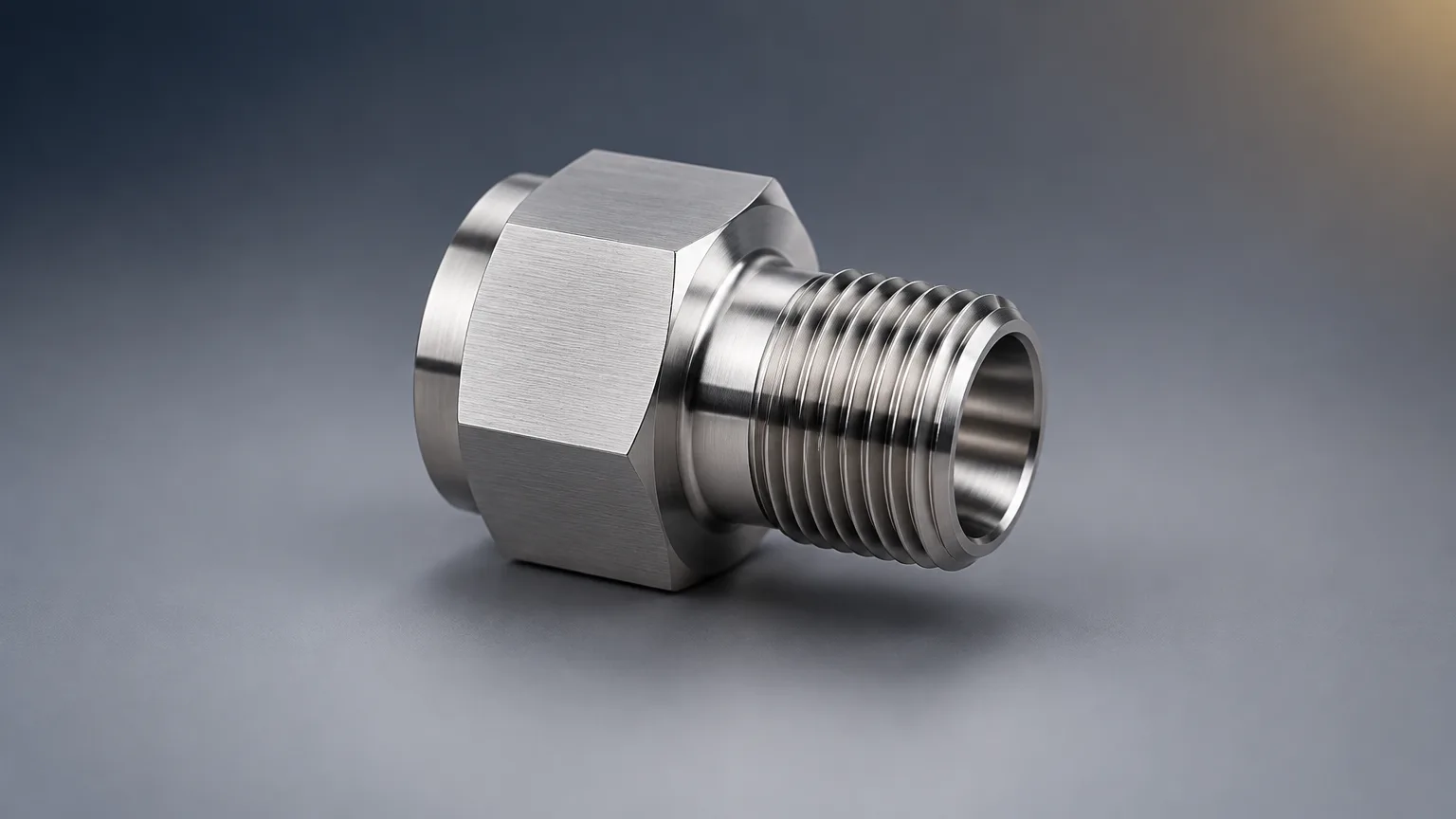
316 for chlorides, 304 for general service.
Chemistry, strength, corrosion and cost criteria.
Strengths, limits and best uses.
Strengths, limits and best uses.
Decision rules for mild service.
Decision rules for chloride exposure.
Relative differences and lifecycle cost.
Final guidance and how to request a quote.
304 vs 316 stainless steel is a comparison of two austenitic chromium-nickel grades that differ mainly in molybdenum. 316 contains about 2-3% molybdenum for better chloride pitting and crevice resistance; 304 specifies none. Annealed strength and fabrication behavior are broadly similar in both grades.
Specify 316 when the part sees chlorides: marine hardware, coastal structures, brine service, chemical or pharmaceutical equipment. Specify 304 for general fabrication, kitchen equipment, architectural parts, tanks and tubing in mild or indoor service. The two grades share the same cited annealed minimum yield of 30 ksi [205 MPa], tensile strength of 75 ksi [515 MPa] and elongation of 40%, so the choice is almost always about corrosion environment and cost, not strength.
The table below compares 304 and 316 on the criteria that most often decide a specification: chemistry, corrosion resistance, mechanical properties and cost drivers.
| Criterion | 304 stainless steel | 316 stainless steel |
|---|---|---|
| Chromium | 18-20% | 16-18% |
| Nickel | 8-10.5% | 10-14% |
| Molybdenum | None specified | 2-3% |
| Chloride pitting resistance | Lower; not intended for aggressive chloride service | Higher; molybdenum improves pitting and crevice resistance |
| Yield strength, annealed | Minimum 30 ksi [205 MPa] | Minimum 30 ksi [205 MPa] |
| Tensile strength, annealed | Minimum 75 ksi [515 MPa] | Minimum 75 ksi [515 MPa] |
| Elongation | Minimum 40% | Minimum 40% |
| Thermal expansion | Approximately 9.6 microinch/in/degF [17.3 um/m degC] | Approximately 8.9 microinch/in/degF [16.0 um/m degC] |
| Typical uses | Food equipment, architectural parts, tanks, tubing, general fabrication | Marine hardware, chemical and pharmaceutical equipment, brine and coastal service |
| Relative cost | Generally lower alloy cost and broad availability | Usually higher due to molybdenum and higher nickel |
Density is approximately 0.289 lb/in3 [8.0 g/cm3] for both grades in the cited comparison. Always confirm final values against the product datasheet and the applicable specification, such as ASTM A240 for flat-rolled product.
In the 304 vs 316 stainless steel decision, 304 is the general-purpose austenitic grade, with roughly 18-20% chromium and 8-10.5% nickel and no specified molybdenum. It offers lower alloy cost and broad availability across sheet, plate, bar and tubing.
In 304 vs 316 stainless steel selection, choose 304 for general sheet, plate, bar and tubing work, food-processing equipment, architectural components and indoor or mildly corrosive service. Where parts will be welded and corrosion resistance at the weld matters, the low-carbon 304L variant is commonly specified.
In 304 vs 316 stainless steel, 316 is an austenitic grade with approximately 16-18% chromium, 10-14% nickel and 2-3% molybdenum. The molybdenum addition is what separates it from 304 in corrosive service.
Specify 316 for chloride-exposed components, marine and coastal hardware, chemical and pharmaceutical equipment, and brine service. Where welded corrosion resistance is critical, the low-carbon 316L variant is commonly selected for process equipment, piping and hygienic assemblies.
304 vs 316 stainless steel is mainly a corrosion-resistance decision. 316 adds about 2-3% molybdenum for chloride resistance, while annealed strength is the same, so choose 316 only when chloride exposure justifies the added cost.
Choose 304 when the service environment is mild and cost or availability is the deciding factor. The decision rules below cover the common cases.
Choose 316 whenever chlorides or reducing environments are present, or when the cost of a corrosion failure is higher than the alloy premium.
316 is commonly selected for marine and coastal service because molybdenum improves chloride resistance, but seawater service still requires application-specific design and inspection. Grade selection alone is not a complete approval.
316 usually costs more than 304 because it contains 2-3% molybdenum and generally more nickel. Exact 304-to-316 price premiums are market-dependent and are not fixed here; they move with alloy surcharges, mill availability and order timing.
Delivered cost is not just the mill price. Availability, certification requirements, country of origin, freight, tariffs and lead time all affect what you pay. Corrosion environment can dominate lifecycle cost: a 304 failure in chloride service may outweigh its lower purchase price many times over.
For a specific part, the practical answer is to quote both grades against the same drawing, quantity and delivery requirement, then compare delivered cost rather than mill price alone.
Default to 316 when chlorides, brine, seawater or reducing chemicals are present, and default to 304 for general fabrication, food equipment and mild indoor service. If the environment is borderline, list the chloride source, operating temperature, cleaning chemicals and required service life before deciding.
Sourcing Repository collects quotes from a vetted supplier network, manages quality and inspection, and delivers parts. Typical quote turnaround is 5-7 working days. Send your drawing, grade preference and quantity to start the comparison.
Upload it with quantity and material to start a quote.
FAQ
Neither grade is universally better. Choose 316 when chloride exposure is meaningful, and choose 304 where the environment is less aggressive and lower cost or wider availability matters more. The right grade follows the service environment, not a general ranking.
Yes, 316 is commonly called the marine grade of stainless steel because its about 2-3% molybdenum improves chloride resistance. It is not immune, though. Seawater service still needs application-specific design, inspection and attention to crevices and surface finish.
Usually yes, technically, because annealed strength and fabrication behavior are broadly similar. However, 316 typically costs more, and the added alloy cost may not pay off in mild service. Confirm forming, welding, dimensions, certifications and procurement availability before switching.
Not necessarily. The typical cited annealed minimums are the same for both grades: about 30 ksi [205 MPa] yield and about 75 ksi [515 MPa] tensile. Actual strength depends on product form, heat treatment and cold work.
Related resources
Ready when you are
Send your drawing, grade preference and quantity. Sourcing Repository collects quotes from a vetted supplier network, manages quality and inspection, and delivers parts. Typical quote turnaround is 5-7 working days.
Your files stay confidential. NDA available on request.