
Custom Plastic Injection Molding
Injection Molding Cost: Custom Parts, Tooling and Quotes
Injection molding cost is the combined expense of part design, mold design and fabrication, resin, machine time, labor, quality control, finishing, packaging and logistics.
- Vetted supplier network
- Quote turnaround 5-7 working days
- Inspection managed by SR
- Automotive-first experience
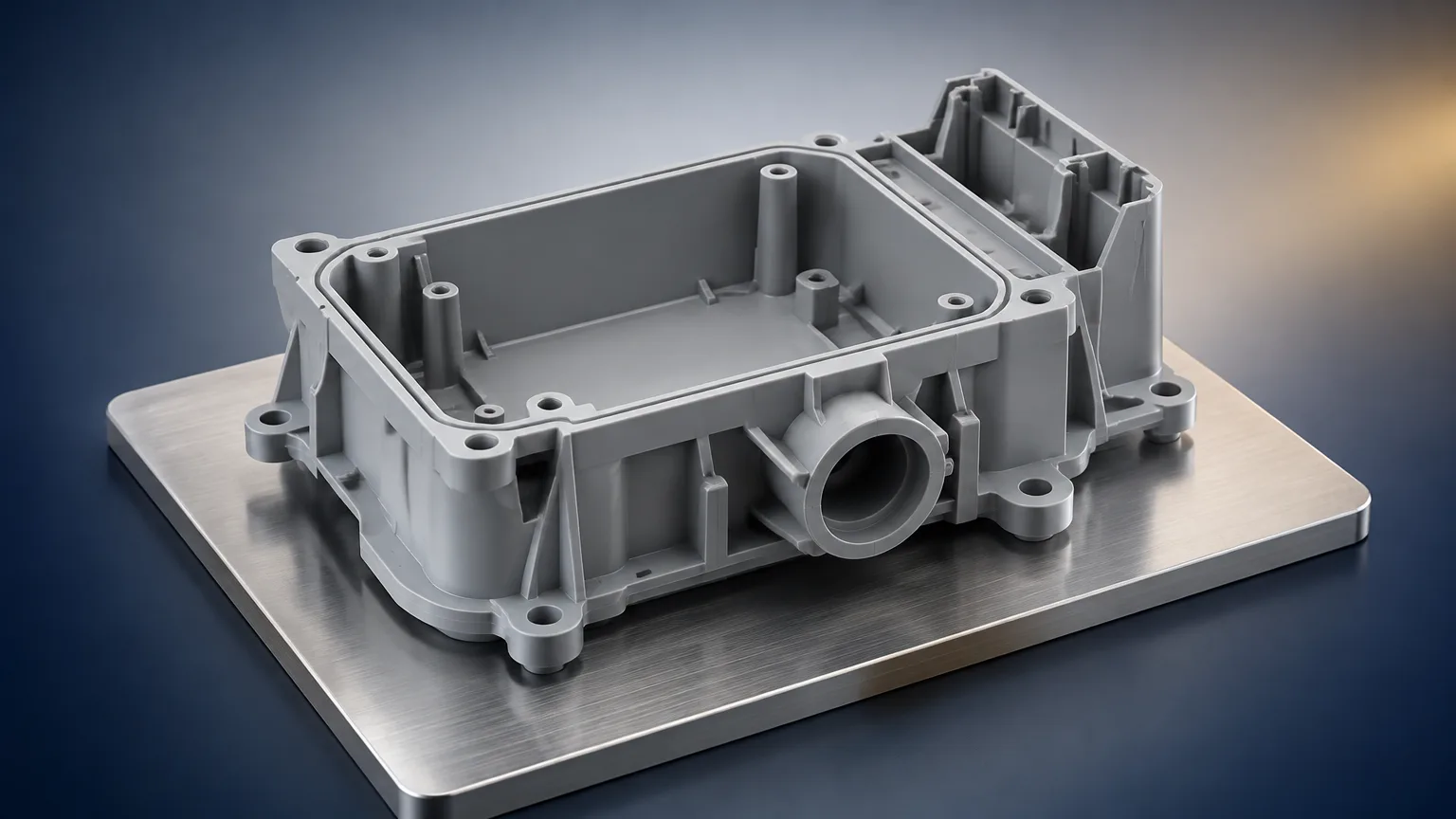
- Design screened firstDesigns screened before mold construction
- Tooling class matchedPrototype to hardened steel options
- Inspection managedQuality and inspection handled by SR
Injection molding cost is the combined expense of part design, mold design and fabrication, resin, machine time, labor, quality control, finishing, packaging and logistics. Mold tooling is usually the major fixed cost, while material and production costs vary with quantity. SR collects quotes from a vetted supplier network, manages quality and inspection, and delivers parts.
What custom injection molding is and when to use it
Custom injection molding is a manufacturing process that injects molten resin into a machined mold cavity to form a shaped plastic part. It suits engineers, procurement managers and founders who need repeatable plastic components at volumes where tooling investment pays back.
Use it when a part needs consistent geometry, cosmetic control and a defined resin grade across many units. For very low volumes or early concept checks, prototype tooling is usually the lower-risk starting point.
Injection molding process steps
The process runs from design review through tooling, sampling and production, with inspection gates between stages. Each step is standard for custom injection molding programs.
- 1. Design and DFM review Review CAD, wall thickness, draft, radii, gate location and cosmetic zones. Screening designs before mold construction is the cheapest place to remove injection molding cost.
- 2. Mold design and tooling selection Choose tooling class: prototype, aluminum production, pre-hardened steel or hardened steel. Cavity count, runner type and finish are fixed here.
- 3. Mold fabrication Machine the cavity and core, then finish to the specified SPI grade. Mold cavity machining tolerance is typically ±0.005 in [±0.127 mm], a service capability rather than a universal standard.
- 4. Sampling and validation Run first articles, check dimensions, shrinkage and cosmetics, and confirm the resin grade. Additional shrinkage allowance is typically reported at about ±0.002 in/in [±0.002 mm/mm] and must be confirmed per material.
- 5. Production molding Run the validated tool at the agreed cycle, monitoring process parameters and part weight.
- 6. Inspection, finishing and delivery Inspect to the drawing, apply finishing or assembly if required, then pack and ship. SR manages quality and inspection across the program.
Materials and finishes for custom injection molding
Injection molding cost is the combined expense of design, tooling, resin, machine time, labor, finishing and quality control. Tooling is usually the largest fixed cost, while material and production costs vary with quantity.
Resin grade and mold finish are two of the largest levers in a quote. The table lists common materials; exact properties depend on the specific grade.
| Material | Grade | Properties | Typical uses |
|---|---|---|---|
| ABS | Grade unverified | Rigid, impact-resistant, easily molded; exact values depend on grade. | Housings, consumer products, automotive and industrial trim. |
| Polypropylene | Grade unverified | Low density, chemical resistance, fatigue resistance; exact values depend on grade. | Living hinges, containers, automotive parts, medical disposables. |
| Polycarbonate | Grade unverified | High impact strength and transparency; exact values depend on grade. | Lenses, guards, electrical housings, transparent components. |
| Acrylic | Grade unverified | Transparency and polishability; exact values depend on grade. | Optical covers, displays, light pipes, cosmetic components. |
| Engineering resins | Specific grade unverified | Tighter molded tolerances may be achievable than with general-purpose resins, but supplier capability and geometry govern results. | Precision industrial, electrical, automotive and medical parts. |
Mold surface finishes
| SPI finish | Surface roughness Ra | Typical character |
|---|---|---|
| SPI A-1 | Ra 0.012-0.025 µm [0.00047-0.00098 mil] | High-gloss, optical-grade polish |
| SPI B-1 | Ra 0.05-0.10 µm [0.002-0.004 mil] | Semi-gloss, fine polish |
| SPI D-3 | Ra 3.20-18.0 µm [0.126-0.709 mil] | Matte or textured as-machined look |
Injection molding specifications and tolerances
Published tolerances are supplier capabilities, not guarantees. Actual results depend on resin, geometry, shrinkage, tooling, process control and measurement method, and tighter tolerances raise injection molding cost.
| Parameter | Typical range | Standard or source |
|---|---|---|
| Mold cavity machining tolerance | ±0.005 in [±0.127 mm] | Xometry service capability; not a universal standard. |
| Additional shrinkage allowance | ±0.002 in/in [±0.002 mm/mm] reported | Xometry service capability; material-specific shrinkage must be confirmed. |
| General molded-part tolerance | ±0.004 in [±0.100 mm] reported | Supplier technical table; not universally applicable. |
| Engineered-resin tolerance | ±0.001 in [±0.025 mm] reported | Supplier technical table; geometry and resin dependent. |
| Draft angle | 0.5° minimum; 3°-5° for textured surfaces | Supplier technical table; confirm with mold designer. |
Tooling routes and what they change
| Tooling route | Trade-off |
|---|---|
| Prototype mold | 3D-printed molds can cost about $100; aluminum molds for 1,000-5,000 parts are reported at $2,000-$5,000. Lower life and capability. |
| Aluminum production mold | Fast machining and relatively low tooling cost. Less durable than hardened steel for high shot counts; exact life is unverified. |
| Pre-hardened steel mold | Good balance of durability, cost and machinability. Higher tooling cost than aluminum; mold-life figures vary by class and are unverified. |
| Hardened steel mold | Suited to high-volume production and demanding wear. Higher machining, heat-treatment and finishing costs; complex molds can exceed $100,000. |
| Multi-cavity mold | Reduces piece cost at adequate volume. Raises initial tooling cost and balancing, validation and maintenance complexity. |
| Hot-runner mold | Can reduce runner scrap and support faster cycles. Adds manifold, valve, controller, maintenance and troubleshooting costs. |
Design tips that lower injection molding cost
Most cost is locked in before the mold is cut. These DFM moves reduce tooling complexity, cycle time and scrap.
- Keep wall thickness uniform and as thin as the resin allows; thick sections add cycle time and sink risk.
- Add draft of at least 0.5°, and 3°-5° on textured surfaces, so parts eject cleanly.
- Avoid undercuts and side actions where possible; each one adds tooling cost and maintenance.
- Design generous radii at corners to improve flow and reduce stress and warpage.
- Place gates and weld lines away from cosmetic and structural zones.
- Specify the coarsest SPI finish that meets the part's function; A-grade polish is expensive.
- Match cavity count to realistic annual volume rather than optimistic forecasts.
Typical applications for custom injection molding
Injection molding covers small precision components through large housings, in automotive and industrial programs especially.
- Automotive: interior trim, clips, connectors, under-hood brackets, sensor housings.
- Industrial: equipment housings, gears, covers, fluid-handling components.
- Electrical: enclosures, terminal blocks, insulating parts.
- Medical and lab: disposables, trays, device housings (grade dependent).
- Consumer: enclosures, handles, cosmetic panels, light pipes.
- Optical and display: lenses, guards, transparent covers in polycarbonate or acrylic.
Part size, resin and cosmetic requirements decide whether aluminum or steel tooling is the better fit.
What drives injection molding cost
Injection molding cost is the combined expense of part design, mold design and fabrication, resin, machine time, labor, quality control, finishing, packaging and logistics. Tooling is usually the major fixed cost; material and production costs vary with quantity.
Fixed, one-time costs
- Mold design and DFM engineering
- Cavity and core machining, heat treatment, polishing
- Multi-cavity balancing and hot-runner manifolds
- First-article validation and fixture cost
Variable, per-part costs
- Resin grade and part weight
- Cycle time and machine tonnage
- Labor, scrap rate and runner waste
- Finishing, assembly, inspection and freight
Cost levers buyers control
- Tooling class: aluminum lowers initial cost; hardened steel supports higher volume and wear.
- Cavity count: multi-cavity lowers piece cost only at sufficient volume.
- Runner type: hot runners can cut runner scrap but add equipment and maintenance cost.
- Tolerance and finish: tighter tolerances and glossier finishes raise tooling and inspection cost.
- Volume: higher annual volume spreads fixed tooling cost across more parts.
Why order custom injection molding through SR
Ordering custom injection molding through SR gives you one contact for quotes, quality and delivery, and side-by-side supplier quotes that make injection molding cost easier to compare. SR is a manufacturing broker: it owns no factories or machines and works through a vetted supplier network.
- One contact for quoting, tooling, production and delivery.
- Vetted suppliers matched to your part size, resin, volume and tooling class.
- Quality and inspection managed by SR, with first-article and production checks.
- Typical quote turnaround of about 5-7 working days from a complete RFQ.
- Design screening before mold construction to reduce rework.
Have a drawing to quote?
Upload it with quantity and material to start a quote.
FAQ
Common questions
What does an injection mold cost?
Reported ranges run from about $100 for simple 3D-printed prototype molds to over $100,000 for complex hardened steel molds. Aluminum tooling for roughly 1,000-5,000 parts is reported at $2,000-$5,000. Actual cost depends on part size, cavity count, tolerances and finish.
What is the biggest cost in molding?
Tooling is commonly the largest fixed startup cost, covering mold design, machining, heat treatment and polishing. Resin, cycle time, labor and quality costs then scale with production volume, so the per-part cost falls as volume rises.
Why do injection molding quotes differ?
Quotes differ because suppliers assume different resin grades, tooling classes, cavity counts, tolerances, finishes, validation scope, volumes, labor rates and shipping terms. Comparing line items rather than totals shows where the real differences sit.
What should an injection molding RFQ include?
Provide CAD, 2D tolerances, resin grade, annual volume, order quantity, cosmetic zones, SPI finish, color, inserts, inspection requirements, packaging and delivery terms. A complete RFQ is what allows SR to return comparable quotes in 5-7 working days.
Related resources
Keep reading
Ready when you are
Get a custom injection molding quote
Send your CAD, resin grade, annual volume and finish requirements. SR collects quotes from vetted suppliers, manages quality and inspection, and delivers parts.
Your files stay confidential. NDA available on request.