
Forging services
Cold Forging and Aluminum Forging Services
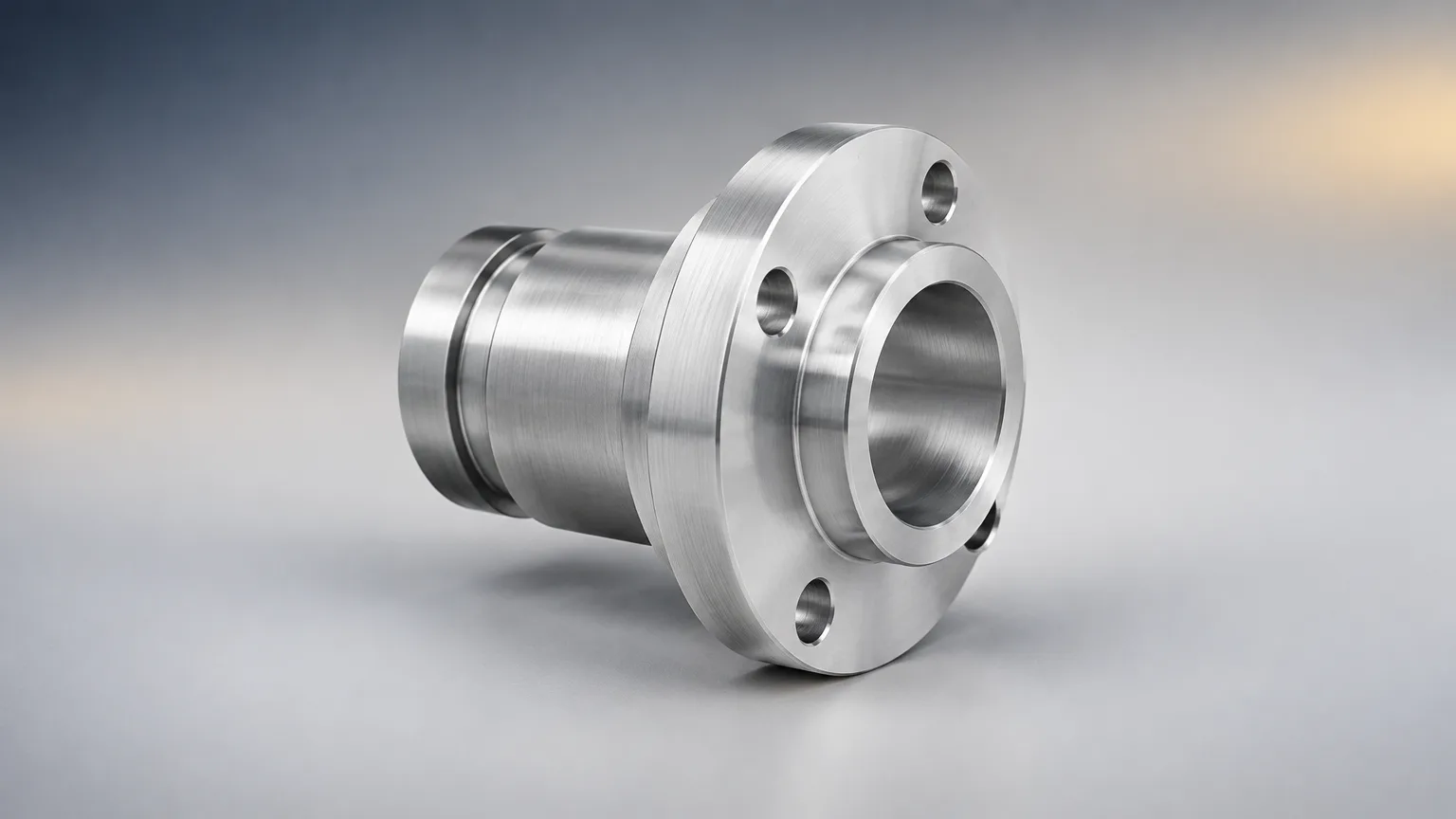
Cold forging forms metal at or near room temperature for tight dimensions and good surface finish. SR collects quotes from a vetted supplier network, manages inspection, and delivers finished parts.
- Cold forging
- Aluminum forging
- Custom forgings
- Quote in 5-7 working daysFrom a complete RFQ
- One contact, not twentySR manages the supplier network
- Inspection managedQuality and inspection handled by SR
Cold forging is a metal forming process that plastically deforms metal at or near room temperature using a press and dies. It gives excellent surface finish, good dimensional control, and high material utilization, but requires high forming loads and substantial tooling. Aluminum forging is often used for lightweight structural parts.
What cold forging is and when to use it
Cold forging is a metal forging process that plastically deforms metal at or near room temperature under compressive force, using a press and dies. Other routes are hot, warm, open-die and closed-die (impression-die) forging, plus ring rolling. ASTM A788 classifies steel forgings as cold-worked, hot-cold-worked, or hot-worked.
Use cold forging for tight dimensional control, good surface finish and efficient material use on small, high-volume parts such as fasteners, fittings and small shafts. It is less suitable for very large parts or low-ductility alloys, where hot or warm forging is usually the better route for forged steel.
Cold forging process steps, from drawing to delivered part
The cold forging process follows a defined sequence: material selection, tooling, forming, secondary operations and inspection. The drawing and the applicable forging standard set each step.
- 1. Review the drawing and application The supplier reviews geometry, alloy, tolerances, load path and any standard called out, such as ASTM A788, to confirm the practical route.
- 2. Confirm material and route Alloy, grade and temperature classification (cold-worked, hot-cold-worked or hot-worked) are fixed.
- 3. Design and build tooling Dies are designed for the part and press. Draft, parting lines and die-fill limits govern the achievable tolerances.
- 4. Prepare the stock Bar, wire or billet is cut to weight and may be annealed, coated or lubricated for the cold forming loads.
- 5. Form the part The press deforms the stock in one or more stations. High forming loads make press capacity and tooling condition important. Excess material, called flash, is trimmed afterward where the die design produces it.
- 6. Heat treat and finish Heat treatment is applied where specified, followed by trimming, shot blasting, coating or machining.
- 7. Inspect and document Visual examination is standard. Magnetic-particle testing (MT) or penetrant testing (PT) is added where required, and ultrasonic testing where specified. Mechanical testing covers tensile, elongation, reduction of area and hardness as specified.
Materials and finishes for cold and aluminum forging
Material choice drives both the forming route and the final properties. The table lists common forging materials from the fact pack; AA 6061 is the aluminum alloy listed for aluminum forging, and its properties depend on temper.
| Material | Grade | Properties | Typical uses |
|---|---|---|---|
| Carbon steel | ASTM A105 | Carbon steel forging specification for pressure-containing components; properties depend on heat treatment and section size. | Flanges, valves, fittings, and pressure piping. |
| Low-alloy steel | ASTM A182 F22 | Chromium-molybdenum alloy forging grade for elevated-temperature service. | Pressure vessels, valves, flanges, and power equipment. |
| Stainless steel | ASTM A182 F304/F316 | Corrosion-resistant austenitic stainless forging grades; exact mechanical properties depend on specification and condition. | Chemical, food, marine, pharmaceutical, and process equipment. |
| Titanium alloy | UNS R56400 / Ti-6Al-4V | High strength-to-weight ratio and corrosion resistance; verify the applicable forging specification. | Aerospace, medical, chemical, and high-performance components. |
| Nickel alloy | UNS N07718 / Alloy 718 | High-temperature strength and oxidation resistance; grade-specific heat treatment is required. | Turbines, aerospace hot sections, and energy equipment. |
| Aluminum alloy | AA 6061 | Lightweight, corrosion-resistant, and readily machinable; forging properties depend on temper. | Transportation, aerospace, structural, and general-engineering parts. |
Finishes and secondary operations
Finishes are specified on the drawing, not assumed. Common options are as-forged with scale and flash removed, shot blasted, machined on critical surfaces, coated (plating, anodizing or paint), or heat treated as specified. Cold forging gives good surface finish and dimensional control, so parts often need less machining than hot-forged equivalents.
Cold forging specs and tolerances
There is no universal forging tolerance. Dimensional tolerance is part-specific and depends on route, size, geometry, die capability, and machining allowance. The table lists the specification parameters buyers should control, with the standard or source for each.
| Parameter | Typical range | Standard or source |
|---|---|---|
| Forging temperature classification | Cold-worked, hot-cold-worked, or hot-worked | ASTM A788/A788M |
| Dimensional tolerance | Part-specific; no universal value | Specify drawing tolerances and applicable forging standard |
| Machining allowance | Part-specific; commonly added to critical surfaces | Forging design guide and supplier quotation |
| Mechanical testing | Tensile, elongation, reduction of area, and hardness as specified | ASTM A788/A788M |
| Surface examination | Visual examination; MT or PT where required | Classification guidance for steel forgings |
| Volumetric examination | Ultrasonic testing where specified | ASTM Manual 53 and applicable product specification |
Lead time is quoted per part and supplier. Factors include tooling build, material availability, heat treatment, testing, and machining. SR returns quotes within 5-7 working days of a complete RFQ, and the quoted lead time covers the full route to delivery.
Cold forging design tips that lower part cost
Most cold forging cost is set at the design stage. These rules reduce tooling, forming, and finishing cost without weakening the part.
- Keep the shape symmetrical and simple. Cold forging needs high forming loads, and complex geometry drives press capacity and tooling cost.
- Allow draft and respect die-fill limits. Plan parting lines where they will not sit on a critical surface.
- Specify tolerances only where they matter. Part-specific tolerances on non-critical features add cost with no functional gain.
- Add machining allowance only to critical surfaces. Extra stock on every surface increases weight, material use, and cycle time.
- Choose an alloy that suits the route. Cold forging needs ductility; limited-ductility alloys may push the part to warm or hot forging.
- Design for one or few forming stations. Extra stations add tooling and press time.
- State testing and inspection up front. Visual examination is standard; MT, PT, or ultrasonic testing add cost, so specify them only where required.
Typical applications for custom forgings
Custom forgings are typically used for fasteners, fittings, shafts, gears and structural parts where directional strength, fatigue resistance and material integrity matter. Cold forging suits high-volume parts with tight dimensions, while aluminum forging suits lightweight structural parts.
Typical parts
- Fasteners, bolts, and studs
- Fittings, flanges, and valve bodies
- Shafts, spindles, and pins
- Gears and structural or suspension parts
Industries
- Automotive and transportation
- Aerospace and defense
- Oil, gas, and pressure equipment
- General industrial machinery
Forging route selection
| Route | Pros | Cons |
|---|---|---|
| Cold forging | Excellent surface finish, dimensional control, and material utilization. | High forming loads; limited ductility and substantial tooling cost. |
| Warm forging | Lower force than cold forging with better accuracy than hot forging. | Narrower temperature control window and possible oxidation. |
| Hot forging | Large deformation capacity and suitability for complex steel parts. | Scale, distortion, energy use, and post-forging heat treatment can increase cost. |
| Open-die forging | Flexible for large parts, low tooling cost, and useful for custom or low-volume work. | Lower dimensional repeatability; extensive machining may be required. |
| Closed-die (impression-die) forging | Good repeatability, high production rates, and near-net shapes. | Higher die cost; draft, parting lines, and die-fill limits apply. |
| Ring rolling | Efficiently produces seamless rings with circumferential grain flow. | Requires dedicated rolling equipment and suitable ring preforms. |
What drives forging cost
Forging cost is driven by the route, the tooling, the material, and the amount of secondary work. Cold forging reduces material waste through high material utilization but requires substantial tooling and high forming loads. Hot forging carries lower tooling cost but adds scale, distortion, energy use, and post-forging heat treatment.
- Route: cold, warm, hot, open-die, closed-die, or ring rolling, each with different tooling and energy profiles.
- Tooling: die design and build, plus tooling life at the required forming loads.
- Material: alloy, grade, and stock weight, including any machining allowance left on the part.
- Forming: number of stations, press capacity, and cycle time.
- Heat treatment: normalizing, quenching and tempering, or solution treatment where specified.
- Machining: how much stock must be removed to hit drawing tolerances and surface finish.
- Inspection and testing: visual examination as standard, plus MT, PT, ultrasonic testing, and mechanical testing where specified.
- Volume and lot size: setup and tooling are spread across the production run.
Why order cold and aluminum forgings through SR
Ordering cold and aluminum forgings through SR gives you one point of contact and a vetted supplier network, because SR is a manufacturing broker, not a factory. SR collects quotes, manages quality and inspection, and delivers parts, so you do not manage separate suppliers for forging, heat treatment, machining and testing.
How to get a useful quote
Send the items below with your request. Ask for heat number traceability if you need each forging linked to its melt, material certificate, processing records, heat treatment and inspection results.
- Drawing with tolerances and surface finish.
- Alloy and grade, with the applicable forging standard.
- Annual quantity and lot size.
- Heat treatment and machining requirements.
- Testing and certification, including any MT, PT, or ultrasonic testing.
- Delivery location and required date.
Have a drawing to quote?
Upload it with quantity and material to start a quote.
FAQ
Common questions
What information should an RFQ include?
An RFQ should include the drawing with tolerances and surface finish, alloy and grade, annual quantity and lot size, forging route, heat treatment, machining needs, testing and certification requirements, and delivery location and date. Complete information lets suppliers quote accurately and reduces back-and-forth before pricing.
Can forgings be supplied fully machined?
Yes, forgings can be supplied fully machined if the supplier has machining capability or an approved machining partner. Define the datum structure, tolerances, surface finish and who is responsible for inspection, so the forged blank and the machined part are checked against the same requirements.
How are forging tolerances determined?
Forging tolerances depend on the route, part size, geometry, die capability and machining allowance. No universal tolerance applies, so specify drawing tolerances and the applicable forging standard. Critical surfaces are commonly given a machining allowance, with exact values set by part geometry and supplier quotation.
How do I get a quote for aluminum forging?
Send SR a drawing, alloy and grade, quantities, tolerances and testing needs. SR collects quotes from a vetted supplier network and typically returns them within 5-7 working days, then manages quality and inspection and delivers the parts.
Related resources
Keep reading
Ready when you are
Get a cold forging quote
Send your drawing, alloy, and quantity. SR collects quotes from a vetted supplier network, manages inspection, and returns them within 5-7 working days.
Your files stay confidential. NDA available on request.