
Automotive Parts Manufacturing
Brake Components Manufacturing for Automotive Programs
Brake components manufacturing covers the calipers, rotors and brackets that slow a vehicle. Sourcing Repository collects quotes from a vetted supplier network and manages quality and inspection.
- Brake caliper
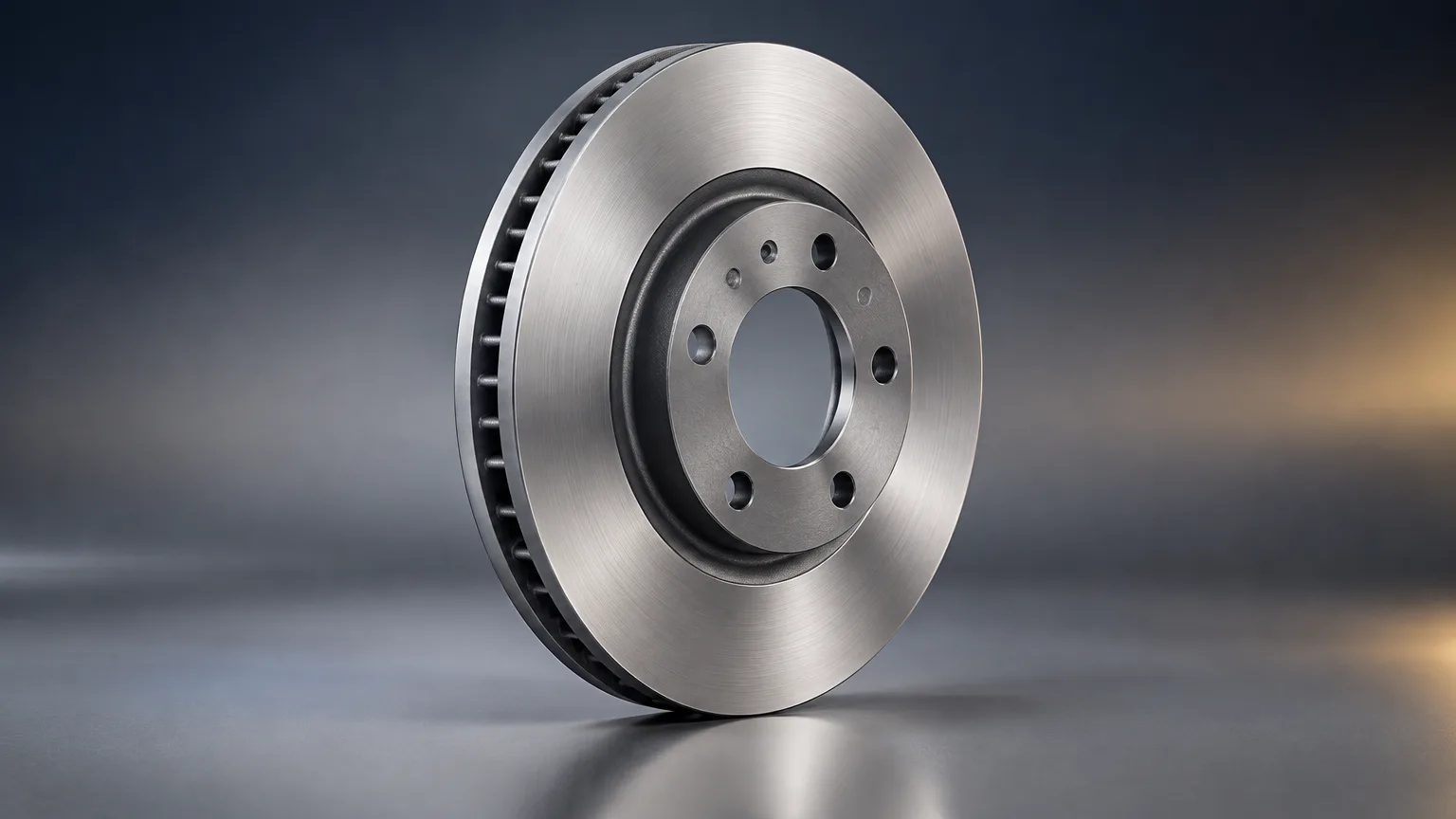
- Brake rotor
- Brake bracket
- RFQ in 5-7 working days
- Process routesCasting, forging, machining, stamping and more
- Material familiesAluminum, steel, magnesium, zinc and polymers
- Quality frameworksIATF 16949, ISO 9001 and AIAG APQP
Brake components manufacturing is the production of brake calipers, rotors and brackets that convert hydraulic or electric pressure into stopping force. Suppliers form, machine, cast or forge these parts, then validate dimensions, material, surface and strength under a control plan, typically aligned with PPAP and IATF 16949 requirements.
What Brake Components Do in a Vehicle
A brake component is a part of the foundation brake system that turns driver or system input into controlled friction at the wheel. The caliper holds the pads and applies clamping force; the rotor provides the friction surface and heat sink; brackets and knuckles carry the loads into the suspension.
- Brake caliper: a housing with one or more pistons that pushes pads against the rotor. Fixed and floating designs are common, and material choice drives stiffness and weight.
- Brake rotor: a disc that rotates with the wheel hub. Solid, vented and drilled or slotted faces are used depending on thermal duty.
- Brake bracket: a machined or stamped part that locates the caliper or anchors the hose and pad hardware.
- Related hardware: dust shields, pad clips, guide pins and hydraulic fittings complete the assembly but follow their own drawings.
Applications range from passenger cars and light trucks to performance and aftermarket builds. Each vehicle class changes size, mass and thermal load, which changes material, wall thickness and inspection needs.
Brake Components Manufacturing Processes: Casting, Forging and Machining
Brake components manufacturing is the production of calipers, rotors, brackets and related parts through casting, forging, machining, finishing and inspection to a drawing and quality plan.
In car parts manufacturing and wider vehicle parts manufacturing, a primary shaping route is paired with secondary machining, finishing and assembly.
- Die casting: near-net-shape aluminum, zinc or magnesium parts; porosity, tooling cost and alloy limits need control. Common for caliper bodies.
- Forging: strong, fatigue-resistant parts; tooling and machining allowances add cost. Common for brackets and hubs.
- CNC machining: precise and flexible for prototypes or low volumes; material waste and cycle time can be high. Used for caliper bores, rotor faces and bracket features.
- Stamping: economical for high-volume sheet-metal parts; needs dedicated dies. Used for shields and simple brackets.
- Rotor casting and machining: cast iron discs are turned, ground and balanced to control runout and thickness variation.
- Assembly and joining: welding, riveting, fastening or bonding; joint strength, distortion and traceability need validation.
- Additive manufacturing: useful for prototypes and tooling; production rate and material qualification may limit use.
Process choice in brake components manufacturing follows volume, geometry and duty. Machining favors low volume, tight features and metal parts; molding favors high-volume plastic production after tooling investment.
Materials Used in Brake Components
Material grade must be specified on the drawing for brake components manufacturing. Seven material families are commonly relevant to automotive components, and each changes weight, corrosion behavior, machinability and heat tolerance.
| Material | Typical properties | Typical uses |
|---|---|---|
| Aluminum alloys | Low density, corrosion resistance, machinability, castability | Brackets, housings, wheels, engine and transmission components |
| Carbon and alloy steel | High strength, fatigue resistance, hardness; weldability varies by grade | Stampings, shafts, gears, suspension, fasteners, structural parts |
| Magnesium alloys | Very low density, good castability; corrosion protection often required | Lightweight housings, brackets, seat frames |
| Zinc alloys | Good die-castability, repeatability and surface finish | Handles, latches, housings, small hardware |
| Polypropylene | Low density, chemical resistance, good processability | Trim, ducts, covers, molded interior parts |
| Polyamide | Good strength, wear resistance, temperature capability; moisture affects dimensions | Gears, clips, brackets, connectors, under-hood parts |
| ABS | Impact resistance, dimensional stability, good molded surfaces | Interior trim, bezels, housings |
Caliper bodies are usually aluminum or cast iron. Rotors are normally cast iron with controlled graphite structure. Brackets may be steel, aluminum or, for low-load covers, a filled polyamide. Automotive component manufacturers confirm grade, heat treatment and coating against the drawing and material specification.
Quality Requirements: PPAP, Traceability and Inspection
PPAP is an automotive submission process used to demonstrate that production processes can consistently meet approved requirements; exact customer submission rules vary. In brake components manufacturing, quality planning starts with a control plan that names each critical and significant characteristic.
- Part approval: an OEM or Tier 1 supplier customer sets submission level and evidence, following AIAG PPAP and customer-specific requirements.
- Capability: Cp/Cpk targets are customer- and feature-specific and tied to the control plan and SPC.
- Traceability: heat or lot numbers, process route and machine records link each shipment to its production history.
- Inspection: dimensional layout, material and hardness verification, surface checks and, where specified, pressure or leak testing.
- Frameworks: IATF 16949:2016 defines automotive quality-management requirements, including defect prevention and process control; ISO 9001:2015 is the base framework it incorporates. AIAG APQP supports product and process planning.
- Geometry: rotors are checked for runout and thickness variation; calipers for bore size and piston fit.
Brake Component Specifications and Tolerances
Brake component specifications and tolerances are driven by the part drawing, the chosen process and the supplier capability study. The ranges below are typical, not fixed limits, for brake components manufacturing.
| Parameter | Typical range | Standard or source |
|---|---|---|
| Dimensional tolerance | Unverified; depends on process, size, material and drawing | Part drawing and supplier capability study required |
| Geometric tolerancing | Unverified; specify datum scheme and GD&T callouts | ASME Y14.5 or applicable ISO GPS standard; exact edition unverified |
| Surface roughness | Unverified; specify Ra or other required parameter | Drawing requirement; applicable surface-texture standard unverified |
| Hardness and strength | Unverified; defined by material and heat-treatment specification | Material specification and test method required |
| Capability | Cp/Cpk targets are customer- and feature-specific | IATF 16949, control plan, SPC and customer-specific requirements |
| Part approval | Submission level and evidence vary by customer | AIAG PPAP and applicable customer-specific requirements |
Size, mass and runout limits for a specific caliper, rotor or bracket are set by the vehicle program and drawing. As a general reference, a typical machined-feature tolerance is about 0.005 in (0.13 mm). Request the tightest tolerance needed for function, not the tightest possible.
Volumes and Lead Times from Prototype to Production
Prototype routes minimize tooling and lead time; production routes optimize repeatability, cycle time, capability and total cost. The transition between them is the main planning decision in brake components manufacturing.
Prototype and low volume
- CNC machining from billet, plate or near-net blank
- 3D printing for fit checks and fixtures
- Minimal tooling; fast revision changes
- Higher unit cost, less capability evidence
Production volume
- Die casting or forging for caliper bodies and brackets
- Dedicated dies; longer tooling lead time
- Stamping for shields and sheet-metal brackets
- Control plan, SPC and PPAP evidence expected
Lead times for a given brake component depend on tooling, material availability, finishing and inspection, so they are confirmed once scope is defined. Custom auto parts cost follows the same drivers plus quantity and tolerance. Sourcing Repository returns supplier quotes in about 5-7 working days.
Design Tips for Brake Component Manufacturability
Design decisions made at the drawing stage drive cost, mass and process choice more than any later negotiation. The following tips apply to calipers, rotors and brackets.
- Define a datum scheme before callouts. Unclear datums force suppliers to guess and raise inspection cost.
- Specify only functional tolerances. Tightening every dimension increases cycle time and scrap.
- Allow machining stock on cast or forged surfaces that must seal or slide.
- Keep wall sections uniform in castings to reduce porosity and distortion.
- Design rotor faces free of sharp interrupted cuts where balancing and runout are critical.
- Use standard threads, fasteners and fits where the application allows.
- Plan access for cutting tools and gauges on internal bores and undercuts.
- Choose a material that matches the thermal and corrosion duty, not just strength.
When in doubt, ask the supplier for a DFM review before releasing a drawing revision. Casting supports complex near-net shapes; forging generally provides stronger directional grain and fatigue performance.
Ordering Brake Components Through Sourcing Repository
Sourcing Repository is a manufacturing broker. It does not own factories or machines; it collects quotes from a vetted supplier network, manages quality and inspection, and delivers parts.
- Send your requirements Share CAD and a drawing with revision, material, finish, tolerances, quantity, delivery location, inspection needs and the intended application.
- Scope and sourcing review We confirm the process route and identify suppliers in the network that fit the part, volume and quality requirements.
- Receive quotes Supplier quotes are returned in 5-7 working days and compared on process, tooling and inspection scope.
- Quality and delivery Inspection and documentation are managed against your drawing and agreed requirements before parts ship.
No reliable universal price exists for custom brake components. Cost depends on geometry, material, process, tooling, quantity, tolerance, finishing, inspection and logistics. Start with the request a quote form to get a scoped comparison.
Have a drawing to quote?
Upload it with quantity and material to start a quote.
FAQ
Common questions
What is PPAP?
PPAP is an automotive submission process that demonstrates a production process can consistently meet approved requirements. The required submission level and evidence vary by customer, so the drawing, control plan and customer-specific rules define what is actually submitted.
Does IATF 16949 certification guarantee part quality?
No. IATF 16949 defines a quality-management system for automotive production, service and accessory parts, including defect prevention and process control. Part conformity still depends on the specification, controls, inspection and the customer's own requirements.
What information is needed for a quote on brake components?
Provide CAD, a drawing with revision, material and grade, finish, tolerances, quantity, delivery location, inspection needs and the intended application. For calipers, rotors and brackets, state whether the part is prototype or production so the process route and tooling can be scoped correctly.
Can a brake caliper or bracket be made without a drawing?
A supplier may reverse-engineer or develop a model from a sample or scan, but requirements, ownership, tolerances, materials and approval responsibilities must be agreed in writing first. A controlled drawing remains the reference for inspection and acceptance.
Related resources
Keep reading
Ready when you are
Request brake component quotes
Send your caliper, rotor or bracket drawing and volume. Sourcing Repository collects quotes from a vetted supplier network in 5-7 working days and manages quality and inspection.
Your files stay confidential. NDA available on request.