
Sheet Metal Fabrication
Sheet Metal Bending Services for Custom Parts
Sourcing Repository collects quotes from a vetted supplier network for custom sheet metal bending and forming, manages quality and inspection, and delivers finished parts to your dock.
- Press-brake forming
- Custom sheet metal bending
- Typical ±0.020 in (±0.51 mm)
- Quote in 5-7 working days
- Design reviewBend radii, reliefs and tolerances checked
- Inspection managedFirst-article and dimensional checks
- One point of contactQuotes, schedules and issues handled
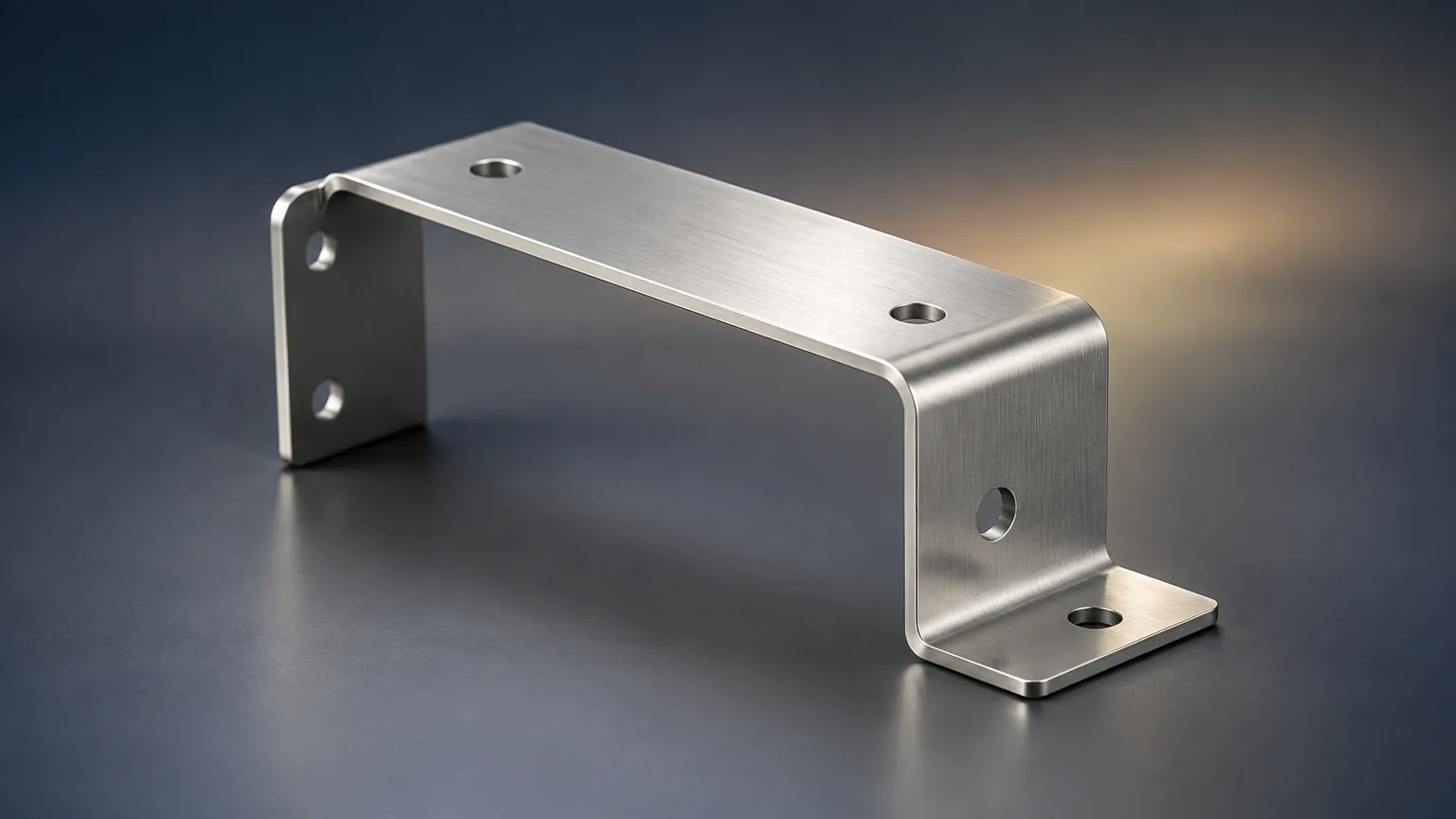
Sheet metal bending services convert flat sheet into 3D parts using press brakes and forming tools. Sourcing Repository is a manufacturing broker: it collects quotes from a vetted supplier network, manages quality and inspection, and delivers custom bent and formed parts. Typical forming tolerance is ±0.020 in (±0.51 mm), confirmed against supplier capability.
What sheet metal bending services are and when to use them
Sheet metal bending services are fabrication services that convert flat metal sheet into three-dimensional parts by plastically deforming it over a die along a defined bend line. Bending is one forming operation within sheet metal fabrication, which also covers cutting, joining and finishing.
The service suits engineers, procurement managers and founders who need brackets, enclosures, panels, chassis and similar parts in low to medium volumes, where a press brake offers more geometric flexibility than a dedicated stamping die. It is also the practical route when designs change between builds, because no hard tooling is required.
Custom vs precision bending
Custom sheet metal bending covers parts built to a drawing without unusually tight requirements. Precision work adds controlled repeatability, tighter dimensional or geometric tolerances, defined inspection and more secondary operations. Specify precision only where function demands it, because inspection effort and process capability drive cost.
How the sheet metal bending and forming process runs
Sheet metal bending services convert flat sheet into formed parts through cutting, press-brake bending and finishing, with inspection against the drawing. Sourcing Repository manages these services across a vetted supplier network, with one contact for the whole order.
- 1. Review drawings and files Send a native CAD file plus a drawing with datums, tolerances, material, thickness, finish, quantity and revision. The drawing controls the part; the model supports programming.
- 2. Quote from vetted suppliers Sourcing Repository routes the package to suppliers whose process, material and capacity match the part, then returns a consolidated quote, typically within 5-7 working days.
- 3. DFM and bend compensation Suppliers confirm bend radii, bend reliefs, hole-to-bend distances and flat-pattern development. Forming requires bend compensation, so the flat pattern is adjusted for material, thickness and tooling.
- 4. Cutting the blank Blanks are cut by laser or plasma, or by turret punching for repeated holes, louvers and high-volume patterns. Laser handles varied profiles without dedicated tooling.
- 5. Press-brake forming The blank is bent over a die to the drawing angles. Tool selection and sequencing control punch marks and distortion.
- 6. Secondary operations Deburring, PEM insertion, welding and coating are added when the assembly requires them. Each adds setup, coordination and inspection.
- 7. Inspection and delivery First-article and dimensional checks are managed against the drawing, then parts are packed to your instructions and delivered.
Materials and finishes for custom sheet metal bending
Material choice for custom sheet metal bending sets formability, corrosion resistance and cost. The table lists grades commonly quoted; the mill specification on the drawing governs acceptance.
| Material | Grade | Properties | Typical uses |
|---|---|---|---|
| Low-carbon steel | AISI 1010 or 1018; verify mill specification | Good formability, weldability and relatively low material cost | Brackets, cabinets, machine guards and structural panels |
| Cold-rolled steel | ASTM A1008; grade must be specified | Smooth finish, consistent thickness, good forming capability | Enclosures, panels, appliance parts and precision blanks |
| Stainless steel | 304 or 316; ASTM specification required | Corrosion resistance; 316 generally offers better chloride resistance | Food, chemical, medical, outdoor and marine equipment |
| Aluminum | 5052-H32 or 6061-T6; ASTM B209 applies to sheet | Low density, corrosion resistance and good machinability; 5052 forms better | Lightweight enclosures, transportation, electronics and covers |
| Galvanized steel | ASTM A653; coating designation must be specified | Zinc coating provides corrosion protection; welding requires process controls | HVAC, outdoor enclosures, ductwork and utility hardware |
Finishes and secondary processing
- Deburring removes sharp edges after cutting and forming.
- Welding follows AWS D9.1/D9.1M where assemblies are joined; weld distortion requires control.
- PEM insertion adds threads and hardware in thin sheet.
- Coating and plating are applied after forming, because forming after coating can crack the finish.
Sheet metal bending specifications and tolerances
Tolerances for sheet metal bending services are typical values from published design guidelines. Actual capability depends on process, material, thickness and supplier, so confirm each critical dimension before release.
| Parameter | Typical range | Standard or source |
|---|---|---|
| Flat cut feature location | ±0.005 in (±0.13 mm), process and supplier dependent | Protolabs design guidelines |
| Bend-to-hole or bend-to-feature | ±0.015 to ±0.025 in (±0.38 to ±0.64 mm) | Protolabs design guidelines |
| Dimensions across three or more bends | ±0.030 to ±0.040 in (±0.76 to ±1.02 mm) | Protolabs design guidelines |
| Forming and bending | ±0.020 in (±0.51 mm) | Brighton design guide; supplier capability must be confirmed |
| Angular tolerance | ±2° | Brighton design guide; unverified as universal default |
| General tolerance | Specify individually; ISO 2768 may provide defaults | ISO 2768; class and applicability must be stated |
| Blank surface roughness | Typically Ra 125 µin (3.2 µm) maximum | Brighton design guide; supplier-specific |
State units on every dimension and identify critical features. If ISO 2768 is used, state the class.
Design tips that lower the cost of sheet metal forming
Most cost in bent parts comes from setups, tooling and inspection, not from the metal itself. These design choices reduce all three.
- Use standard material grades and thicknesses that suppliers hold in stock; material grade, thickness, availability and purchased-sheet size all affect price.
- Consolidate bend radii to one or two values so fewer tooling setups are needed.
- Keep holes and features away from bend lines; bend-to-hole tolerance is looser than flat cut tolerance.
- Add bend reliefs at the ends of bends to prevent tearing and distortion.
- Relax noncritical tolerances and specify only functional ones; tight tolerances increase inspection effort and process capability requirements.
- Simplify profiles and reduce the number of bends, especially across three or more bends where tolerance stacks grow.
- Minimize secondary finishing and avoid coating before forming.
Typical applications for bent and formed sheet metal
Typical applications for bent and formed sheet metal are parts where stiffness, enclosure or mounting geometry matters more than solid machined mass. Common examples include:
- Brackets, mounts and structural panels in low-carbon or cold-rolled steel.
- Enclosures, chassis and covers in cold-rolled steel or aluminum.
- Machine guards and cabinets for industrial machinery and material-handling equipment.
- HVAC and outdoor enclosures in galvanized steel.
- Food, chemical, medical and marine equipment in 304 or 316 stainless steel.
- Lightweight covers and housings in 5052-H32 or 6061-T6 aluminum.
Automotive and industrial buyers of sheet metal bending services often add cutting, PEM insertion, welding and coating so a complete assembly arrives from one supply chain.
What drives the cost of sheet metal bending services
The cost of sheet metal bending services is driven by material, process time, tooling and the inspection and coordination a part requires. No single rate applies across suppliers, volumes or regions.
- Material grade, thickness, availability and purchased-sheet size.
- Nesting efficiency and scrap on the cut blank.
- Number of bends, setups and tooling changes.
- Tight tolerances, inspection effort and process capability.
- Secondary operations such as PEM insertion, welding, deburring and coating.
- Quantity, packaging and schedule.
Why order sheet metal bending through Sourcing Repository
Sourcing Repository is a manufacturing broker. It does not own factories or machines; it collects quotes from a vetted supplier network, manages quality and inspection, and delivers parts.
What you get
- One point of contact for quotes, schedules and issues
- Quotes matched to supplier process, material and capacity
- Quality and inspection managed against your drawing
- Delivery of finished parts, including assemblies
What you provide
- Native CAD file and controlled drawing
- Material, thickness, finish and quantity
- Inspection and packaging requirements
- Deposit and payment terms confirmed at order
Typical quote turnaround is 5-7 working days. Contact killol@sourcingrepository.com or use the quote form to start a review. Sourcing Repository is based at 201 SG Mall, Ahmedabad.
Have a drawing to quote?
Upload it with quantity and material to start a quote.
FAQ
Common questions
How is sheet metal fabrication cost estimated?
Suppliers generally evaluate material, nesting, cutting, forming, tooling, labor, joining, finishing, inspection, packaging, quantity and schedule. Send a complete drawing package so the estimate reflects the real scope rather than assumptions.
What is precision sheet metal fabrication?
It is fabrication requiring controlled repeatability and tighter dimensional or geometric requirements, normally supported by defined inspection and process controls. Precision work typically adds tighter tolerances, controlled processes, specialized inspection and more secondary operations.
How can cost be reduced?
Use standard materials, simplify profiles, reduce setups, consolidate bend radii, relax noncritical tolerances and minimize secondary finishing. Keeping holes away from bend lines also avoids rework caused by looser bend-to-hole tolerance.
What files should a buyer provide?
Provide a native CAD file, a drawing with datums and tolerances, material and thickness, finish, quantity, revision, inspection requirements and packaging instructions. The drawing controls the part; the model supports programming and flat-pattern development.
Related resources
Keep reading
Ready when you are
Get a quote for custom sheet metal bending
Send your CAD files and drawing. Sourcing Repository will collect quotes from vetted suppliers, confirm tolerances and manage inspection through delivery. Typical quote turnaround is 5-7 working days.
Your files stay confidential. NDA available on request.