
How to choose a contract manufacturer
Qualification criteria and evaluation steps for supplier selection.
Buyer's Guide
This contract manufacturing guide walks engineers and procurement teams through processes, materials, design rules, cost drivers and supplier selection for custom parts.
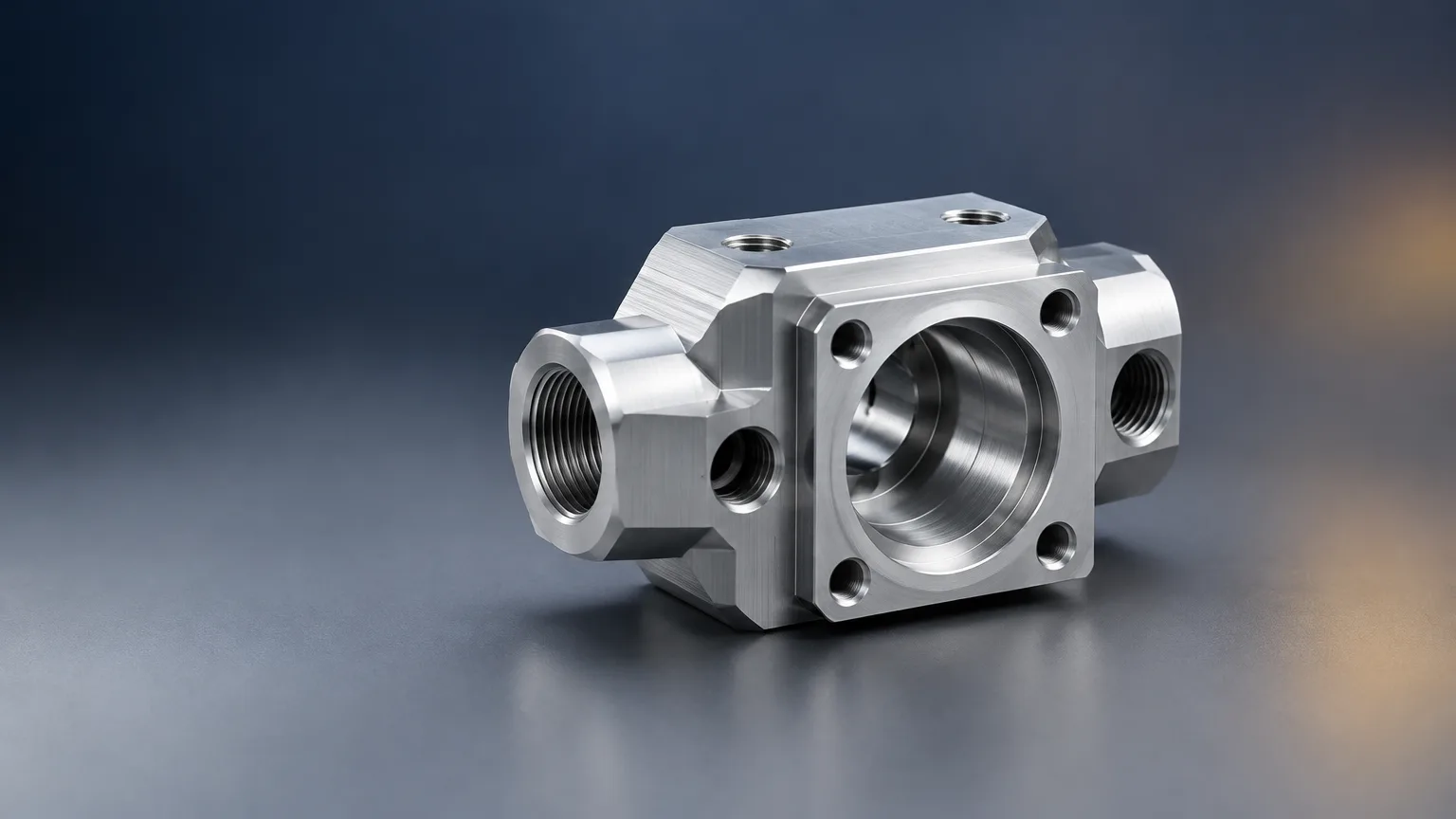
Qualification criteria and evaluation steps for supplier selection.
Scheduling, freight and transfer of risk on custom part orders.
First article inspection, sampling and nonconformance handling.
Commercial structure and cash exposure across a production program.
Building a complete RFQ package that suppliers can quote from.
Moving from samples and tooling to steady-state supply.
The full library index for custom part sourcing.
Submit your package for supplier quotes and inspection support.
A contract manufacturing guide is a buyer reference that explains how outsourcing custom part production works: the customer supplies designs, specifications and quantities, and a contract manufacturer may handle sourcing, tooling, production, inspection, packaging and logistics. It covers process selection, materials, tolerances, supplier qualification and RFQ preparation.
Contract manufacturing is outsourcing part or all of a product's production to a third-party manufacturer under a formal agreement. The customer typically supplies designs, specifications, quantities and acceptance criteria; the contract manufacturer may provide sourcing, tooling, production, inspection, packaging and logistics. This guide is written for the buyer side of that agreement.
The goal is to help you compare processes, specify parts clearly, understand what drives price, qualify a supplier and prepare an RFQ that gets usable quotes. It focuses on custom parts sourcing for industrial and automotive-style buying programs.
This contract manufacturing guide is organised as eight sections, plus a chapter library that goes deeper on individual topics. Read it in order for a full picture, or start with the chapter that matches your current decision.
The chapter library covers supplier selection, commercial terms, quality management and program ramp-up in more detail. Link targets are listed here for reference and are connected through the site navigation.
Contract manufacturing covers several production routes, and the right one depends on volume, geometry, material and tolerance requirements. The table below compares the main routes by what they are good for and the trade-offs to plan for.
| Route | Strengths (typical) | Trade-offs to plan for |
|---|---|---|
| Machining | Good for prototypes, low-to-medium volumes and tight drawing-controlled features. | Material waste, tooling wear and higher unit cost at high volume. |
| Injection molding | Repeatable, fast production of polymer parts after tooling is complete. | Mold cost and lead time; design changes can require mold modification. |
| Sheet-metal fabrication | Suitable for enclosures, brackets, panels and moderate production volumes. | Bend allowances, springback, distortion and tooling constraints require control. |
| Casting | Produces complex shapes and can reduce machining at scale. | Requires patterns or dies; porosity, shrinkage and dimensional variation are risks. |
| Additive manufacturing | Rapid prototypes and complex low-volume geometries without conventional tooling. | Build anisotropy, surface finish, material limits and slower unit economics. |
| Assembly and packaging | Consolidates component integration, testing, labeling and shipment. | Line balancing, traceability, supplied-part quality and change control add complexity. |
Material choice drives strength, corrosion behavior, machinability, finish and cost. The table below summarises the common families. In every case, the drawing and approved material specification control the requirement — not the family name alone.
| Material | Grade guidance | Properties (typical) | Typical uses |
|---|---|---|---|
| Aluminum | Specify an applicable alloy such as 6061-T6 only when required by the drawing. | Grade-dependent strength, corrosion behavior, machinability and heat treatment. | Machined parts, brackets, housings, panels and lightweight assemblies. |
| Stainless steel | Specify the exact grade, condition and applicable material standard. | Grade-dependent corrosion resistance, strength, weldability and machinability. | Process equipment, medical components, enclosures, fasteners and food-contact hardware. |
| Carbon steel | Specify grade, chemistry, condition and coating requirements. | Generally high stiffness and strength; corrosion protection may be required. | Frames, brackets, shafts, fabricated structures and general industrial components. |
| Engineering polymers | Identify resin family, reinforced content, color and applicable specification. | Grade-dependent strength, temperature resistance, chemical resistance, creep and shrinkage. | Molded housings, seals, covers, insulators, wear parts and consumer products. |
| Elastomers | Specify polymer, hardness, compound and compatibility requirements. | Elasticity, sealing behavior, compression set, temperature range and chemical resistance vary by compound. | Gaskets, seals, vibration isolators, grips and flexible components. |
Material condition is a controlled requirement, not a default. Define alloy or resin grade, temper or condition, and certification on the drawing or in the purchase requirements, and keep substitutions under formal approval.
Tolerance is drawing-, process-, material- and feature-dependent, so no single global range applies. The practical rule is to specify what function requires, then confirm the supplier can measure and hold it. The table below shows the requirement areas to control and the document that should carry them.
| Parameter | What to define | Controlling document |
|---|---|---|
| Dimensional tolerance | Tolerance is drawing-, process-, material- and feature-dependent; define critical features explicitly. | Customer drawing and controlled specification; process tolerances may be defined in drawings, work instructions or material specifications. |
| Material condition | Define alloy or resin grade, temper or condition, and certification. | Approved material specification and purchase requirements. |
| Surface finish | Specify roughness, coating, plating or cosmetic acceptance criteria. | Engineering drawing, finish specification and approved sample where applicable. |
| Inspection sampling | Define inspection level, sample size and acceptance criteria. | Quality plan, purchase order, customer specification or applicable industry standard. |
| Process parameters | Establish validated limits for critical steps. | Process specification, control plan, work instructions or quality manual. |
| Lead time and quantity | Negotiate by product, volume, tooling and capacity. | Manufacturing services agreement, purchase order and production schedule. |
Unit price is the sum of several drivers, and the same part can quote differently across suppliers when assumptions differ. Understanding the drivers lets you compare quotes on equal terms and target the changes that actually move cost.
| Driver | What it affects | Buyer lever |
|---|---|---|
| Volume | Unit price and route selection | Quote realistic annual volume and expected ramp |
| Tooling | Up-front cost and lead time | Confirm who holds tooling title and change rights |
| Tolerance and finish | Processing time, scrap and inspection | Keep tight calls limited to critical features |
| Material | Price, availability and certification | Specify the grade and condition actually required |
| Inspection | Labor and documentation cost | Set sample size and acceptance criteria clearly |
| Assembly and packaging | Scope complexity and logistics | Define the delivered configuration precisely |
Supplier selection decides most of your quality and delivery risk, so qualify on evidence rather than price alone. The checklist below covers the areas that matter most for custom parts sourcing.
SR is a manufacturing broker. SR does not own factories or machines. SR collects quotes from a vetted supplier network, manages quality and inspection, and delivers parts, with a quote turnaround of 5-7 working days. You can reach the team at killol@sourcingrepository.com or at 201 SG Mall, Ahmedabad.
A complete RFQ is the fastest route to comparable quotes. The steps below turn an engineering package into a quoting-ready request.
The chapter library goes deeper on supplier qualification, lead times and shipping, quality and NCR handling, payment terms, quote package preparation and the prototype-to-production ramp. When your package is ready, submit it for quotes through the request-a-quote flow.
Upload it with quantity and material to start a quote.
FAQ
The customer issues specifications or an RFQ; the manufacturer reviews manufacturability, quotes, prototypes or tools as needed, produces approved parts, inspects them and ships under agreed requirements. Responsibilities for material sourcing, production, inspection and logistics are defined in the agreement rather than assumed.
Ownership is contract-dependent. Define intellectual property, tooling title, maintenance access, relocation rights, confidentiality and engineering-change authority in the manufacturing services agreement so there is no ambiguity if the relationship or program scope changes.
First article inspection is documented verification of an initial part or production sample against the drawing and requirements before wider production. It confirms that the process can produce conforming parts. Required report content can vary by contract, industry and customer specification, so agree the format before production starts.
Include drawings, CAD, revision numbers, materials, finishes, quantities, forecast volumes, inspection requirements, packaging, delivery location and any certifications required. Suppliers can only quote the route, tooling and lead time accurately from a complete package.
Related resources
Ready when you are
Send your drawings, BOM and specifications. SR collects quotes from a vetted supplier network, manages quality and inspection, and delivers parts. Quote turnaround is 5-7 working days.
Your files stay confidential. NDA available on request.