
Automotive Forging Service
Forge Auto Parts: Crankshafts, Rods and Gears
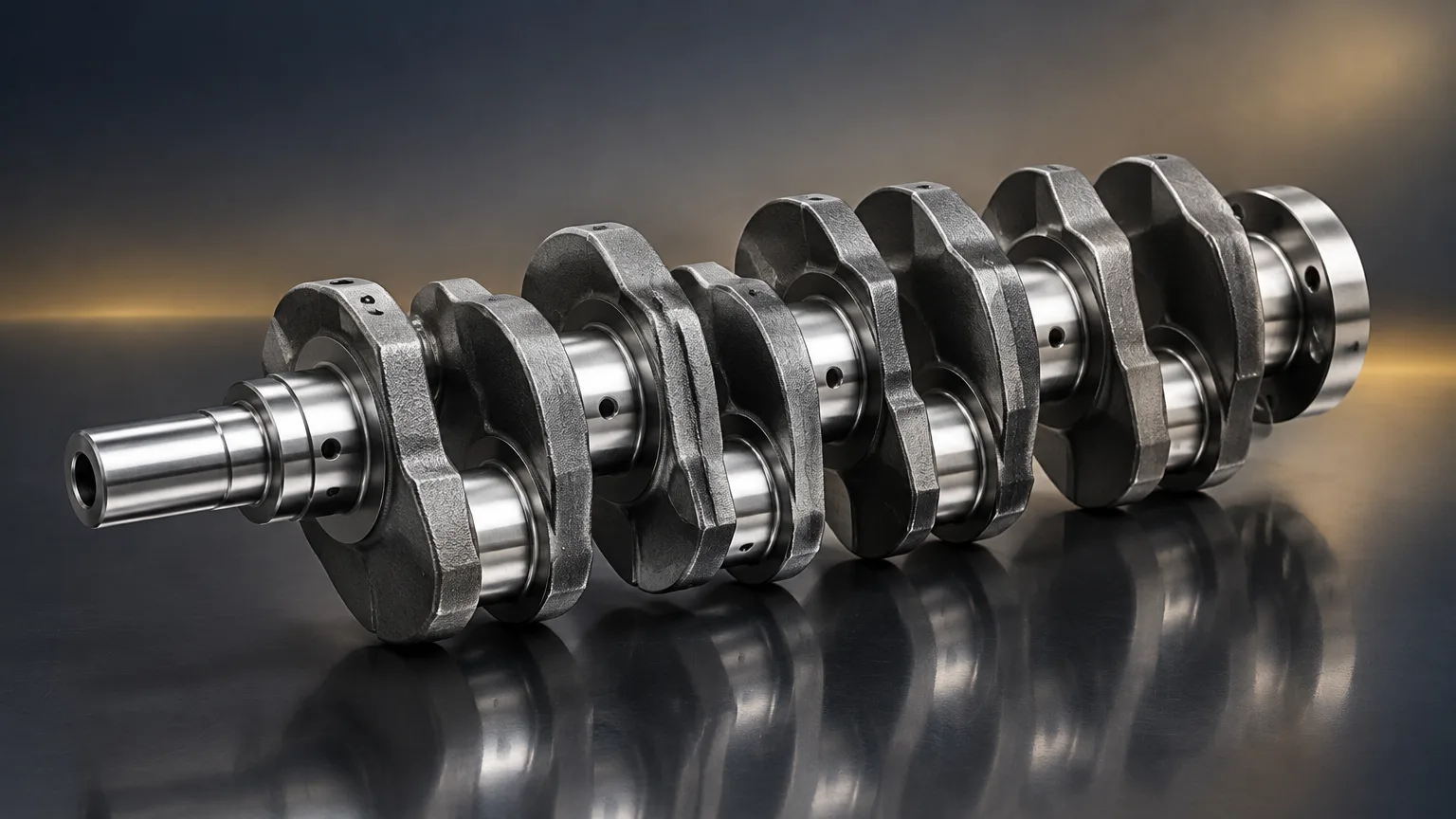
SR brokers automotive forging for crankshafts, connecting rods and gears. We collect quotes from a vetted supplier network, manage quality and inspection, and deliver finished parts to your drawing.
- Crankshafts
- Connecting rods
- Gears
- Steel forgings
- Quote turnaround5-7 working days from a complete RFQ package
- Managed inspectionInspection coordinated against your drawing
- Vetted suppliersForging sources screened before quoting
Automotive forging is the shaping of heated metal into strong, fatigue-resistant parts such as crankshafts, connecting rods and gears. Sourcing Repository brokers forge auto parts by collecting quotes from a vetted supplier network, managing quality and inspection, and delivering parts to your drawing.
What automotive forging is and when to use it
Automotive forging is a metal forming process in which heated metal is shaped under compressive force into a strong, fatigue-resistant part. It is used for crankshafts, connecting rods, gears and other drivetrain and structural components that must survive cyclic loading.
Forging is the right route when a part needs high strength and fatigue resistance in a metal alloy, and when the geometry can be produced with a forging die plus machining allowance. Casting supports more complex near-net shapes, while forging generally provides stronger directional grain and better fatigue performance.
Who this service is for
- Engineers specifying crankshafts, connecting rods, gears or similar load-bearing parts.
- Procurement managers moving a forged part from prototype to production volume.
- Founders and aftermarket brands sourcing steel forgings without owning forging equipment.
- Teams that need one point of contact for quoting, quality and delivery.
Automotive forging process steps
The forge auto process runs from drawing review to inspected delivery, a core route in automotive parts manufacturing. SR manages each step while the supplier does the physical work.
- 1. Drawing and requirement review SR reviews CAD, drawing, revision, material, heat treatment, tolerances, quantity and delivery location, and flags gaps so suppliers quote the same scope.
- 2. Supplier selection and quoting The RFQ goes to vetted forging suppliers whose capacity and process fit the part. Quotes state tooling, piece price, lead time and inspection assumptions.
- 3. Tooling and process planning The supplier designs the die and process route, including billet size, material flow, draft and machining allowance. Control plans and inspection points are defined.
- 4. Billet cutting and heating Material is verified against the specification, cut to billet weight and heated to the forging temperature range for the alloy.
- 5. Forging and trimming The billet is shaped in the die under compressive force, then flash is trimmed. Grain flow follows the die cavity, which supports fatigue performance.
- 6. Heat treatment The heat-treatment specification sets hardness and strength. Test method and acceptance criteria come from the drawing and material specification.
- 7. Machining and finishing Critical features are machined to drawing, then finished as specified, such as shot blasting, coating or plating.
- 8. Inspection and delivery Inspection is coordinated against the drawing and control plan, including dimensional checks, material certificate review and any required part approval evidence. Parts are then packed and shipped.
Materials and finishes for steel forgings
Carbon and alloy steel are the standard materials for steel forgings such as crankshafts, rods and gears in forge auto work. Aluminum and magnesium alloys suit automotive components where weight matters more than peak strength. Grades must be specified on the drawing; the table lists families, not approved grades.
| Material family | Grade | Properties | Typical uses |
|---|---|---|---|
| Carbon and alloy steel | Unverified; specify grade on drawing | High strength, fatigue resistance, hardness and weldability vary by grade | Crankshafts, connecting rods, gears, shafts, suspension and fasteners |
| Aluminum alloys | Unverified; drawing defines grade | Low density, corrosion resistance, machinability and castability | Brackets, housings, wheels, engine and transmission components |
| Magnesium alloys | Unverified; grade set by drawing | Very low density and good castability; corrosion protection is often required | Lightweight housings, brackets and seat frames |
Finishes and post-processing
- Machining of journals, bores, splines and mounting faces to drawing.
- Heat treatment to the specified hardness and strength range.
- Shot blasting or peening for surface cleaning and fatigue performance.
- Coating or plating for corrosion protection where the drawing requires it.
Forging specifications and tolerances
Tolerances for automotive forging depend on process, part size, material and the drawing; no universal range applies. The table lists the parameters to define and the source that governs each.
| Parameter | Typical range | Standard or source |
|---|---|---|
| Dimensional tolerance | Unverified; depends on process, size, material and drawing | Part drawing and supplier capability study required |
| Geometric tolerancing | Unverified; specify datum scheme and GD&T callouts | ASME Y14.5 or applicable ISO GPS standard; exact edition unverified |
| Surface roughness | Unverified; specify Ra or other required parameter | Drawing requirement; applicable surface-texture standard unverified |
| Hardness and strength | Unverified; defined by material and heat-treatment specification | Material specification and test method required |
| Capability | Cp/Cpk targets are customer- and feature-specific | IATF 16949, control plan, SPC and customer-specific requirements |
| Part approval | Submission level and evidence vary by customer | AIAG PPAP and applicable customer-specific requirements |
Request the tightest tolerance needed for function, not the tightest possible. Forge auto suppliers should confirm capability for each critical feature before production.
Design tips that lower forged part cost
Forging cost is driven by die complexity, material flow and the amount of machining after forging. These design choices reduce cost without weakening the part.
- Design for the forging direction: add draft and avoid deep, narrow pockets that block material flow.
- Keep walls and ribs at consistent thickness so metal fills the die evenly and flash stays controlled.
- Specify machining allowance only where the surface must be machined; extra allowance adds material and cycle time.
- Use generous fillets and radii at internal corners to reduce stress concentration and die wear.
- Limit tight tolerances to functional features such as bearing journals and bores; loosen them elsewhere.
- Choose a standard, readily available grade instead of a specialty alloy unless the application demands it.
- Define the datum scheme and GD&T callouts clearly so inspection matches design intent.
Typical automotive forging applications
Typical automotive forging applications include crankshafts, connecting rods, gears, shafts, suspension links and fasteners, wherever a metal component carries cyclic load. These examples do not limit what the network can quote for car parts manufacturing.
| Part | Industry or system | Why forging fits |
|---|---|---|
| Crankshafts | Engine and powertrain | High strength and fatigue resistance under cyclic loading |
| Connecting rods | Engine and powertrain | Directional grain flow supports repeated load cycles |
| Gears and gear blanks | Transmission and drivetrain | Tough core with machinable surfaces for tooth cutting |
| Shafts and axles | Drivetrain and suspension | Strength and hardness set by alloy and heat treatment |
| Steering and suspension links | Chassis and safety systems | Fatigue performance in load-bearing joints |
| Fasteners and hardware | Assembly and aftermarket | Repeatable strength in high-volume metal parts |
In vehicle parts manufacturing, OEM programs usually require validated processes, traceability and customer approval. Custom aftermarket work often prioritizes flexibility and low-volume economics.
What drives the cost of forge auto parts
No reliable universal price exists for forged automotive parts. Cost depends on geometry, material, process, tooling, quantity, tolerance, finishing, inspection and logistics.
- Part geometry and die complexity, including draft, ribs and parting-line placement.
- Material type, grade, availability and buy-to-fly ratio.
- Tooling cost and whether it is amortized across the order quantity.
- Machining allowance and the number of features machined after forging.
- Heat treatment and finishing steps such as coating, plating or shot peening.
- Tolerance and inspection requirements, including capability studies and part approval evidence.
- Order quantity, repeat volume and delivery location.
Why order forged auto parts through SR
Order forged auto parts through SR because it is a manufacturing broker, not a factory, that collects quotes from a vetted supplier network, manages quality and inspection, and delivers parts to your drawing. Forge auto RFQs go to forging suppliers, the automotive component manufacturers that do the physical work.
What SR manages
- One contact for quoting, quality and delivery
- Supplier screening before an RFQ is issued
- Inspection coordinated against your drawing and control plan
- Quote turnaround of 5-7 working days from a complete package
What the supplier performs
- Die design, forging, heat treatment and machining
- Process control, traceability and part approval evidence
- Material certification and test records
- Packing and shipment to the agreed destination
To start an RFQ, contact killol@sourcingrepository.com or write to 201 SG Mall, Ahmedabad.
Have a drawing to quote?
Upload it with quantity and material to start a quote.
FAQ
Common questions
How much do custom auto parts cost?
No reliable universal price exists. Cost depends on geometry, material, process, tooling, quantity, tolerance, finishing, inspection and logistics. Send a complete RFQ package and SR will return comparable quotes from the vetted supplier network.
What information is needed for a quote?
Provide CAD, drawing, revision, material, finish, tolerances, quantity, delivery location, inspection needs and intended application. Missing requirements are the main cause of quote revisions, so state the material grade and heat-treatment condition explicitly.
What is PPAP?
PPAP is an automotive submission process used to demonstrate that production processes can consistently meet approved requirements. It is governed by AIAG PPAP and applicable customer-specific requirements, and the exact submission level and evidence vary by customer.
What tolerance should be requested?
Request the tightest tolerance needed for function, not the tightest possible tolerance. The supplier should confirm capability for each critical feature, and Cp/Cpk targets are customer- and feature-specific under IATF 16949 and the control plan.
Related resources
Keep reading
Ready when you are
Request a quote for forged auto parts
Send your drawing, material, quantity and delivery location. SR will collect quotes from the vetted supplier network and manage inspection through delivery.
Your files stay confidential. NDA available on request.