
Aluminum and steel forgings
Which alloy family and grade to specify, and how material choice affects weight, corrosion and service temperature.
Sourcing guide
This metal forging guide explains how open-die, closed-die, ring, cold, warm and hot forging routes differ, which alloys suit which duty, and how to specify tolerances, testing and traceability before you request quotes.
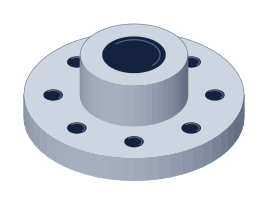
Which alloy family and grade to specify, and how material choice affects weight, corrosion and service temperature.
How temperature route changes force, accuracy, surface finish, tooling cost and material utilization.
How forging compares with casting, machining from bar, fabrication and powder metallurgy.
Which die route fits your volume, size and shape, and what each route costs in tooling and machining.
A metal forging guide is a reference that explains how to specify metal forging, a process that plastically deforms heated, warm or cold metal under compressive force using a hammer, press or dies. Routes include open-die, closed-die, ring, cold, warm and hot forging; ASTM A788 classifies steel routes as cold-worked, hot-cold-worked or hot-worked.
This metal forging guide is written for engineers, procurement managers and founders who need to specify, source and compare forged components. It covers the main process routes, the alloys most often quoted, the design and tolerance decisions that drive feasibility, the cost drivers behind a quotation, and the checks to run before placing an order.
Forging suits parts where directional strength, fatigue resistance and material integrity matter. It is not automatically the right answer for every geometry: open-die work can need extensive machining, closed-die work carries die cost and die-fill limits, and cold forging demands high forming loads and substantial tooling. The guide sets out those trade-offs so you can state a route on the drawing instead of leaving it to the supplier.
The guide is split into four chapters plus this overview. Each chapter answers one sourcing question end to end, so you can read them in order or jump straight to the decision you are facing.
| Chapter | What it answers | Link |
|---|---|---|
| Aluminum and steel forgings | Which alloy family and grade to specify, and how material choice affects weight, corrosion and service temperature. | /resources/guides/forging-guide/aluminum-and-steel-forgings/ |
| Cold, warm and hot forging | How temperature route changes force, accuracy, surface finish, tooling cost and material utilization. | /resources/guides/forging-guide/cold-warm-and-hot-forging/ |
| Forged vs cast vs machined parts | How forging compares with casting, machining from bar, fabrication and powder metallurgy on grain flow, geometry and risk. | /resources/guides/forging-guide/forged-vs-cast-vs-machined-parts/ |
| Open die vs closed die vs ring forging | Which die route fits your volume, size and shape, and what each route costs in tooling and machining. | /resources/guides/forging-guide/open-die-vs-closed-die-vs-ring-forging/ |
If you already know the route and grade, skip to the design, cost and supplier sections below. If you are still choosing between processes, start with the chapter on open die, closed die and ring forging.
Forging processes differ mainly in how the metal is constrained and at what temperature it is formed. The table below summarises the six routes most often quoted for custom steel and alloy parts, with the practical advantage and the main penalty of each.
| Route | Advantages | Limitations |
|---|---|---|
| Open-die forging | Flexible for large parts, low tooling cost, useful for custom or low-volume work. | Lower dimensional repeatability; extensive machining may be required. |
| Closed-die forging | Good repeatability, high production rates, near-net shapes. | Higher die cost; draft, parting lines and die-fill limits apply. |
| Ring rolling | Efficiently produces seamless rings with circumferential grain flow. | Requires dedicated rolling equipment and suitable ring preforms. |
| Cold forging | Excellent surface finish, dimensional control and material utilization. | High forming loads; limited ductility and substantial tooling cost. |
| Warm forging | Lower force than cold forging with better accuracy than hot forging. | Narrower temperature control window and possible oxidation. |
| Hot forging | Large deformation capacity and suitability for complex steel parts. | Scale, distortion, energy use and post-forging heat treatment can increase cost. |
Treat the route as a specification decision, not a supplier preference. Open-die work is normally chosen when the part is large or the volume is low and machining capacity is available. Closed-die work pays back when annual volume justifies die cost and the geometry respects draft and parting-line rules. Cold forging is chosen for finish and dimensional control on smaller parts where the alloy has enough ductility.
In this metal forging guide, material choice sets the achievable strength, corrosion resistance and service temperature before any process decision is made. The grades below are typical starting points for forged steel and other custom forging components; confirm the applicable specification and heat-treatment condition.
A metal forging guide is a practical reference for specifying forged parts: it links alloy, forging route, heat treatment and inspection to the drawing so every supplier quotes the same scope.
Most routes start from a billet. In impression-die forging, the billet is pressed in shaped dies, and the excess metal that escapes the cavity forms flash, which is trimmed afterward.
| Material | Grade | Properties | Typical uses |
|---|---|---|---|
| Carbon steel | ASTM A105 | Carbon steel forging specification for pressure-containing components; properties depend on heat treatment and section size. | Flanges, valves, fittings and pressure piping. |
| Low-alloy steel | ASTM A182 F22 | Chromium-molybdenum alloy forging grade for elevated-temperature service. | Pressure vessels, valves, flanges and power equipment. |
| Stainless steel | ASTM A182 F304/F316 | Corrosion-resistant austenitic stainless forging grades; exact mechanical properties depend on specification and condition. | Chemical, food, marine, pharmaceutical and process equipment. |
| Titanium alloy | UNS R56400 / Ti-6Al-4V | High strength-to-weight ratio and corrosion resistance; verify the applicable forging specification. | Aerospace, medical, chemical and high-performance components. |
| Nickel alloy | UNS N07718 / Alloy 718 | High-temperature strength and oxidation resistance; grade-specific heat treatment is required. | Turbines, aerospace hot sections and energy equipment. |
| Aluminum alloy | AA 6061 | Lightweight, corrosion-resistant and readily machinable; forging properties depend on temper. | Transportation, aerospace, structural and general-engineering parts. |
Forging tolerances are part-specific. There is no universal value that can be applied across sizes, routes and geometries, so the drawing must carry the tolerances you actually need and the standard they are judged against.
| Parameter | Typical range | Standard or source |
|---|---|---|
| Forging temperature classification | Cold-worked, hot-cold-worked or hot-worked | ASTM A788/A788M |
| Dimensional tolerance | Part-specific; no universal value | Specify drawing tolerances and applicable forging standard |
| Machining allowance | Part-specific; commonly added to critical surfaces | Forging design guide and supplier quotation |
| Mechanical testing | Tensile, elongation, reduction of area and hardness as specified | ASTM A788/A788M |
| Surface examination | Visual examination; MT or PT where required | Classification guidance for steel forgings |
| Volumetric examination | Ultrasonic testing where specified | ASTM Manual 53 and applicable product specification |
Forging cost is driven by the route, the tooling it needs, the material, and the amount of post-forging processing the part requires. Two quotes for the same drawing can differ substantially because the suppliers assumed different routes or different levels of machining and testing.
Give every supplier the same drawing revision, the same alloy and grade, the same annual quantity and lot size, the same forging route or an explicit statement that the route is open, and the same testing and certification requirements. Ask each supplier to break out tooling, piece price, heat treatment, machining and testing so you can see where the differences sit.
Supplier selection for forgings comes down to whether the supplier can hold your drawing, document the material and prove the result. Work through the checklist below before you release a purchase order.
Upload it with quantity and material to start a quote.
FAQ
Yes, if the supplier has machining capability or an approved machining partner. Define the datum structure, tolerances, surface finish and inspection responsibility in the RFQ so the machined part is judged against the drawing you actually need.
Include the drawing, alloy and grade, annual quantity, lot size, forging route, heat treatment, machining scope, tolerances, testing, certification and delivery requirements. Quotes are only comparable when every supplier receives the same specification.
Heat-number traceability links the forging to its melt, material certificate, processing records, heat treatment and inspection results. It is the thread that lets you trace a finished part back to the material it was made from.
They depend on the route, part size, geometry, die capability and machining allowance. There is no universal value, so specify drawing tolerances and the applicable forging standard rather than assuming a default.
Related resources
Ready when you are
Send your drawing, alloy and grade, quantities and testing requirements. Sourcing Repository collects quotes from a vetted supplier network, manages quality and inspection, and delivers the parts.
Your files stay confidential. NDA available on request.