
Material reference
7075 Aluminum: High-Strength Alloy Properties and Uses
7075 aluminum is a heat-treatable zinc-magnesium-copper alloy used for highly stressed parts. This reference covers typical properties, tempers, processes, finishes and sourcing.
- AA 7075 / UNS A97075
- Zinc-magnesium-copper
- Heat-treatable
- Aerospace-grade strength
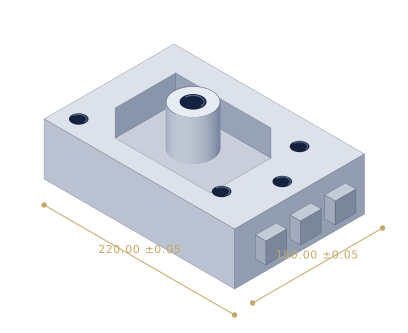
7075 aluminum (AA 7075, UNS A97075) is a heat-treatable 7xxx-series alloy with zinc, magnesium and copper as its main additions. It delivers very high strength at low density, making it a common choice for highly stressed structural and machined parts. Weldability is limited and corrosion performance depends on temper and environment.
7075 Aluminum Overview: What It Is and Key Traits
7075 aluminum is a high-strength, heat-treatable 7xxx-series aluminum alloy whose principal additions are zinc, magnesium and copper. It is designated AA 7075 and UNS A97075. The alloy provides very high strength at low density, but its weldability and corrosion performance depend strongly on temper and environment.
The zinc-magnesium-copper combination drives its strength through precipitation hardening. Typical composition limits are 5.1-6.1 wt% zinc, 2.1-2.9 wt% magnesium and 1.2-2.0 wt% copper. These additions also make the alloy more sensitive to thermal control during processing and to stress-corrosion cracking in certain tempers.
Typical Properties of 7075 Aluminum
The table below lists typical mechanical, thermal and physical properties for 7075 aluminum. Values are typical and vary by product form, temper and thickness. Always confirm properties in the required product direction and governing specification.
| Property | Typical value | Notes |
|---|---|---|
| Density | 0.10 lb/in3 [2.81 g/cm3] | Physical property |
| Elastic modulus | 10,400 ksi [72 GPa] | Mechanical property |
| Melting point | 1,175 F [635 C] | Thermal property |
| Ultimate tensile strength (T6) | About 83 ksi [572 MPa] | Bare product; varies by form |
| Ultimate tensile strength (T651) | About 80 ksi [552 MPa] | Stress-relieved by stretching |
| Machinability | Approximately 70%; Hydro rating B | Typical rating |
| Zinc composition | 5.1-6.1 wt% | Composition limit |
| Magnesium composition | 2.1-2.9 wt% | Composition limit |
| Copper composition | 1.2-2.0 wt% | Composition limit |
Product tolerance is unverified without product form, size, temper and governing specification. Specify ASTM B209/B211 or the applicable AMS standard and dimensional table when ordering.
Best Processes for 7075 Aluminum Parts
CNC machining from plate or bar is the most common process for 7075 aluminum parts because it delivers precise, complex geometry. Rolling and extrusion are used to produce the plate, bar and profiles that feed machining, while cold finishing improves dimensional control.
- CNC machining from plate or bar: precise complex parts; watch material waste, distortion and tool wear.
- Rolled plate or sheet: broad flat-product availability; watch directional properties and residual stress.
- Extruded bar, tube or profile: efficient near-net sections; watch section-size and shape limits.
- Cold-finished bar followed by aging: improved dimensional control and finish; added processing cost.
- Direct-chill cast billet, homogenized, hot-worked, solution-treated, quenched and artificially aged: high strength; requires strict thermal control.
Typical Applications of 7075 Aluminum by Industry
7075 aluminum is selected where high strength-to-weight ratio matters more than weldability or maximum corrosion resistance. Aerospace is the classic application, followed by high-performance automotive, tooling and sporting goods.
| Industry | Typical parts | Why 7075 |
|---|---|---|
| Aerospace | Wing structures, fuselage frames, fittings | High specific strength; T73/T7351 for stress-corrosion resistance |
| Automotive / motorsport | Suspension components, chassis brackets, drivetrain parts | Weight reduction in highly stressed areas |
| Tooling and fixtures | Jigs, molds, precision fixtures | Dimensional stability in T651; good machinability |
| Sporting goods | Bicycle frames, climbing equipment, archery components | High strength at low weight |
| Industrial equipment | Valve bodies, gears, shafts | Strength and machinability in demanding service |
For critical aircraft structures exposed to sustained stress, T73 or T7351 is often specified because it improves stress-corrosion resistance, even though strength is lower than T6.
7075 Aluminum Machining and Fabrication Notes
7075 aluminum machines well, but its high strength and residual stress make distortion and tool wear the main risks. Plan roughing and finishing passes, manage heat, and account for material yield.
- Use sharp tooling and appropriate speeds and feeds to manage tool wear.
- Rough machine, then stress-relieve or allow the part to stabilize before finishing.
- Expect distortion when removing large amounts of material from plate; consider T651 for stability.
- Plan for material waste and scrap rate when quoting plate or bar machining yield.
- Avoid fusion welding where possible; resistance welding is cited as preferred, while arc or gas welding can reduce performance.
- Verify alloy, temper, dimensions and heat or lot traceability on the material certificate.
- Check tensile properties in the required product direction and thickness.
Compatible Finishes for 7075 Aluminum
7075 aluminum has a generally good anodizing response, but appearance and protection depend on the process and alloy condition. Anodizing is the most common finish; other finishes are selected for corrosion protection, conductivity or appearance.
- Anodizing (Type II or Type III): good response; color and thickness depend on process and alloy condition.
- Chemical conversion coating (chromate or non-chromate): corrosion protection and paint adhesion.
- Painting or powder coating: appearance and additional corrosion protection.
- Chromate conversion for electrical conductivity where required.
- Mechanical finishes such as bead blasting or brushing before anodizing.
Because 7075 is more corrosion-sensitive than 6061 in some environments, specify the finish and service environment together. T73/T7351 tempers improve stress-corrosion resistance and are often paired with anodizing or conversion coating for critical parts.
7075 Aluminum Alternatives and Comparison
Choose 7075 when high strength at low weight is the priority. Choose another alloy when weldability, corrosion resistance, thick-section toughness or cost drive the decision.
| Alternative | Key differences | When to choose it |
|---|---|---|
| 2024 aluminum | 7075 generally offers higher strength; T73/T7351 has better stress-corrosion resistance than T6 7075 and is cited as a replacement for some 2024 applications. | When higher fatigue resistance or established 2024 processes are preferred. |
| 6061 aluminum | 7075 provides substantially higher strength but generally has lower weldability and more demanding corrosion control. | When weldability, corrosion resistance and lower cost matter more than maximum strength. |
| 7050 aluminum | Both are high-strength aerospace alloys; 7050 is often selected where thick-section toughness and stress-corrosion performance are priorities. Exact comparison is temper- and thickness-dependent. | When thick sections and toughness are critical. |
| Steel | 7075 has much lower density and high specific strength, while steel generally provides higher modulus, hardness and temperature capability. | When stiffness, hardness or high-temperature service is required. |
For marine service, life prediction requires alloy, coating, environment, stress and joining details. That combination is a known gap and should be evaluated case by case.
Sourcing 7075 Aluminum Parts Through SR
Sourcing Repository collects quotes from a vetted supplier network, manages quality and inspection, and delivers parts. SR does not own factories or machines. For 7075 aluminum parts, the process starts with your drawing, material specification and quantity.
- Send your requirements Share drawings, alloy and temper, product form, dimensions, applicable ASTM or AMS specification, certification and inspection requirements.
- Quote collection SR collects quotes from its vetted supplier network. Typical quote turnaround is 5-7 working days.
- Supplier selection and quality planning SR manages quality and inspection requirements, including material certification and dimensional checks.
- Production and delivery Parts are produced by network suppliers and delivered to your specification.
To request a quote, email killol@sourcingrepository.com or use the request form. Include the governing specification and any inspection or traceability requirements so quotes are comparable.
Have a drawing to quote?
Upload it with quantity and material to start a quote.
FAQ
Common questions
What is 7075 aluminum?
7075 aluminum is a zinc-, magnesium- and copper-containing heat-treatable aluminum alloy, designated AA 7075 or UNS A97075. It is a 7xxx-series alloy known for very high strength at low density, used for highly stressed structural and machined parts.
Can 7075 be anodized?
Yes. 7075 aluminum has a generally good anodizing response, but appearance and protection depend on the process and alloy condition. Type II and Type III anodizing are common, and T73/T7351 tempers are often paired with anodizing for critical parts.
Which 7075 temper is strongest?
T6 is commonly selected for maximum strength, with about 83 ksi [572 MPa] ultimate tensile strength for bare product. T651 is stress-relieved by stretching and offers improved dimensional stability with slightly lower strength. Exact ranking depends on product form and specification.
Is 7075 weldable?
7075 aluminum is generally not considered readily fusion-weldable. Resistance welding is cited as preferred, while arc or gas welding can reduce performance. For welded assemblies, consider a different alloy or a joint design that avoids fusion welding in the 7075 part.
Related resources
Keep reading
Ready when you are
Need 7075 aluminum parts quoted?
Send your drawings, alloy and temper, and inspection requirements. SR collects quotes from a vetted supplier network and manages quality and inspection through delivery.
Your files stay confidential. NDA available on request.