
Industries
Aerospace Parts Manufacturing for Flight and Defense Hardware
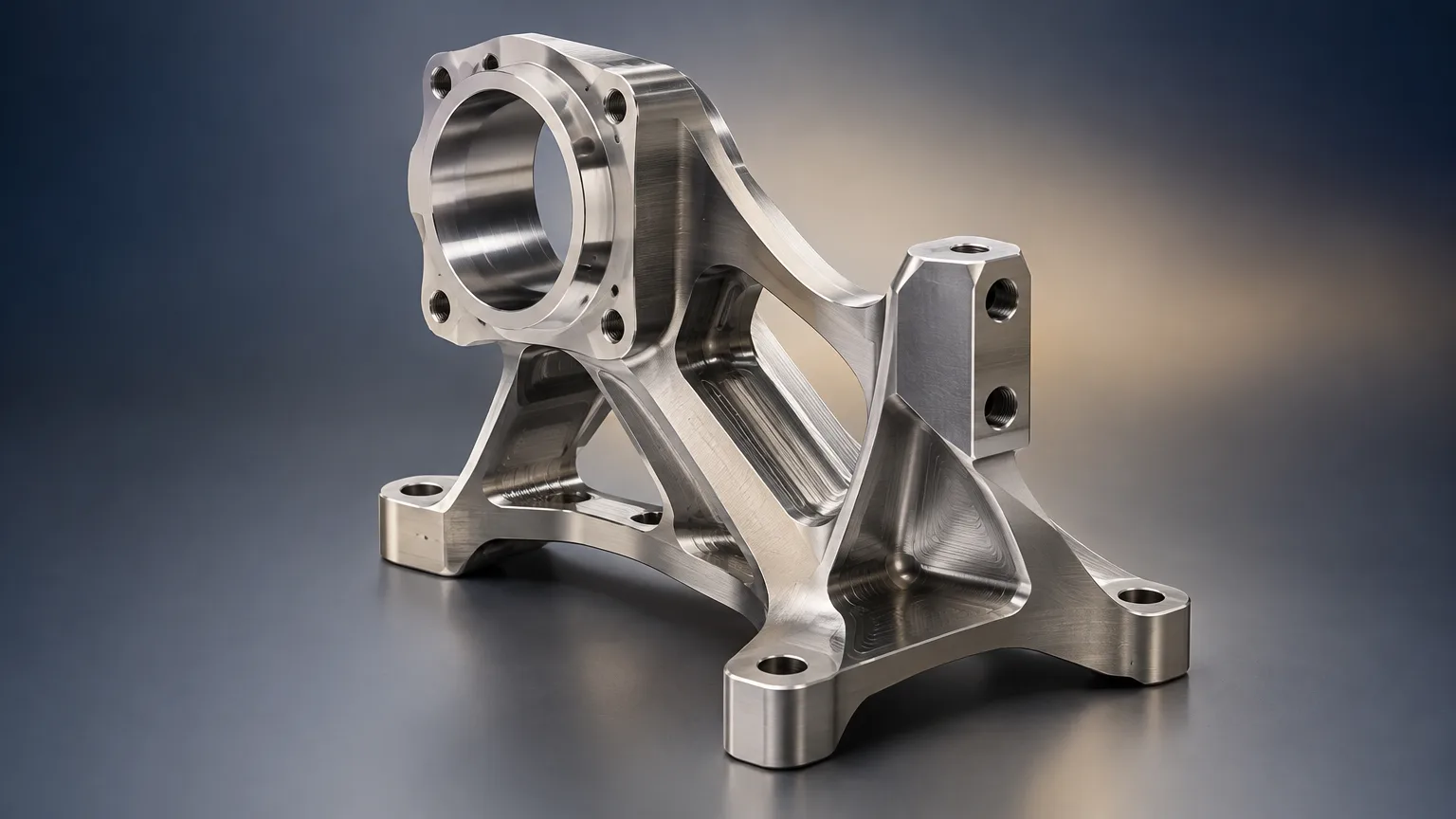
SR sources aerospace components and aerospace casting parts from a vetted supplier network, then manages inspection and delivery. You send the drawing; we return quoted, documented parts.
- Flight and propulsion parts
- UAV and mission systems
- Casting and machining
- Documented conformity
- Quote turnaround5-7 working days from a complete RFQ package
- Inspection managedReports, certificates and traceability retained
- Vetted suppliersQuality-system and process scope reviewed
Aerospace parts manufacturing produces flight, propulsion, spacecraft and support components through machining, forming, casting, fabrication and additive manufacturing. It requires controlled materials, qualified processes, traceability, inspection and documented conformity. SR does not own factories; it collects quotes from a vetted supplier network, manages quality and inspection, and delivers finished parts.
Industry challenges: what buyers face in aerospace parts manufacturing
Aerospace parts manufacturing is constrained less by machining capability than by documentation, qualification and supply capacity. Buyers rarely struggle to find a shop that can cut metal; they struggle to find one that can prove what it did.
- Material price, availability, certification and minimum order quantity shift between orders, so quoted pricing ages quickly.
- Low production volume, long lead times and supplier capacity limit how fast a program can move from drawing to delivered parts.
- Process qualification is not transferable. A supplier approved for one alloy or one process is not automatically approved for another.
- Traceability gaps appear late. Missing mill certificates, powder-lot records or inspection reports surface at final review, not at order placement.
- Casting and additive processes carry defect risk that must be managed through classification, inspection and acceptance criteria rather than assumed.
Aerospace components and assemblies we source
SR sources aerospace components across airframe, propulsion, avionics and unmanned systems, from single machined details to welded and bolted assemblies. Typical part families include:
- Landing-gear components and hydraulic hardware.
- Avionics housings, heat sinks and connector parts.
- UAV airframes and mission-system components.
- Structural fittings, brackets, ribs and frames.
- Engine and hot-section details where the specified alloy and process support them.
- Sheet-metal panels, ducts and fabricated subassemblies.
- Additive-manufactured brackets and lightweight consolidated parts.
Assemblies are quoted with the same discipline as individual parts: the drawing set defines the interfaces, the finish, the inspection method and the records that must travel with the shipment.
Processes and materials for aerospace parts manufacturing
Aerospace parts manufacturing uses CNC machining, casting, forging, forming and additive manufacturing, chosen by geometry, quantity, alloy and drawing acceptance criteria. No single route is best; each trades capability against qualification burden.
| Process | Strength | Constraint to manage |
|---|---|---|
| CNC machining | High accuracy and repeatability | Material waste and setup cost |
| Investment casting | Complex near-net shapes | Tooling, porosity, dimensional control |
| Sand, permanent-mold or squeeze casting | Economical for selected geometries | Finish and defect risk vary |
| Sheet-metal forming and fabrication | Lightweight structures, low buy-to-fly ratios | Springback and tooling |
| Forging | Directional properties, fatigue resistance | High tooling loads, limited complexity |
| Laser or electron-beam powder-bed fusion | Complex, lightweight parts with less assembly | Anisotropy, residual stress, powder control |
| Directed-energy deposition | Repairs and larger deposits | Accuracy and heat-affected microstructure |
| Post-processing | Heat treatment, HIP, machining, coating, finishing | Adds cost and process control |
Materials and grades
| Material | Grade | Properties | Typical uses |
|---|---|---|---|
| Aluminum alloy | Set by the applicable AMS or ASTM specification | Low density, good machinability; properties depend on alloy and temper | Fittings, housings, structural castings. AMS 4210 covers a cast aluminum alloy.[5] |
| Titanium alloy | Ti-6Al-4V; Ti-6Al-4V ELI | High specific strength, corrosion resistance | Airframe fittings, engine parts, powder-bed-fusion parts. ASTM F2924 and F3001 apply.[2][6] |
| Nickel alloy | 62Ni-21.5Cr-9.0Mo-3.65Nb; SAE AMS7000 | High-temperature strength, oxidation resistance | Engine hot-section parts made by laser powder-bed fusion.[3] |
| Steel and stainless steel | Specific grade unverified | Strength and corrosion resistance vary by grade and heat treatment | Landing gear, fasteners, fittings, structural hardware |
| Nickel-, cobalt- and titanium-based powder | Set by material specification and purchase order | Chemistry, particle size, cleanliness and reuse history affect quality | Powder-bed fusion and directed-energy deposition. SAE AMS7002 covers aerospace AM powder.[3] |
Choosing between routes
- Machining vs casting: machining is accurate and flexible but removes material; casting gives near-net shapes but needs tooling and defect control.
- Machining vs additive: machining is predictable for accessible geometry; additive cuts waste and enables internal complexity but needs qualification.
- Forging vs casting: forging gives grain flow and fatigue strength; casting suits complex shapes with more porosity risk.
- Investment casting vs additive: casting suits repeat runs after tooling; additive avoids tooling but demands more validation.
- Powder-bed fusion vs directed-energy deposition: PBF supports finer features; DED suits larger deposits and repairs but needs more finishing.
Standards and certifications relevant to aerospace components
The standards for aerospace components are set by the drawing, the contract and the product's criticality, not by one industry-wide rule. The frameworks below appear most often in aerospace parts manufacturing.
| Standard | Title | Relevance |
|---|---|---|
| AS9100 | Quality management systems—Aerospace | Common quality-system requirement; applicability depends on the buyer and contract. |
| SAE AMS2175B | Castings, classification and inspection of | Classifies and sets inspection provisions for many aerospace casting alloys and processes.[7] |
| ASTM F2924 | Additive Manufacturing Titanium-6 Aluminum-4 Vanadium with Powder Bed Fusion | Covers feedstock, process, properties, inspection and certification for Ti-6Al-4V AM parts.[2][6] |
| ASTM F3001 | Additive Manufacturing Titanium-6 Aluminum-4 Vanadium ELI with Powder Bed Fusion | Covers Ti-6Al-4V ELI AM thermal processing, HIP, dimensions, inspection and marking.[6] |
| ASTM E3166 | Nondestructive Examination of Metal Additively Manufactured Aerospace Parts After Build | Covers CT, eddy current, optical, penetrant, radiographic, infrared and ultrasonic examination.[4] |
| SAE AMS7000 | Laser-Powder Bed Fusion Produced Parts, Nickel Alloy | Identified in FAA engine guidance for a nickel alloy AM condition including stress relief, HIP and solution annealing.[3] |
| SAE AMS7002 | Process Requirements for Production of Metal Powder Feedstock for Additive Manufacturing of Aerospace Parts | Addresses aerospace AM metal-powder production and feedstock control.[3] |
| ISO/ASTM 52941 | Additive manufacturing—System performance and reliability—Acceptance test method for powder-bed fusion machines | Gives an acceptance-test framework for powder-bed-fusion machine performance.[8] |
Quality and documentation for aerospace parts manufacturing
Documentation is the deliverable that proves the part. FAA guidance states that materials must meet approved specifications supporting assumed strength and other properties.[1] That principle drives what SR collects and retains.
- Supplier quality-system certification and approved-process scope reviewed before award.
- Manufacturing records, inspection reports, certificates and chain-of-custody documentation retained.
- First-article inspection (FAI) reports where the drawing or contract requires them.
- PPAP documentation where the buyer's program requires production-part approval.
- Material certificates showing chemistry and mechanical properties against the applicable AMS, ASTM or customer specification.
- Heat-treatment and, where applicable, hot isostatic pressing records.
- Nondestructive testing results per the specified method and acceptance criteria.
- Powder-lot data, build orientation, parameters and build traceability for additive parts.
Volumes and lead times: prototype to production
Volumes and lead times in aerospace parts manufacturing change at each program stage, and the sourcing route changes with them. Low volume and long lead times are structural features of this industry, not exceptions.
- Prototype and development Machining and additive manufacturing carry early work because they avoid hard tooling. Expect qualification and post-processing effort even at low quantity.
- Qualification builds Process parameters, inspection methods and acceptance criteria are fixed here. Additive parts typically need machine and material qualification, powder-lot data, build orientation and heat-treatment records.
- Low-rate initial production Casting and forging become viable once geometry and quantity justify tooling. Casting inspection follows the applicable specification, such as SAE AMS2175B for many methods.[7]
- Rate production Capacity, repeatability and documentation throughput matter most. Supplier capacity and material availability are the usual constraints.
Example project: aerospace casting parts sourced and inspected
A typical sourcing pattern for aerospace casting parts starts when a buyer releases a drawing for a near-net housing with a defined alloy specification. SR reviews the drawing, confirms the casting method and classification requirements, and collects quotes from suppliers whose approved-process scope covers that alloy and method.
The awarded supplier casts the part, applies the specified heat treatment, and completes dimensional inspection and required nondestructive testing. SR retains manufacturing records, inspection reports, material certificates and chain-of-custody documentation, and delivers the parts with that package.
How to get started with aerospace parts manufacturing sourcing
Send a complete RFQ package and SR will collect quotes from the vetted supplier network, manage inspection and deliver the parts. Quote turnaround is 5-7 working days from a complete package.
- Submit the released drawing or model, material and condition, and quantities.
- State delivery requirements, tolerances, finish and any NDT or acceptance criteria.
- Identify required certifications, traceability and approved processes.
- Specify first-article and PPAP requirements, if applicable.
- Confirm the documentation package that must ship with the parts.
- Review quotes, award, and let SR manage inspection and delivery.
Questions on scope can go to killol@sourcingrepository.com. SR is located at 201 SG Mall, Ahmedabad.
Have a drawing to quote?
Upload it with quantity and material to start a quote.
FAQ
Common questions
What should an RFQ include?
Include the released drawing or model, material and condition, quantities, delivery, tolerances, finish, NDT, certifications, traceability, approved processes and first-article requirements. A complete package is what allows SR to return a firm quote within 5-7 working days.
When is aerospace casting appropriate?
Use casting for complex near-net geometries, integrated features and repeat quantities where tooling cost is justified and casting quality can be demonstrated. Classification and inspection follow the applicable specification, such as SAE AMS2175B for many casting methods.[7]
Are tolerances standardized across aerospace parts?
No universal tolerance applies. Requirements normally come from the engineering drawing, GD&T, the material or process specification, and validated supplier capability. Define tolerances per feature rather than assuming an industry default.
Can a supplier substitute material?
Only with documented engineering approval and evidence that chemistry, properties, processing, compatibility and certification requirements remain satisfied. Unapproved substitution breaks the assumption that materials meet approved specifications supporting assumed strength.[1]
Related resources
Keep reading
Ready when you are
Send your aerospace drawing for quoting
SR collects quotes from a vetted supplier network, manages inspection and delivers documented aerospace components. Quote turnaround is 5-7 working days from a complete RFQ package.
Your files stay confidential. NDA available on request.