
EV startups, restoration and custom builds
Custom Automotive Parts Manufacturing for Low-Volume Programs
SR is a manufacturing broker for EV startups, restoration shops and custom builders. Send drawings, get quotes from a vetted supplier network, and receive inspected parts.
- EV startups
- Restoration
- Motorsport
- Low volume
- Quote turnaround5-7 working days
- PPAP and FAI supportInspection reports and material certs
- Prototype to productionOne route from first article to repeat build
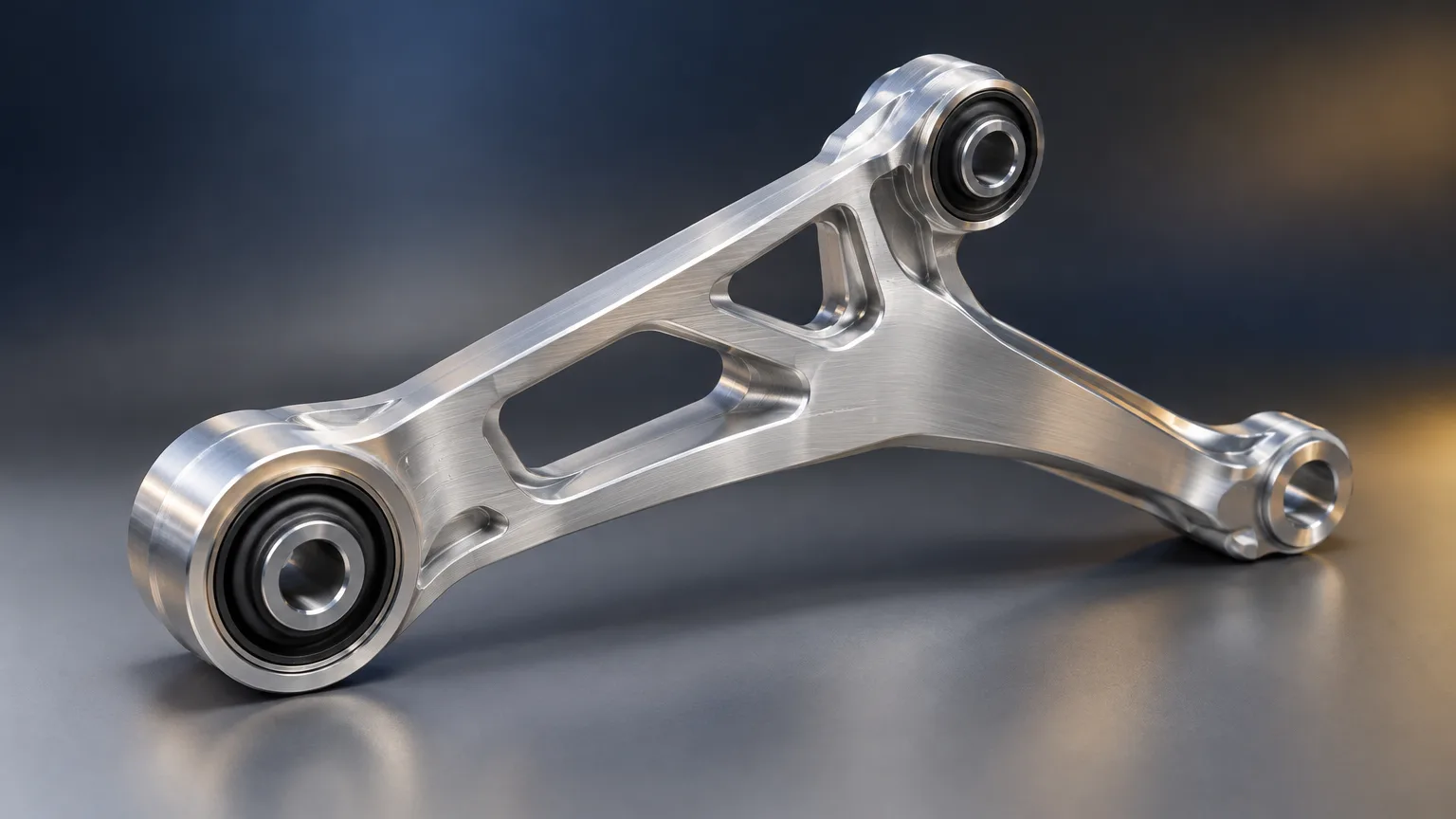
Custom automotive parts manufacturing is the design, tooling, production, finishing and inspection of components built to buyer drawings for cars, trucks, vans and electric vehicles. SR is a broker: it collects quotes from a vetted supplier network, manages quality and inspection, and delivers parts for EV startups, restoration and low-volume programs.
Who this is for: EV startups, restoration and custom builders
This service fits buyers who need custom automotive parts manufacturing in quantities too small for dedicated tooling. That includes EV startups building battery trays, motor housings and busbar supports, restoration shops replacing obsolete components, motorsport teams, and builders of limited-production vehicles.
- EV startups: battery trays, cooling parts, motor housings, busbar supports and structural brackets.
- Restoration and classic-car shops: discontinued castings, trim, fasteners and driveline parts.
- Motorsport and custom builders: one-off and small-batch machined or molded components.
- Limited-production vehicle makers: parts for programs below 1,000 units per year.
- Tier 2 and Tier 3 suppliers: overflow or specialty parts outside their own process range.
If your program runs at mass-production volume with dedicated dies and full automation, a direct Tier 1 contract is usually the better route. This page is aimed at the low-volume end of the market.
Their challenges: why low-volume automotive manufacturing is hard
Low-volume automotive manufacturing is difficult because most suppliers are set up for the opposite. Dedicated dies, mold bases and automated lines only pay back at high volume, so small programs get quoted high, quoted slow, or declined.
- Tooling economics: injection molding and metal stamping carry high tooling cost and longer launch preparation, which is hard to justify on a few hundred parts.
- Supplier fit: many shops screen out small annual volumes before engineering even reviews the drawing.
- Process choice: CNC machining has low tooling and suits prototypes and low volumes, but unit cost and material waste rise at high volume.
- Documentation: prototypes validate design, while production parts need repeatability, approved materials, controls and customer documentation.
- Fragmented sourcing: a single build may need machining, molding, casting and finishing from different suppliers.
- Change control: EV and restoration programs often revise drawings mid-build, which strains suppliers without formal revision tracking.
How SR helps: one broker for custom automotive parts manufacturing
Sourcing Repository (SR) is a broker for custom automotive parts manufacturing and does not own factories or machines. SR collects quotes from a vetted supplier network, manages quality and inspection, and delivers parts, so you deal with one contact instead of six suppliers.
What SR does
- Reviews your drawings, volumes and inspection requirements
- Routes the RFQ to suppliers whose process fits the part
- Collects and normalizes quotes for comparison
- Manages quality, inspection and delivery
What SR does not do
- Own plants, machines or tooling
- Hold manufacturing certifications in its own name
- Replace your design authority or drawing control
- Guarantee a process without a capability review
The practical benefit is process matching. A machined housing, a molded trim panel and a forged shaft belong with different suppliers, and one RFQ can reach the right ones without separate sourcing cycles.
Process: from RFQ to delivered parts
The RFQ-to-delivery process for custom automotive parts manufacturing runs from a controlled drawing package to inspected delivery, with quote turnaround typically 5-7 working days. Each step is a checkpoint where you can stop, revise or approve.
- 1. Send the RFQ package Send controlled CAD and 2D drawings with material, finish, tolerances, annual volume, inspection needs and revision status. Flag any PPAP or first-article needs up front.
- 2. Scope and process review SR reviews the part against candidate processes such as CNC machining, injection molding, die casting, forging, metal stamping or additive manufacturing, and flags unclear features.
- 3. Supplier quoting The RFQ goes to vetted suppliers whose capability matches the part. Quotes are normalized so tooling, unit price and lead time compare on the same basis.
- 4. Award and pre-production You approve the quote and drawing revision. Tooling or fixtures are prepared, and the inspection plan is agreed before parts are made.
- 5. First article and approval First-article parts are measured against the drawing. Dimensional reports and material certificates are reviewed before volume release.
- 6. Production and inspection Parts are made to the approved revision with in-process and final inspection. Deviations are raised before shipment.
- 7. Delivery and documentation Parts ship with the agreed inspection reports, material certificates and traceability records.
Quality documents: PPAP, FAI and inspection reports
Quality documents are agreed at RFQ stage, because the right set depends on whether the part is a prototype or a production item. Common automotive requirements include PPAP, control plans, PFMEA, inspection reports, material certificates and traceability.
| Document | Prototype or first article | Production part |
|---|---|---|
| First article inspection (FAI) report | Typical | On drawing or program change |
| Dimensional inspection report | Typical | Per control plan |
| Material certificates | Typical | Typical, with traceability |
| PPAP submission | Rarely required | Commonly required by OEM and Tier customers |
| Control plan and PFMEA | Not usually | Commonly required |
| Surface finish and hardness records | When specified | When specified |
IATF 16949 is a quality management system requirement for automotive production, and it is commonly required by OEM and Tier suppliers. Whether it applies to your program depends on the customer, the program and the supply-chain contract, so confirm certification and scope with the supplier before award.
Volumes and pricing approach for low-volume automotive manufacturing
Pricing in low-volume automotive manufacturing is driven by process choice and tooling, not by a published rate card. The same part can be cheap to tool and expensive per unit, or the reverse, depending on the route.
- CNC machining: low tooling and suited to prototypes and low volumes, but higher unit cost and material waste at high volume.
- Injection molding: high tooling cost and longer launch preparation, but low unit cost at volume.
- Metal stamping: fast and repeatable for sheet metal, but dedicated dies make low volumes less economical.
- Die casting: complex lightweight aluminum, zinc and magnesium shapes, with tooling cost and possible secondary machining.
- Forging: high strength and fatigue performance for gears and shafts, with higher tooling and forming loads.
- Additive manufacturing: minimal tooling and flexible geometry, but material, surface and fatigue properties depend on the process.
In custom automotive parts manufacturing, below about 1,000 parts per year is often cited as low volume, though it is not an industry-wide definition. Low volume favors flexible processes and limited tooling, while mass production favors dedicated tooling and automation.
Tolerance also shapes cost. Reported general CNC tolerance is typically about ±0.0004 in (±0.010 mm), and custom molded parts are reported up to about ±0.005 in (±0.127 mm); verify both against your drawing and the supplier's capability.
Starter program: a sensible first order
A starter program de-risks the first build. The goal is to prove the drawing, the process and the inspection method on a small quantity before committing to a larger run.
- Pick one or two representative parts, ideally the ones with the tightest tolerances or the most uncertain process fit.
- Freeze a single drawing revision and label it clearly, including tolerance class such as ISO 2768 fine, medium, coarse or very coarse.
- Order a first-article quantity and request a dimensional inspection report plus material certificates.
- Review the first article against the drawing and confirm the measurement method, not just the numbers.
- Release a small repeat batch to confirm the process holds tolerance across a run.
- Only then scale to the annual volume, with the approved revision and inspection plan locked in.
This sequence also builds the documentation trail you will need if the part later moves into a customer PPAP submission.
Get started with your custom automotive parts RFQ
Start your custom automotive parts RFQ by sending your drawing package and annual volume. Quote turnaround is typically 5-7 working days, and a complete package means fewer clarification rounds.
For custom automotive parts manufacturing quotes, mark any open feature in the package so it can be flagged during process review.
Have a drawing to quote?
Upload it with quantity and material to start a quote.
FAQ
Common questions
What process suits low-volume automotive parts?
CNC machining, additive manufacturing, flexible assembly and other limited-tooling methods are commonly considered below 1,000 parts per year. The right choice depends on geometry, material, tolerance and whether the part must later move to a higher-volume process.
Can one supplier make prototype and production parts?
Often yes, but verify process capability, tooling strategy, capacity, quality systems and change-control procedures first. A supplier that is strong on prototypes may not hold tolerance across a repeat production run, so confirm both before award.
What quality documents may be required?
Common requirements include PPAP, control plans, PFMEA, first article inspection reports, dimensional reports, material certificates and traceability records. The exact set is agreed at RFQ stage and depends on whether the part is a prototype or a production item.
What files should a buyer provide?
Provide controlled CAD, 2D drawings, material, finish, tolerances, annual volume, inspection requirements and revision status. Naming the tolerance class, such as ISO 2768 fine or medium, removes ambiguity before quoting begins.
Related resources
Keep reading
Ready when you are
Send your drawings for a custom parts quote
Share your CAD, drawings and annual volume. SR routes the RFQ to vetted suppliers, manages inspection and delivers parts. Quote turnaround is typically 5-7 working days.
Your files stay confidential. NDA available on request.