Aluminum alloy comparison

6061 vs 6063 Aluminum: Strength, Finish and Extrusion Use

6061 is the stronger 6xxx alloy, while 6063 extrudes into smoother profiles and finishes better. The right pick depends on load, profile complexity and how visible the part is.

6061vs6063 Aluminum
Reviewed by Killol DesaiUpdated Oct 20267 min read
  • 6061-T6: 45,000 psi tensile
  • 6063-T6: 35,000 psi tensile
  • Both: 10,000 ksi modulus
  • T5 vs T6 temper
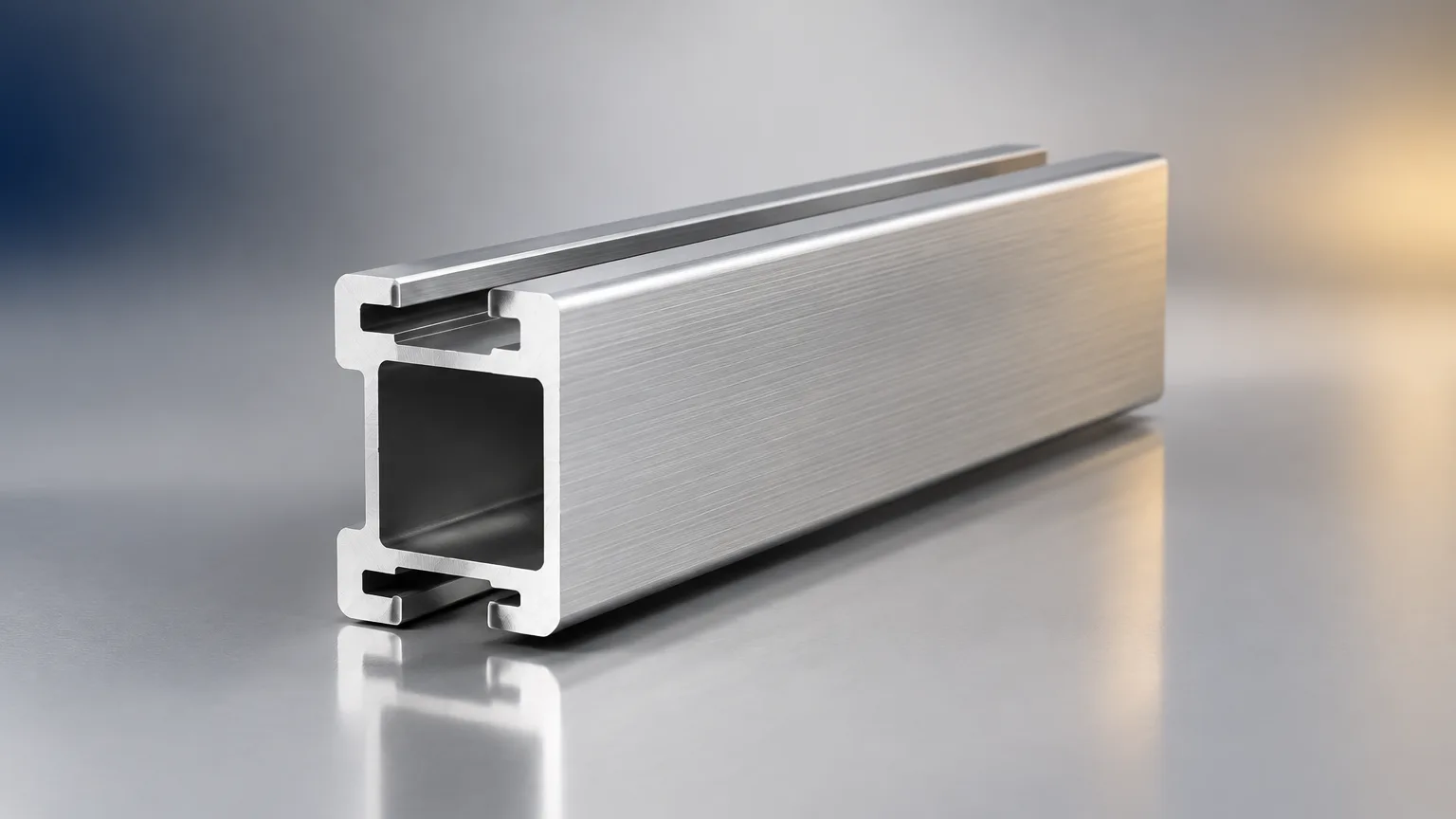
6061 and 6063 aluminum extruded profiles side by side
  • Strength firstStructural frames, machined parts, load paths
  • Finish firstArchitectural profiles, anodized visible parts
  • Extruded to profileBillet, quench, age, cut to length

Guide chapters

Quick verdict

6061 for strength, 6063 for extrusion quality and finish.

Strength gap and shared stiffness

Side-by-side table

Ten criteria compared, from tensile strength to typical uses.

T6 values, temper, best-fit uses

6061 in depth

Higher strength grade for structural and machined parts.

Strengths, limits, best uses

6063 in depth

Easier extrusion and better anodizing appearance.

Strengths, limits, best uses

Decision rules

Checklists for choosing 6061 or 6063 with confidence.

Strong and weak signals

Cost and lead time

What actually moves cost: profile, die, temper, finishing.

Relative differences only

Recommendation and next step

Specify alloy and temper, then request a quote.

Steps to RFQ
Quick answer

6061 vs 6063 is a comparison of two heat-treatable 6xxx-series aluminum-magnesium-silicon alloys. 6061 generally offers higher strength for structural and machined parts; 6063 is usually selected for extrusion quality, smooth finish and anodizing appearance. Choose 6061 when loads govern and 6063 when profile shape or cosmetics govern.[7][11]

Quick verdict: which aluminum alloy should you choose?

6061 vs 6063 is mainly a choice between strength and finish. Choose 6061 when the part carries load, is machined after extrusion, or needs maximum strength in a 6xxx alloy. Choose 6063 when profile smoothness, surface finish and anodizing appearance matter more.[3][7][11]

The gap is real but narrow: 6061-T6 reaches a typical tensile strength of about 45,000 psi (310 MPa), versus about 35,000 psi (241 MPa) for 6063-T6.[7]

Strength and machining drive the design
Pick 6061 when
Structural frames, transportation, marine, load-bearing components.[11]
Extrusion quality and finish drive the design
Pick 6063 when
Architectural profiles, tubes, frames, heat sinks, visible anodized parts.[3][7]
Nearly identical for both alloys
Stiffness
Both sit at a typical 10,000 ksi (68.9 GPa) modulus, so section geometry mainly controls deflection.[7]

6061 vs 6063 aluminum: side-by-side comparison

The table below compares 6061 and 6063 on the criteria buyers and engineers weigh most: strength, extrusion behavior, finish, anodizing, stiffness, typical uses and temper options. Values are typical published figures for T6 temper.[7]

6061 vs 6063 aluminum compared on 10 criteria
Criterion60616063
Tensile strength (T6)45,000 psi (310 MPa)[7]35,000 psi (241 MPa)[7]
Yield strength (T6)40,000 psi (276 MPa)[7]31,000 psi (214 MPa)[7]
Elastic modulusAbout 10,000 ksi (68.9 GPa)[7]About 10,000 ksi (68.9 GPa)[7]
Elongation / hardness (T6)12% / Brinell 95[7]12% / Brinell 73[7]
Extrusion behaviorStronger but needs higher process controlExtrudes more easily into smoother profiles
Surface finish and anodizingAcceptable; cosmetic uniformity is harder to holdCommonly preferred for visible anodized surfaces[6][7]
Machining after extrusionFavored for machined and load-bearing parts[11]Machinable, but often left as-extruded
Typical temper orderedT6, T651T5, T6
Best-fit usesStructural frames, truck and marine frames, machined parts[11]Architectural profiles, tubes, frames, heat sinks, anodized extrusions[3][7]
Shared strengthsCorrosion-exposed components, brackets, fabricated assembliesCorrosion-exposed components, brackets, fabricated assemblies

6061 aluminum in depth: strengths, limits and best uses

In a 6061 vs 6063 comparison, 6061 aluminum (AA 6061, UNS A96061) is the higher-strength option: a heat-treatable 6xxx-series aluminum-magnesium-silicon alloy used in structural frames, truck and marine frames, machined parts and load-bearing components.[7][11]

Where 6061 wins

  • Higher strength than 6063 in the same temper: typically about 45,000 psi (310 MPa) tensile and 40,000 psi (276 MPa) yield at T6 (solution heat-treated and artificially aged).[7]
  • Tempers such as T651 (solution heat-treated, stress-relieved, and artificially aged) can be specified when stress relief matters for machined parts.
  • Common in transportation, marine and structural assemblies where load paths and fatigue life matter.[11]

Limits to plan around

  • Harder to extrude than 6063 and generally needs higher process control, which can affect profile complexity and die cost.
  • Cosmetic anodizing uniformity is harder to guarantee; results depend on billet, extrusion, pretreatment and process control.[6][7]
  • Quench distortion, residual stress and tolerance limits apply to any extruded profile.

6063 aluminum in depth: strengths, limits and best uses

6063 aluminum (AA 6063, UNS A96063) is a heat-treatable 6xxx-series aluminum-magnesium-silicon alloy usually selected for superior extrusion quality, surface finish and anodizing appearance. It is the default for architectural profiles, tubes, frames, heat sinks and visible anodized extrusions.[3][7]

Where 6063 wins

  • Extrudes more easily and produces smoother profiles than 6061, which helps with complex cross-sections.
  • Commonly preferred for architectural anodizing and cosmetic uniformity on visible surfaces.[6][7]
  • Can be specified as T5 (artificially aged after extrusion) or T6 when more strength is needed; frequently used for heat-sink profiles.

Limits to plan around

  • Lower strength is the main trade-off in 6061 vs 6063: 6063-T6 is typically about 35,000 psi (241 MPa) tensile and 31,000 psi (214 MPa) yield.[7]
  • Lower Brinell hardness (typically 73 at T6) than 6061, which matters for wear surfaces and heavily machined features.[7]
  • Corrosion, weldability and machinability rankings depend on grade, temper, product form, finish and process, so confirm them for the specific application.
A thermal-conductivity advantage for 6063 is often repeated in supplier literature, but the figure depends on temper and source data. Verify it against the applicable product data sheet before designing a heat sink around it.

When to choose 6061 vs 6063: decision rules for 6061

Choose 6061 when strength, machining or load-bearing duty governs the design. If two or more of the rules below apply, 6061 is normally the correct starting point.[7][11]

  1. The part is structural or load-bearing: frames, brackets under load, transportation or marine components.[11]
  2. The profile will be machined, drilled or milled after extrusion and needs better dimensional control.
  3. The design is strength-limited, not stiffness-limited, and 6063-T6 yield strength is insufficient.
  4. The part is not the visible finished surface, so anodizing uniformity is secondary.
  5. The application involves higher stress, wear or fatigue exposure where the extra hardness of 6061-T6 (Brinell 95) helps.[7]

Strong signals for 6061

  • Structural frame or chassis member
  • Machined features after extrusion
  • Load path sized by yield strength
  • Non-cosmetic or painted surface

Weak signals for 6061

  • Thin, complex visible profile
  • Deep anodized cosmetic finish required
  • Deflection-limited design (alloy will not fix it)
  • Simple trim with no load

When to choose 6063 vs 6061: decision rules for 6063

In a 6061 vs 6063 decision, choose 6063 when the extrusion profile and visible finish matter more than peak strength. It is the standard pick for architectural and anodized work.[3][6][7]

  1. The part is an architectural profile, tube, frame or trim with a visible surface.[3][7]
  2. The profile is complex or thin-walled and needs easier extrusion and a smoother surface.
  3. The part will be anodized and must show uniform color and appearance.
  4. The profile is a heat sink where shape and surface area carry the thermal duty.
  5. Applied loads stay comfortably below the typical 6063-T6 yield strength of about 31,000 psi (214 MPa).[7]

Cost and lead time differences between 6061 and 6063

Cost and lead time depend on the profile, die, temper, finishing and order size rather than on the alloy name alone. Alloy price differences between 6061 and 6063 are usually secondary to tooling and processing decisions.

  • 6063 generally extrudes more easily and can run smoother profiles, which tends to reduce extrusion difficulty relative to 6061.
  • 6061 generally requires higher process control during extrusion, which can add processing effort.
  • Both alloys add cost when cold drawing or machining follows extrusion, since drawing improves dimensional control and machining adds cost and material waste.
  • Die cost, quench distortion, residual stress and tolerance limitations apply to both alloys.
  • Finishing choices, such as anodizing for cosmetic uniformity, affect cost and lead time independently of the alloy.
SR collects quotes for both alloys from a vetted supplier network and manages quality and inspection through delivery. Typical quote turnaround is 5-7 working days, and SR does not own plants or machines.

Recommendation and next step for your 6061 vs 6063 decision

For a 6061 vs 6063 decision, default to 6061 when strength and machining drive the part, and to 6063 when extrusion quality, finish and anodizing appearance drive it. When both are close, size the section on stiffness first, then confirm the alloy against yield strength and finishing needs.[7]

  1. Define the governing requirement State whether the part is limited by strength, stiffness, wear, finish or thermal performance. That answer usually decides the alloy.
  2. Specify alloy and temper Write the alloy and temper on the drawing, such as 6061-T6, 6061-T651, 6063-T5 or 6063-T6, and cite the product specification, such as ASTM B221 for extruded profiles.[3]
  3. Confirm profile and tolerance Extruded dimensional tolerance is typically about ±0.008 in (±0.20 mm) for 0.250-0.499 in (6.35-12.67 mm) dimensions; verify the applicable ASTM product specification for your profile.[9]
  4. Request a quote Send drawings, alloy, temper, finish and volumes to SR. Quotes typically come back in 5-7 working days, with quality and inspection managed through delivery.

Send your drawing with alloy, temper and finish requirements to start an RFQ. Questions on alloy selection can go to killol@sourcingrepository.com.

Have a drawing to quote?

Upload it with quantity and material to start a quote.

Request a quote

FAQ

Common questions

Which is stronger, 6061 or 6063?

6061-T6 is stronger. It offers 45,000 psi (310 MPa) tensile and 40,000 psi (276 MPa) yield strength, compared with 35,000 psi (241 MPa) tensile and 31,000 psi (214 MPa) yield for 6063-T6. Both alloys share an elastic modulus near 10,000 ksi (68.9 GPa), so deflection is mostly a geometry problem.[7]

Can 6061 replace 6063?

It can, but the trade-offs matter. 6061 may satisfy the strength requirement while making the extrusion harder to run and the cosmetic finish harder to control. If the part is a visible anodized profile, test the finish before committing to a full run.

Which alloy is better for architectural extrusion?

6063 is commonly selected for architectural profiles because it extrudes well and provides favorable visible-surface and anodizing results. It is also frequently used for tubes, frames and heat sinks. Final finish quality still depends on billet, extrusion, pretreatment and process control, so confirm with the extruder.[3][6][7]

What temper should be ordered?

Specify the temper required by the design, such as T5, T6 or T651, based on strength, forming and stress-relief needs. T6 increases strength after solution heat treatment and artificial aging; T5 uses aging after extrusion. State the temper and the applicable product specification on the drawing.

Ready when you are

Ready to quote 6061 or 6063 parts?

Send your drawings with alloy, temper and finish requirements. SR collects quotes from a vetted supplier network, manages quality and inspection, and delivers parts. Typical quote turnaround is 5-7 working days.

Your files stay confidential. NDA available on request.

Have a drawing?Get a quote