
Automotive Fasteners & Hardware
OEM Fasteners and Hardware Sourcing
SR collects quotes from a vetted supplier network for OEM fasteners and automotive hardware, manages quality and inspection, and delivers parts to your specification.
- Vetted supplier network
- Quote in 5-7 working days
- Inspection managed by SR
- Quote in 5-7 daysSend drawing, material, finish, quantity
- Inspection managedIncoming material and process checks
- One point of contactSR coordinates the supplier network
OEM fasteners are production fasteners and hardware built to an automaker's drawing, material, finish and approval requirements. SR is a manufacturing broker: it collects quotes from a vetted supplier network, manages quality and inspection, and delivers parts. Typical routes include cold forming, stamping, CNC machining, die casting and injection molding.
What OEM fasteners and hardware sourcing is
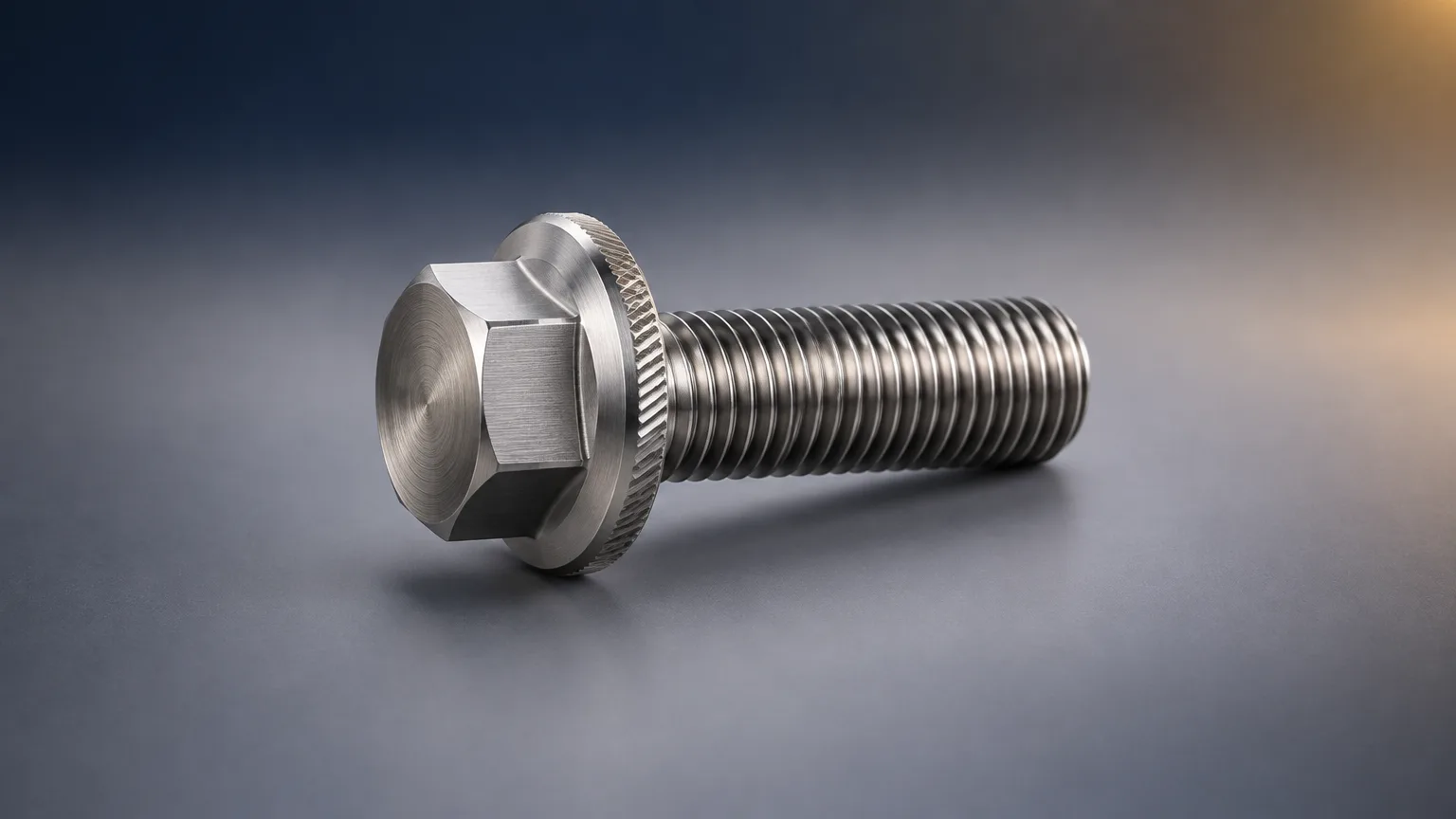
OEM fasteners are bolts, screws, nuts, studs, clips, rivets and similar hardware produced to an automaker's or tier supplier's drawing, material, finish and approval requirements. Hardware covers the related small parts that complete an assembly, such as washers, brackets, retainers, spacers and latches.
This service is for engineers, procurement managers and founders who need production fasteners or hardware but do not want to qualify and manage several suppliers themselves. SR is a manufacturing broker. It does not own factories or machines; it collects quotes from a vetted supplier network, manages quality and inspection, and delivers parts.
When to use this service
- You have a drawing or CAD model and need production-intent fasteners or hardware.
- You are moving a part from prototype to series production and need repeatable supply.
- Your current supplier cannot meet tolerance, finish or capacity requirements.
- You need one contact for quoting, quality documentation and delivery.
- You are sourcing service, replacement or performance parts outside a full OEM program.
How the OEM fastener sourcing process works
The OEM fastener sourcing process runs in seven steps, from your requirements to delivered parts. It is used for automotive components and for wider auto parts manufacturing programs.
OEM fasteners are bolts, screws, nuts, clips and similar hardware made to a vehicle manufacturer's drawing and approval requirements, not bought as catalog stock. Each part is tied to a specified material, finish and tolerance.
- 1. Send requirements Send the CAD file, drawing and revision, plus material, finish, tolerances, quantity, delivery location, inspection needs and application. Missing details are the most common cause of quote delay.
- 2. SR reviews the package SR checks that the drawing, material callout and finish are complete enough to quote. Gaps come back to you as questions.
- 3. Supplier matching SR routes the package to vetted suppliers whose process, material and capacity fit the part. Not every supplier sees every RFQ.
- 4. Quotes collected SR consolidates quotes into one comparison of price, lead time, tooling, process route and assumptions. Quote turnaround is typically 5-7 working days.
- 5. Process and quality planning The selected supplier defines the process route, control plan and inspection method. Automotive programs may require APQP, FMEA, SPC and PPAP submissions.
- 6. Production and inspection Parts are produced and inspected against the drawing. SR manages material verification, certification review, process audits, control plans and traceability.
- 7. Delivery Parts ship with the agreed documentation. SR stays the single contact for quality questions after delivery.
Materials and finishes for automotive fasteners
Materials for automotive fasteners are chosen for strength, weight, corrosion behavior and cost, and the grade must be on the drawing. SR does not assume a grade from a part name, in car parts manufacturing or anywhere else.
| Material | Grade | Properties | Typical uses |
|---|---|---|---|
| Aluminum alloys | Specify on drawing | Low density, corrosion resistance, machinability, castability | Brackets, housings, wheels, engine and transmission components |
| Carbon and alloy steel | Specify on drawing | High strength, fatigue resistance, hardness; weldability varies by grade | Stampings, shafts, gears, suspension, fasteners, structural parts |
| Magnesium alloys | Specify on drawing | Very low density, good castability; corrosion protection often required | Lightweight housings, brackets, seat frames, instrument-panel structures |
| Zinc alloys | Specify on drawing | Good die-castability, dimensional repeatability, surface finish | Handles, latches, housings, small hardware |
| Polypropylene | Specify on drawing | Low density, chemical resistance, good processability | Trim, ducts, covers, containers, molded interior parts |
| Polyamide | Specify on drawing | Good strength, wear resistance, temperature capability; moisture affects dimensions | Gears, clips, brackets, connectors, under-hood parts |
| ABS | Specify on drawing | Impact resistance, dimensional stability, attractive molded surfaces | Interior trim, bezels, housings, instrument-panel parts |
Finishes and coatings
Fasteners usually need a finish for corrosion protection, friction control or appearance. Common families are zinc plating, zinc-nickel, phosphate and oil, anodizing for aluminum, and painted or molded-in-color plastic. The callout should state the standard, thickness or coating weight, and any torque-tension or salt-spray requirement, because these change cost and lead time.
Specs and tolerances for OEM fasteners
Specs and tolerances for OEM fasteners are set by the drawing, not by a default table. In automotive parts manufacturing, numerical limits depend on process, size, material and supplier capability.
| Parameter | Typical range | Standard or source |
|---|---|---|
| Dimensional tolerance | Depends on process, size, material and drawing | Part drawing and supplier capability study required |
| Geometric tolerancing | Specify datum scheme and GD&T callouts | ASME Y14.5 or applicable ISO GPS standard |
| Surface roughness | Specify Ra or other required parameter | Drawing requirement |
| Hardness and strength | Defined by material and heat-treatment specification | Material specification and test method required |
| Capability | Cp/Cpk targets are customer- and feature-specific | IATF 16949, control plan, SPC, customer-specific requirements |
| Part approval | Submission level and evidence vary by customer | AIAG PPAP and customer-specific requirements |
Design tips that lower OEM fastener cost
Most cost is fixed at the drawing stage. These seven changes reduce cost without weakening the part.
- Specify the loosest tolerance that still meets function. Tightening a non-critical feature adds inspection and scrap cost with no benefit.
- Use one material and one finish across a fastener family. Mixed grades and coatings split volumes and add setup.
- Standardize thread sizes, lengths and drive types across the program so suppliers can run larger batches.
- Avoid unnecessary secondary operations. Chamfers, grooves and special heads each add a step and a handling risk.
- Design for the process. Cold forming, stamping, machining and casting each have different shape and wall-thickness limits.
- State the datum scheme and GD&T callouts on the drawing so inspection is unambiguous and repeatable.
- Define the finish by standard, thickness and performance requirement rather than by color or trade name.
Typical OEM fastener and hardware applications
OEM fasteners and hardware appear in nearly every vehicle system. The examples below show common part types by area.
- Powertrain: bolts, studs, washers, brackets and machined fittings for engine and transmission assemblies.
- Chassis and suspension: high-strength fasteners, forged and machined links, and stamped reinforcement plates.
- Body and structure: stamped brackets, rivets, clips, weld nuts and structural hardware.
- Interior: molded clips, retainers, bezels, latches and small zinc die-cast hardware.
- Electrical and under-hood: connectors, polyamide brackets, heat-resistant clips and mounting hardware.
- Service and performance parts: replacement fasteners, upgraded hardware and low-volume custom parts.
Industries served
Automotive is the primary focus, including passenger vehicles, commercial vehicles and off-highway equipment. The same fastener and hardware routes also serve industrial equipment, agricultural machinery and aftermarket performance suppliers.
What drives OEM fastener cost
No reliable universal price exists for custom fasteners. Cost is built from the drawing, the process route and the evidence the customer requires. SR does not publish prices because the same part can differ widely by quantity, material and approval level.
- Material type, grade, availability, and buy-to-fly ratio.
- Part geometry, size, wall thickness, and tolerance requirements.
- Process route: cold forming, stamping, machining, casting, forging, molding or additive.
- Tooling and fixtures, including die and mold cost and design lead time.
- Finishing and coating, including thickness control and salt-spray performance.
- Inspection and documentation: capability studies, control plans, traceability and PPAP submissions.
- Quantity and order pattern, since setup and tooling amortize over volume.
- Logistics, packaging and delivery location.
Prototype routes minimize tooling and lead time. Production routes optimize repeatability, cycle time, capability and total cost. Moving a part from one to the other usually changes the cost structure more than any single design feature.
Why source OEM fasteners through SR
Sourcing OEM fasteners through SR gives you one contact, a vetted supplier network and managed inspection. SR is a manufacturing broker, not a factory, and it works with automotive component manufacturers rather than owning plants or machines.
What SR does
- Matches your RFQ to suppliers whose process and capacity fit
- Consolidates quotes into one comparison
- Manages incoming material verification and certification review
- Coordinates process audits, control plans and traceability
- Stays the single contact through delivery and after
What SR does not do
- Own factories, machines or tooling
- Skip drawing or material requirements
- Quote without a complete RFQ package
To start an RFQ, email killol@sourcingrepository.com or use the quote form. SR is based at 201 SG Mall, Ahmedabad.
Have a drawing to quote?
Upload it with quantity and material to start a quote.
FAQ
Common questions
How much do custom auto parts cost?
No reliable universal price exists. Cost depends on geometry, material, process, tooling, quantity, tolerance, finishing, inspection, and logistics. SR collects quotes from its vetted supplier network and consolidates them so you can compare assumptions, not just totals.
What information is needed for a quote?
Provide CAD, drawing, revision, material, finish, tolerances, quantity, delivery location, inspection needs, and intended application. A complete package is the fastest route to a quote; SR returns missing items as questions before quoting starts.
What is PPAP?
PPAP is an automotive submission process used to demonstrate that production processes can consistently meet approved requirements. Submission level and evidence vary by customer, so the required level is defined before production begins.
Can a supplier make a part without a drawing?
A supplier may reverse-engineer or develop a model, but requirements, ownership, tolerances, materials, and approval responsibilities must be agreed in writing. For OEM fasteners, a controlled drawing is the safer starting point.
Related resources
Keep reading
Ready when you are
Send your fastener drawing for a quote
Share CAD, drawing, material, finish, tolerances and quantity. SR will route the package to its vetted supplier network and return a consolidated quote, typically in 5-7 working days.
Your files stay confidential. NDA available on request.