
EV Motor Laminations & Stator Cores
Stator Core Lamination Sourcing for EV Motors
SR sources stator core laminations and rotor stacks from a vetted supplier network. We collect quotes, manage quality and inspection, and deliver parts to your drawing.
- Laser-cut laminations
- Stamped stacks
- IATF 16949 suppliers
- Inspection managed
- Quote in 5-7 daysSend drawing, material, quantity and delivery location
- Inspection managedIncoming material verification and traceability
- Vetted suppliersAutomotive-focused shops under IATF 16949
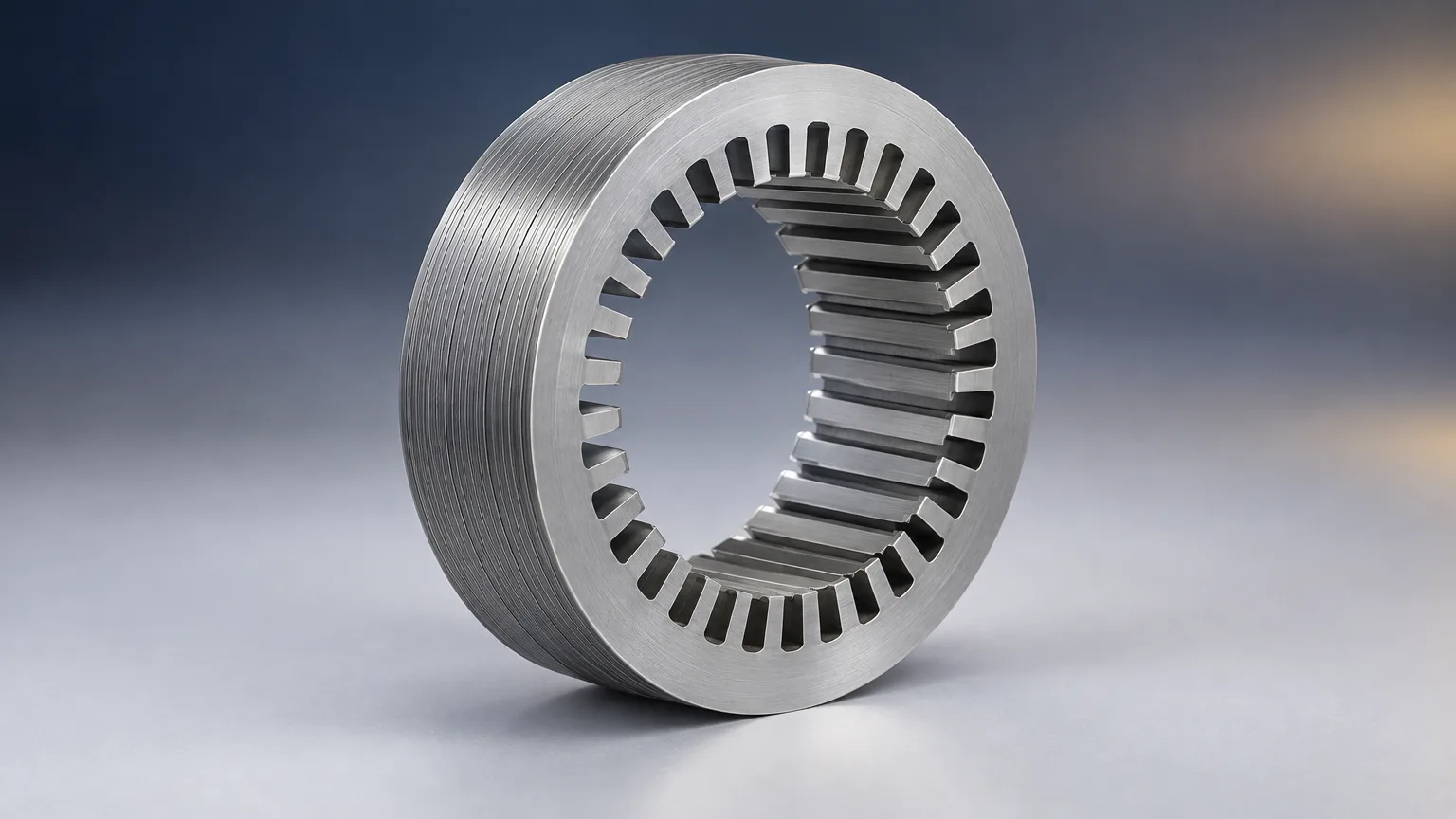
Stator core lamination is the process of cutting thin electrical steel sheets and stacking them into the stator core of an electric motor. SR sources these laminations from a vetted supplier network, using laser cutting or stamping, and manages quality and inspection through delivery.
What stator core lamination sourcing is
Stator core lamination is the production of thin electrical steel sheets cut to a profile and stacked to form the stator core of an electric motor. Each lamination is insulated from the next to limit eddy currents, and the stack is compressed and bonded or interlocked.
This service is for engineers, procurement managers and founders who need custom EV motor laminations but do not want to manage multiple fabrication and coating suppliers. It fits prototype builds, low-volume performance motors and production programs that require documented quality.
When to use this service
- You have a lamination profile drawing or CAD and need quotes from capable suppliers.
- You need motor laminations laser cutting for prototype or low-volume builds where tooling is not justified.
- You need stamped laminations for higher volumes and want a supplier with automotive quality systems.
- You need incoming material verification, traceability and inspection evidence for the delivered stack.
Process steps for stator core lamination orders
The process runs from drawing review to delivered stack. Each step is managed by SR as a single point of contact.
- 1. Drawing and requirement review Send the lamination profile, stack height, material grade, insulation requirement, tolerance callouts and quantity. SR reviews the package for completeness before quoting.
- 2. Supplier matching and quoting SR routes the RFQ to vetted suppliers whose process routes fit the part. Quotes are compared on process, capability and inspection plan, not price alone.
- 3. Process route selection Laser cutting is used for prototypes and low volumes; stamping is used when volume justifies dedicated dies. The route is confirmed against the drawing and quantity.
- 4. Material verification Incoming electrical steel is verified against the specified grade, and certification is reviewed before cutting begins.
- 5. Cutting and stacking Laminations are cut, deburred, insulated as required, and stacked to the specified height. Interlocking, bonding or clamping is applied per the drawing.
- 6. Inspection and documentation Critical features are measured against the drawing. Process audits, control plans and traceability records are maintained by the supplier.
- 7. Delivery Parts are packed to protect the stack and shipped to the agreed delivery location.
Materials and finishes for motor laminations
Laminations are made from electrical steel selected for core loss and permeability. The table lists material families used in automotive parts; the exact grade must be specified on the drawing.
| Material | Grade | Properties | Typical uses |
|---|---|---|---|
| Aluminum alloys | Unverified; grade must be specified by drawing | Low density, corrosion resistance, machinability, and castability | Brackets, housings, wheels, engine and transmission components |
| Carbon and alloy steel | Unverified; grade must be specified by drawing | High strength, fatigue resistance, hardness, and weldability vary by grade | Stampings, shafts, gears, suspension, fasteners, and structural parts |
| Magnesium alloys | Unverified; grade must be specified by drawing | Very low density and good castability; corrosion protection is often required | Lightweight housings, brackets, seat frames, and instrument-panel structures |
| Zinc alloys | Unverified; grade must be specified by drawing | Good die-castability, dimensional repeatability, and surface finish | Handles, latches, housings, and small hardware |
| Polypropylene | Unverified; grade must be specified by drawing | Low density, chemical resistance, and good processability | Trim, ducts, covers, containers, and molded interior parts |
| Polyamide | Unverified; grade must be specified by drawing | Good strength, wear resistance, and temperature capability; moisture affects dimensions | Gears, clips, brackets, connectors, and under-hood parts |
| ABS | Unverified; grade must be specified by drawing | Impact resistance, dimensional stability, and attractive molded surfaces | Interior trim, bezels, housings, and instrument-panel parts |
Finishes and stack treatments
- Core-plate insulation coating applied by the steel mill or the lamination supplier.
- Deburring after laser cutting or stamping to remove sharp edges.
- Bonding, interlocking or clamping to hold the stack at the specified height.
- Corrosion protection where the stack is exposed to moisture or road salt.
- Edge treatment and cleaning before assembly into the motor housing.
Specs and tolerances for stator core laminations
Tolerances depend on process, size, material and the drawing. The table lists the parameters that must be defined before quoting; numerical values are confirmed by the supplier's capability study.
| Parameter | Typical range | Standard or source |
|---|---|---|
| Dimensional tolerance | Unverified; depends on process, size, material, and drawing | Part drawing and supplier capability study required |
| Geometric tolerancing | Unverified; specify datum scheme and GD&T callouts | ASME Y14.5 or applicable ISO GPS standard; exact edition unverified |
| Surface roughness | Unverified; specify Ra or other required parameter | Drawing requirement; applicable surface-texture standard unverified |
| Hardness and strength | Unverified; defined by material and heat-treatment specification | Material specification and test method required |
| Capability | Cp/Cpk targets are customer- and feature-specific | IATF 16949, control plan, SPC, and customer-specific requirements. |
| Part approval | Submission level and evidence vary by customer | AIAG PPAP and applicable customer-specific requirements. |
Design tips that lower lamination cost
Cost is driven by geometry, material and tolerance. These DFM choices reduce waste and cycle time without compromising motor function.
- Specify the tightest tolerance needed for function, not the tightest possible tolerance.
- Keep the lamination profile simple; avoid narrow slots and thin webs that slow cutting and increase scrap.
- Use a standard electrical steel grade and thickness where the design allows.
- Design for a single stack height or a small number of variants to reduce setup.
- Confirm the datum scheme and GD&T callouts so inspection is unambiguous.
- Choose laser cutting for prototypes and low volumes; move to stamping only when volume justifies tooling.
- Define the insulation and bonding method early so the stack process is not reworked later.
Typical applications for EV motor laminations
Stator core laminations and rotor stacks are used across electric traction and auxiliary motors. The same sourcing route covers related automotive parts.
- EV traction motor stators and rotors.
- Hybrid and 48V auxiliary motors.
- Pumps, fans and compressor motors.
- Performance and motorsport motor rebuilds.
- Prototype drivetrains and test rigs.
- Industrial and e-mobility motor programs.
Related automotive parts include stampings, shafts, gears, housings and structural components produced under the same quality framework.
What drives the cost of stator core laminations
No reliable universal price exists for custom laminations. Cost depends on the factors below, and each quote is built from the drawing and quantity.
- Material type, grade, availability, and buy-to-fly ratio.
- Part geometry, size, wall thickness, and tolerance requirements.
- Process route: laser cutting versus stamping, and whether tooling is required.
- Stack height, interlocking or bonding method, and insulation coating.
- Inspection level, documentation and part approval requirements.
- Quantity, delivery location and logistics.
Why source stator core laminations through SR
Sourcing stator core laminations through SR gives you one contact for quoting, quality and delivery. SR is a manufacturing broker: we do not own factories or machines. We collect quotes from a vetted supplier network, manage quality and inspection, and deliver parts.
A stator core lamination is a thin steel sheet cut to the stator profile and stacked with others to form a motor's stator core. SR sources stator core lamination parts, including motor laminations made by laser cutting, from vetted suppliers against your drawing.
What you get
- One contact for quoting, quality and delivery.
- Quotes from vetted suppliers matched to your process route.
- Incoming material verification and certification review.
- Process audits, control plans and traceability.
- Inspection managed against your drawing.
What you provide
- CAD and drawing with revision.
- Material grade, finish and tolerance callouts.
- Quantity and delivery location.
- Inspection and part approval requirements.
- Intended application and program timing.
The same process supports auto parts manufacturing, car parts manufacturing, automotive parts manufacturing and vehicle parts manufacturing, from automotive components to motor parts, through automotive component manufacturers in the network.
Quotes are typically returned in 5-7 working days from a complete RFQ package. Contact killol@sourcingrepository.com or use the quote form to start.
Have a drawing to quote?
Upload it with quantity and material to start a quote.
FAQ
Common questions
How much do custom auto parts cost?
No reliable universal price exists. Cost depends on geometry, material, process, tooling, quantity, tolerance, finishing, inspection and logistics. A supplier can only quote accurately from a complete drawing and specification, so send a full RFQ package to get a price for your part.
What information is needed for a quote?
Provide CAD, a drawing with revision, material, finish, tolerances, quantity, delivery location, inspection needs and the intended application. A complete package lets suppliers quote accurately and avoids repeated clarification rounds that delay the quote.
Can a supplier make a part without a drawing?
A supplier may reverse-engineer a part or develop a model, but requirements, ownership, tolerances, materials and approval responsibilities must be agreed in writing first. A drawing with a revision level remains the clearest basis for quoting and inspection.
What is PPAP?
PPAP, the Production Part Approval Process, is an automotive submission process that demonstrates production processes can consistently meet approved requirements. Submission level and evidence vary by customer, so confirm the exact customer-specific requirements before production starts.
Related resources
Keep reading
Ready when you are
Request a stator core lamination quote
Send your drawing, material, quantity and delivery location. SR returns quotes from vetted suppliers in 5-7 working days.
Your files stay confidential. NDA available on request.