
Sheet Metal Fabrication Service
Metal Laser Cutting Services
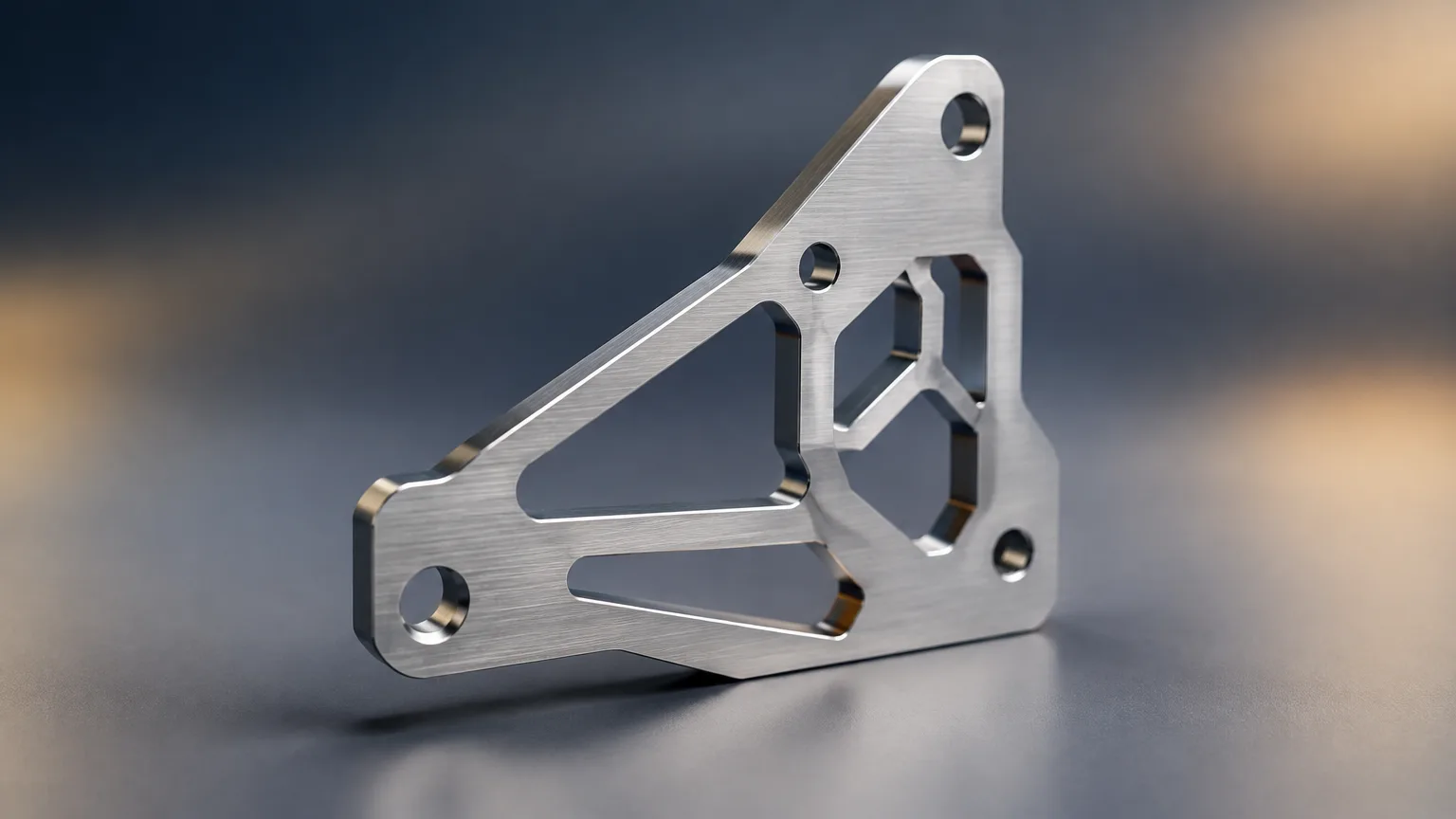
Metal laser cutting is a CNC thermal process that uses a focused laser beam and assist gas to cut programmed contours in sheet, tube and profile metal.
- 0.020–1.260 in [0.5–32 mm]
- ±0.008 in [±0.20 mm] reported
- 5-7 working day quotes
- ISO 9013 scope0.020–1.260 in [0.5–32 mm] laser range
- Design review includedNesting, kerf and lead-in advice
- Inspection managed by SRDimensional checks before delivery
Metal laser cutting is a CNC thermal process that focuses a laser beam onto metal and uses an assist gas to melt, vaporize or oxidize material along programmed paths. ISO 9013 covers laser cuts from about 0.020–1.260 in (0.5–32 mm). It suits flat blanks, profiles and tube parts in steel, stainless, aluminum, copper and brass.
What metal laser cutting is and when to use it
Metal laser cutting is the use of a programmed, focused laser beam to cut sheet, plate and tube, with an assist gas clearing the molten or oxidized metal from the kerf. The edge is produced by the beam and gas, not by a physical tool.
ISO 9013 classifies the geometrical specifications and quality tolerances of laser-cut surfaces; its stated laser range is about 0.020–1.260 in (0.5–32 mm). Metal laser cutting suits engineers and buyers who need flat blanks, profiles or tube parts with tight contours inside a wider laser cutting and fabrication scope. It fits parts with complex outlines, several hole patterns or repeat volumes that would otherwise need dedicated tooling.
When laser cutting is the right process
- Complex 2D contours, cutouts and hole patterns in sheet metal.
- Precision sheet-metal blanks and profiles that feed later bending, welding or assembly.
- Tube, pipe and structural-profile work where cutting and hole-making are combined.
- Mixed or changing part geometry where dedicated punch tooling is not practical.
- Thin-to-medium sheet where narrow kerf and low heat input matter.
Laser cutting process steps
The process runs from your CAD data through nested cutting to inspection and delivery. Each step below is a control point where the part geometry, material or cut quality can be confirmed before the next operation.
- 1. Review CAD and drawing The supplier checks the model, revision, material grade, thickness and tolerances, then flags anything that will not cut cleanly or economically.
- 2. Select the cutting route Fiber-laser fusion cutting, oxygen-assisted flame cutting, tube and profile cutting, or 2D flat-sheet cutting is chosen based on metal, thickness and edge requirement.
- 3. Nest and program CAD/CAM nests parts on the sheet, sets pierce points and lead-ins, and generates the contour paths. Nesting efficiency directly affects material cost.
- 4. Cut the parts The machine pierces, cuts contours and unloads finished parts. Laser power, cutting speed and assist gas are matched to the material and cut-quality class.
- 5. Inspect and finish Parts are checked against the drawing, deburred or cleaned where specified, then packed. Cutting can also pass into bending, tapping, welding or coating as a fabrication route.
Materials and finishes for laser cutting metal fabrication
Mild steel, stainless steel, aluminum, copper and brass are all cut by laser, but each behaves differently at the beam. Grade is not universal in this process, so the exact alloy, temper or condition should be named on the drawing rather than left to the supplier.
| Material | Grade | Cutting behavior | Typical uses |
|---|---|---|---|
| Mild or structural steel | Grade unverified; specify an applicable ASTM or EN grade | Ferrous, economical, suits oxygen- or nitrogen-assisted cutting | Brackets, frames, machinery parts, panels, structural components |
| Stainless steel | Grade unverified; specify grade and condition | Corrosion-resistant; typically inert-gas fusion cutting to avoid oxide contamination | Food equipment, medical components, enclosures, architectural parts, process equipment |
| Aluminum | Grade unverified; specify alloy and temper | Lightweight, reflective, thermally conductive; parameters depend on alloy and thickness | Transportation, electronics, enclosures, brackets, lightweight structures |
| Copper | Grade unverified; specify electrical or oxygen-free grade where required | Highly conductive and reflective; maximum thickness generally lower than steel | Busbars, electrical parts, heat-management components, architectural details |
| Brass | Grade unverified; specify alloy | Copper-zinc alloy with reflective cutting behavior and alloy-dependent machinability | Fittings, hardware, decorative parts, electrical components |
Finishes applied after cutting
Laser cutting leaves a thermally cut edge. Deburring, edge cleaning or oxide removal is often specified for stainless and for oxygen-cut mild steel, where oxide scale and heat-affected effects can require cleaning or finishing. Further finishing such as coating, plating or painting is handled as a separate operation with its own specification.
Specs and tolerances for metal laser cutting
Tolerances are machine-, material- and geometry-dependent, so treat published figures as typical rather than guaranteed. The table below separates published scope values from reported application values.
| Parameter | Typical range | Standard or source |
|---|---|---|
| Laser-cut material thickness | About 0.020–1.260 in (0.5–32 mm) under ISO 9013 scope | ISO 9013:2017 |
| Mild-steel capacity (specified machines) | Up to 1.260 in (32 mm) on specified TruLaser configurations | TRUMPF TruLaser 5030/5040/5060 technical data |
| Stainless-steel capacity (specified machines) | Up to 1.378 in (35 mm) with specified thick-sheet package | TRUMPF TruLaser 5030/5040/5060 technical data |
| Copper and brass capacity | Up to 0.394 in (10 mm) on specified configurations | TRUMPF TruLaser 5030/5040/5060 technical data |
| Part dimensional tolerance | About ±0.008 in (±0.20 mm) reported for a production application; not universal | The Fabricator case study |
| Machine repeatability | CNC machinery generally repeats within about 0.004 in (0.10 mm) | The Fabricator engineering guidance |
| Cut-quality classification | Select quality and geometry classes from the applicable ISO 9013 requirements | ISO 9013:2017 |
| Tube wall and profile variation | Supplier-specific; no universal value verified | The Fabricator tube-cutting guidance |
| Quotation lead time | Typical 5-7 working days for a costed supplier quote | SR process |
Design tips that lower metal laser cutting cost
Most cost in laser cutting comes from material, machine time and handling, and design choices influence all three. These design-for-manufacture rules reduce waste without changing function.
- Keep hole diameter at least equal to material thickness where possible; smaller holes cut slowly and can taper.
- Use a common material grade and thickness across a part family so parts nest together on one sheet.
- Design contours with generous radii instead of sharp inside corners, which reduce speed and stress the beam path.
- Avoid tiny webs and slivers between cutouts; they distort, vibrate and can be lost during unloading.
- Standardize hole sizes to the drill or punch sizes used in later operations so you do not pay for two setups.
- Leave enough edge margin for clamping and for any bending allowance on parts that will be formed after cutting.
- State the cut-quality class only where the edge actually needs it; a lower class on non-critical edges cuts faster and uses less gas.
Typical applications for laser cutting and fabrication
Laser cutting appears wherever a metal part starts as a flat blank or a profiled section. The examples below are typical part families rather than limits on what the process can do.
- Precision sheet-metal blanks and profiles that feed a press brake or weld cell.
- Brackets, frames, panels and machinery parts in mild or structural steel.
- Architectural and decorative metal parts, including screens, fascias and feature panels.
- Tube, pipe and structural-profile cutting for frames, rails and handrails.
- Enclosures and chassis for electronics and control equipment.
- Food equipment, medical components and process equipment in stainless steel.
- Busbars, electrical parts and heat-management components in copper and brass.
Industries that commonly specify it
The strongest demand comes from automotive and transportation, industrial machinery, electronics and electrical equipment, architectural metalwork, and food and process equipment. Automotive programs often add material traceability and inspection documentation on top of the cut part itself.
What drives metal laser cutting cost
Metal laser cutting cost is driven by the material consumed, the machine time used and the handling around the cut. Quotes differ because nesting efficiency and cut-quality class change both material yield and cycle time.
- Material grade, thickness and sheet price, including nest scrap.
- Part geometry: contour length, pierce count, hole count and cut-quality class.
- Laser power, cutting speed and machine utilization, which set the hourly cost.
- Assist gas and consumables; inert-gas cutting of stainless costs more in gas than oxygen-assisted cutting.
- Quantity: setup and programming are spread over the batch.
- Secondary operations such as deburring, tapping, bending, welding, coating and assembly.
- Inspection scope, documentation and packaging.
- Delivery timing and expedite pressure.
Why order laser cutting through SR
Order laser cutting through SR when you want one point of contact for quotes, quality and delivery instead of chasing several shops. SR is a manufacturing broker and does not own factories or machines; for metal laser cutting it collects quotes from a vetted supplier network, manages quality and inspection, and delivers the parts.
What SR handles
- Sourcing quotes from vetted suppliers for the specified material and thickness
- One contact for cutting, fabrication and finishing steps
- Quality and inspection management against your drawing
- Quote turnaround typically 5-7 working days
- Order coordination through to delivery
What you provide
- CAD model and drawing with revision
- Material grade, thickness, quantity and tolerances
- Cut-quality class and finish requirements
- Deburring, inspection and packaging instructions
- Delivery date and destination
Compliance requirements such as IATF 16949 or PPAP can be stated as a supplier requirement when your program needs them.
Have a drawing to quote?
Upload it with quantity and material to start a quote.
FAQ
Common questions
What metals can be laser cut?
Common materials include mild steel, stainless steel, aluminum, copper and brass. Confirm grade, thickness, reflectivity and supplier machine capacity before quoting, because reflective metals such as copper and brass have lower maximum thicknesses than steel on comparable equipment.
Are ±0.008 in [±0.20 mm] tolerances guaranteed?
No. That value is reported for one production application, not a universal capability. CNC machinery generally repeats within 0.004 in [0.10 mm], but the practical tolerance depends on material, thickness and geometry. Ask for a tolerance statement against your specific part.
Can laser cutting include fabrication?
Yes. Suppliers may combine cutting with bending, tapping, welding, deburring, coating and assembly, and tube cutting can combine cutting with hole-making in one pass. Each added operation needs its own specification and inspection requirement on the drawing.
What information should a buyer send for quotation?
Provide CAD files, drawing revision, material grade, thickness, quantity, tolerances, cut-quality class, finish, deburring, inspection, packaging and delivery requirements. Send a quantity range so nesting yield and setup costs are quoted realistically.
Related resources
Keep reading
Ready when you are
Send your CAD files for a laser cutting quote
Share the model, drawing revision, material grade, thickness and quantity range. SR returns costed quotes from vetted suppliers in 5-7 working days, with inspection managed against your drawing.
Your files stay confidential. NDA available on request.