
Investment Casting Service
Stainless Steel Investment Casting
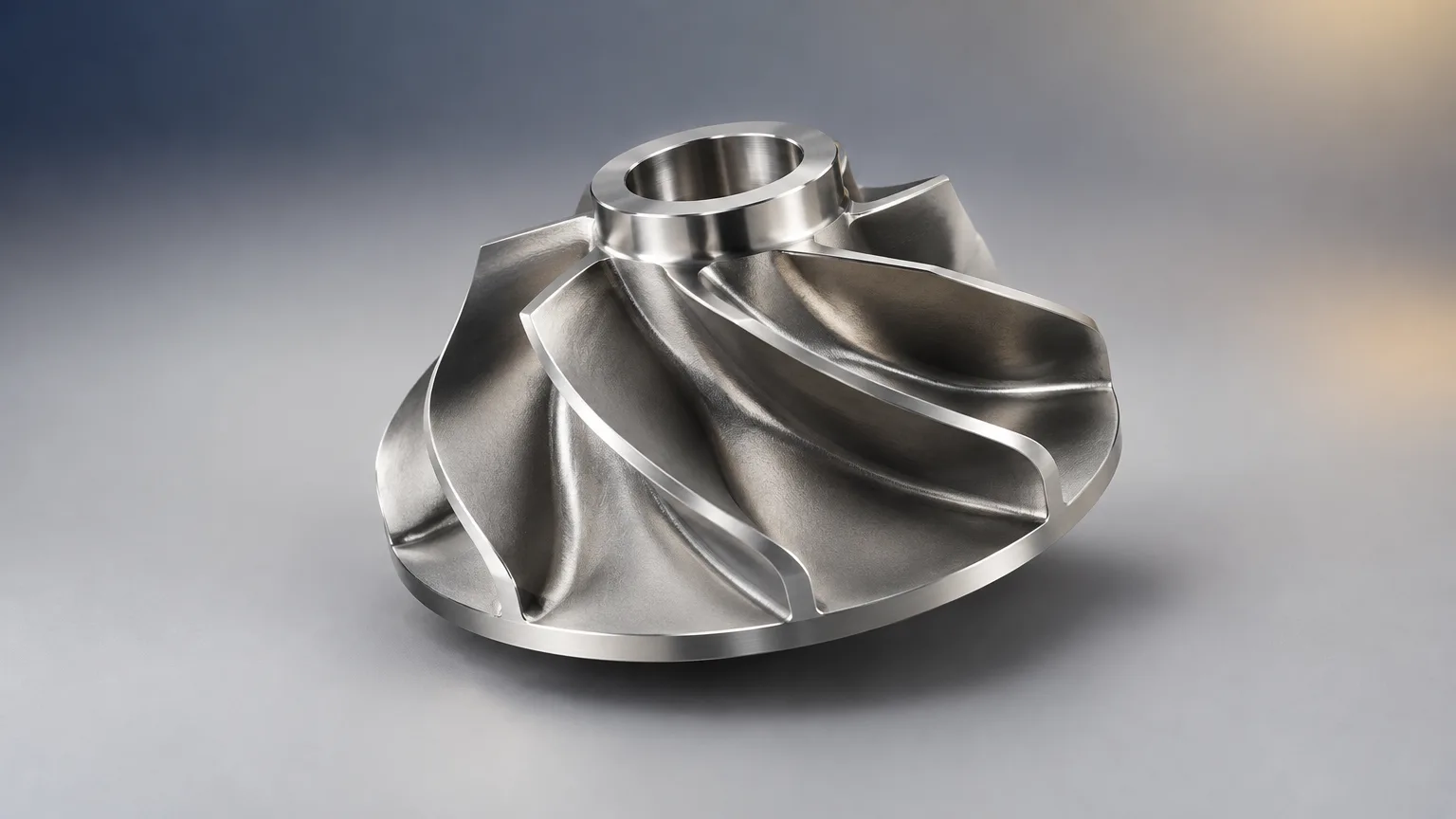
Stainless steel investment casting produces near-net-shape, corrosion-resistant parts from disposable ceramic molds. It suits complex geometry, thin walls and integrated features with limited machining.
- ISO 8062-3 tolerances
- 316, CF8M, 17-4 PH, 2205
- As-cast or machined
- Inspection included
- Design reviewDraft angles, wall thickness and gating checked
- InspectionDimensional and material verification
- Quote turnaround5-7 working days
Stainless steel investment casting forms stainless parts by pouring molten alloy into a disposable ceramic mold made from a wax pattern. It delivers complex geometry, thin sections and corrosion-resistant castings with limited machining. Dimensional capability depends on part size, geometry, tooling maturity and the specified ISO 8062-3 tolerance grade.
What stainless steel investment casting is and when to use it
Stainless steel investment casting is a near-net-shape process that forms stainless steel parts by pouring molten alloy into a disposable ceramic mold made from a wax or polymer pattern. It supports complex geometries, thin sections, integrated features and corrosion-resistant castings with limited machining.
The service fits engineers, procurement managers and founders who need small-to-medium precision stainless castings, often for chemical-processing or corrosion-service parts. Choose it when a machined-from-bar or welded assembly would waste material, add joints or require many operations.
Use investment casting when geometry is too intricate for sand casting, when stainless steel rules out most die casting, or when a one-piece cast form removes welds and assembly steps. It is less suitable when only a simple shape is needed and machining from bar is already economical.
Stainless steel investment casting process steps
Stainless steel investment casting is a near-net-shape process that pours molten stainless steel into a disposable ceramic mold built from a wax pattern. It produces complex, thin-walled, corrosion-resistant parts with limited machining, in seven main steps.
- Wax injection Reusable metal tooling forms expendable wax patterns. This gives repeatability and economical volume production, but tooling cost is fixed and design changes are slow.
- Pattern assembly Patterns are attached to a runner and gating tree so multiple parts pour at once. Gating marks and yield must be managed.
- Ceramic shelling Slurry and stucco layers build and dry the mold. The shell captures fine detail, but cracking, drying time and process sensitivity need control.
- Dewaxing and burnout Wax is removed and the shell is fired, leaving a clean cavity. Thermal distortion or residual wax can cause defects.
- Melting and pouring Stainless steel is melted, typically in controlled atmosphere or vacuum-capable equipment, then poured into the preheated shell. Oxidation, inclusions and shrinkage are the main risks.
- Knockout and cutoff Ceramic is removed and parts are cut from the tree, leaving cutoff scars and cleanup work.
- Finishing and heat treatment Gates are ground; heat treatment, passivation, machining or surface finishing may follow, adding cost and distortion risk.
Stainless steel casting materials and finishes
Stainless steel casting materials are selected by grade, and grade drives corrosion performance, strength and heat treatment. Specify a recognized casting grade and service condition rather than relying on the word stainless alone.
| Family | Grade | Properties | Typical uses |
|---|---|---|---|
| Austenitic stainless steel | 316/316L cast equivalent; exact grade must be specified to an applicable casting standard | Corrosion resistance, weldability and useful performance in chloride-bearing and chemical environments. Chemistry, heat treatment and mechanical requirements need a material specification. | Chemical equipment, pumps, valves, food equipment and marine-related components. |
| Austenitic stainless steel | CF8/CF8M; verify grade designation against the purchase specification | Cast austenitic grades for general and pressure-containing service; properties depend on chemistry and heat treatment. | Valve bodies, pump parts, fittings and general-service castings. |
| Precipitation-hardening stainless steel | 17-4 PH; casting designation and condition must be specified | High strength after heat treatment, with moderate corrosion resistance. Properties depend strongly on aging condition. | High-strength hardware, aerospace components, pump parts and fittings. |
| Duplex stainless steel | 2205; cast grade and heat-treatment condition must be verified | Austenitic-ferritic structure with high strength and resistance to chloride stress-corrosion cracking; phase balance and heat treatment are critical. | Chemical, offshore, marine, pump and valve applications. |
Finishes and post-processing
- As-cast: Ra 126-248 microinches [3.2-6.3 um] typical, suitable for non-critical surfaces.
- Heat treatment: specified to reach the required mechanical properties.
- Passivation: removes free iron and supports corrosion performance.
- Machining: applied to bores, threads, sealing faces, bearing seats and datums.
- Coating or blasting: used where appearance, wear or surface condition is specified.
List each finish separately on the drawing or purchase order. Combined lines make quotes hard to compare and nonconformances hard to trace.
Stainless steel investment casting specs and tolerances
Tolerances are set by the ISO 8062-3 dimensional casting tolerance grade, part size and geometry. State the grade you need and reserve tighter limits for critical features.
| Parameter | Typical range | Standard or source |
|---|---|---|
| Dimensional casting tolerance | ISO 8062-3 DCTG 4-6 for parts up to 4 in [100 mm]; DCTG 4-8 from 4-16 in [100-400 mm]; DCTG 4-9 above 16 in [400 mm] | ISO 8062-3:2023 guidance summarized by Bruynseels |
| Common linear tolerance | Approximately +/-0.005-+/-0.010 in [+/-0.13-+/-0.25 mm] per 1 in [25.4 mm], depending on size and foundry capability | Dawang technical guide |
| Example total tolerance at DCTG 4-6 | 25 mm (1 in) feature: approximately 0.30-0.58 mm [0.012-0.023 in]; 100 mm (4 in) feature: approximately 0.40-0.78 mm [0.016-0.031 in] | ISO 8062-3:2023 table summary |
| As-cast surface roughness | Ra 126-248 microinches [3.2-6.3 um], reported as typical | Pahwa MetalTech technical article |
| Angular tolerance | Approximately +/-0.5-+/-1.0 degrees, depending on geometry and process | Dawang technical guide |
| Minimum wall thickness | Approximately 0.06-0.12 in [1.5-3 mm], depending on alloy, size and geometry | Dawang technical guide |
Lead time for stainless steel investment casting is typical and depends on tooling, alloy availability, heat treatment and inspection scope. Tooling and first-article approval usually sit on the critical path, so confirm both before releasing production quantities.
Design tips that lower stainless steel casting cost
Most cost is fixed at the drawing stage. These design choices reduce tooling, scrap and machining without changing function.
- Keep walls uniform and above the minimum, typically 0.06-0.12 in [1.5-3 mm], to avoid misruns and hot tears.
- Add draft on surfaces that must release from the wax tool; shallow draft is usually enough.
- Use generous fillets and radii at internal corners to reduce stress and shrinkage defects.
- Avoid undercuts and deep narrow pockets that need extra tooling or cores.
- Place tolerances only where they matter; specify ISO 8062-3 DCTG rather than tightening everything.
- Design machining allowance only on surfaces that will actually be machined.
- Keep lettering, part numbers and logos as raised or simple recessed features rather than fine engraved detail.
Review these points with the foundry before tooling is cut. Changes after tooling exist are the most expensive changes you can make.
Typical stainless steel casting applications
Stainless investment castings appear wherever corrosion resistance and complex shape meet. The examples below are typical, not limits.
- Pump and valve parts: bodies, impellers, housings, fittings and trim.
- Chemical-processing equipment: corrosion-service components exposed to aggressive media.
- Marine and offshore hardware: parts needing chloride resistance, including duplex grades.
- Food and beverage equipment: components requiring cleanable stainless surfaces.
- Instrumentation and hardware: brackets, levers, linkages and mechanical fittings.
- Aerospace and high-strength components: 17-4 PH parts where strength and moderate corrosion resistance are both needed.
| Compared with | Key differences |
|---|---|
| Sand casting | Investment casting generally provides finer detail, thinner sections and better as-cast dimensional capability; sand casting usually has lower tooling cost for large or low-volume parts. |
| Die casting | Investment casting accommodates stainless steels and complex shapes; die casting is typically faster for high-volume nonferrous production and requires permanent tooling. |
| Machining from bar or billet | Investment casting reduces material waste and can integrate features; machining offers tighter final tolerances but may have higher buy-to-fly ratio and longer cycle time for complex shapes. |
| Forging | Forging can provide strong directional properties and high integrity; investment casting better accommodates intricate geometry and reduces extensive machining. |
| Fabrication and welding | Investment casting can produce one-piece complex forms; fabrication can be economical for simple welded assemblies but introduces weld inspection and distortion considerations. |
What drives stainless steel investment casting cost
Stainless steel investment casting cost is driven by geometry, alloy, quantity and the inspection you require. No verified cost figures apply across parts, so a quote needs the drawing and the specification.
- Tooling: pattern and die complexity, number of cavities and expected tool life.
- Part size and geometry: larger parts use more alloy and shell material; thin walls, deep pockets and tight tolerances raise scrap risk.
- Alloy: duplex and precipitation-hardening grades cost more to melt, pour and heat treat.
- Volume: reusable wax tooling and multi-part trees reduce unit cost as volume increases.
- Finishing: machining, passivation, coating and heat treatment are separate cost lines.
- Inspection: dimensional layout, material certification and non-destructive testing add scope.
Send the drawing, alloy, tolerance grade, finish and inspection requirements together. Incomplete requests usually come back with assumptions that change the final price.
Why order stainless steel investment casting through SR
SR sources stainless steel investment casting through a vetted supplier network, then manages quality and inspection and delivers the parts to you. SR is a manufacturing broker, not a foundry.
What SR does
- Collects quotes from vetted suppliers for your drawing and specification
- Gives you one contact for quoting, production and delivery
- Manages quality and inspection requirements through the order
- Keeps you informed from quote to shipment
What SR does not do
- SR does not own factories, machines or certifications
- SR does not cast, machine or heat treat parts in house
- SR does not replace your drawing or material specification
Quote turnaround is typically 5-7 working days.
Have a drawing to quote?
Upload it with quantity and material to start a quote.
FAQ
Common questions
Are all stainless grades suitable for investment casting?
Many stainless families can be investment cast, including austenitic, precipitation-hardening and duplex grades, but they do not behave alike. Fluidity, cracking tendency, heat treatment response and corrosion performance vary by grade. Specify a recognized casting grade and the service condition so the foundry can confirm it is castable.
Can investment castings be supplied fully finished?
Yes. Suppliers can provide cutoff, grinding, heat treatment, passivation, machining, coating and inspection so parts arrive ready to use. List each operation separately on the drawing or purchase order, which keeps quotes comparable and makes any nonconformance traceable to a specific step.
What tolerance should be placed on the drawing?
Reference ISO 8062-3 and state the required dimensional casting tolerance grade (DCTG), typically DCTG 4-6 for parts up to 4 in (100 mm). Apply tighter explicit tolerances only to critical features, and expect those to need machining or a qualified process capability study.
When is machining required?
Machining is normally required for precision bores, threads, sealing faces, bearing seats and datums. It is also needed for any feature that must hold a tighter tolerance than the qualified as-cast process can deliver. Flag these features on the drawing so the quote includes the machining operations.
Related resources
Keep reading
Ready when you are
Get a stainless steel investment casting quote
Send your drawing, alloy, tolerance grade, finish and inspection requirements. SR collects quotes from vetted suppliers and manages quality through delivery.
Your files stay confidential. NDA available on request.