
Metal Fabrication Services
Metal Fabrication Services for Custom Parts
SR collects quotes from a vetted supplier network for cutting, forming, welding, machining and finishing, then manages quality and inspection and delivers the parts.
- Cutting and forming
- Welding and assembly
- Machining
- Finishing
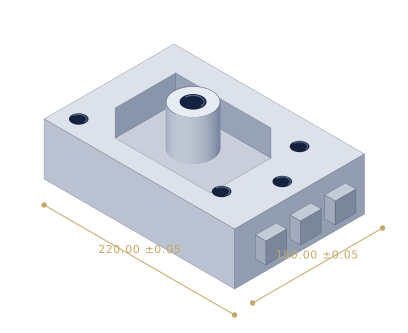
Metal fabrication is the conversion of metal stock into parts, assemblies or structures through cutting, forming, joining and finishing. Precision metal fabrication adds controlled processes, inspection and tighter drawing tolerances for repeatable fit and function. SR collects quotes from a vetted supplier network, manages quality and inspection, and delivers fabricated parts.
Metal fabrication capabilities: what the service covers
Metal fabrication turns sheet, plate, tube, or bar into finished parts, assemblies, or structures by cutting, forming, joining, and finishing. Precision work adds controlled processes, inspection, and tighter drawing tolerances for repeatable fit and function. SR manages the route from raw stock to inspected, delivered parts.
- Laser or plasma cutting: sheet or plate is programmed, cut, deburred, and inspected. Fast setup suits prototypes and moderate volumes.
- Punching and stamping: a press and tooling pierce, form, or draw sheet. Throughput is high and unit cost low at volume; tooling cost and limited flexibility are the trade-offs.
- Press-brake bending: a punch and die form blanks into flanges, channels, or angles. Tooling is flexible; springback and bend-sequence constraints apply.
- Welding: MIG, TIG, resistance, or other methods join prepared components into permanent joints. Plan for distortion and post-weld finishing.
- Machining: milling, turning, drilling, or grinding finish features with tight dimensional control, at higher cost and waste than near-net-shape fabrication.
- Finishing: deburring, cleaning, coating, plating, brushing, or passivation improve corrosion resistance, appearance, and handling safety, but add cost, thickness, masking, and inspection steps.
Part size and volume range: SR supports prototype through production quantities. Typical work covers commercial sheet-metal dimensions and general linear dimensions under ISO 2768-m when drawings omit tolerances; exact limits depend on nominal size. The supplier confirms size, thickness, and volume against the drawing.
Materials and finishes for metal fabrication stainless steel and other grades
Metal fabrication in stainless steel typically uses grades 304/304L or 316/316L, which are formable and weldable. Grade 316/316L resists chlorides and many chemicals better than 304, so the service environment drives the choice.
| Material | Grade | Properties | Typical uses |
|---|---|---|---|
| Carbon steel | ASTM A36 | Weldable structural steel; nominal minimum yield strength about 36 ksi (248 MPa). | Frames, brackets, platforms, bases, and general structures. |
| Stainless steel | 304/304L | Austenitic, corrosion-resistant, formable, and widely weldable; 304L reduces weld sensitization risk. | Food equipment, enclosures, tanks, architectural parts, and process equipment. |
| Stainless steel | 316/316L | Austenitic stainless steel with improved resistance to chlorides and many chemicals compared with 304. | Marine, chemical, pharmaceutical, and outdoor equipment. |
| Aluminum | 6061-T6 | Lightweight, machinable, and heat-treated; nominal tensile strength about 45 ksi (310 MPa), grade- and product-dependent. | Frames, brackets, housings, transportation, and lightweight structures. |
| Aluminum | 5052-H32 | Excellent sheet formability and corrosion resistance; generally more formable than 6061-T6. | Enclosures, panels, tanks, covers, and formed sheet parts. |
| Low-carbon sheet steel | ASTM A1008 CS | Cold-rolled sheet with good forming characteristics; exact strength depends on specification and thickness. | Cabinets, panels, brackets, and formed components. |
Finishes and surface treatment
- Deburring and cleaning: removes sharp edges and process residue before assembly or coating.
- Coating and plating: add corrosion resistance, appearance, or wear performance; masking and thickness add inspection steps.
- Brushing and passivation: common on stainless steel to restore surface condition after welding or machining.
- Surface roughness: typical Ra 63–125 µin (1.6–3.2 µm) when specified for controlled functional or visible surfaces; the customer drawing governs.
Tolerances and lead times for precision metal fabrication
Tolerances are capability references, not guarantees. The supplier must confirm tolerances for the specific material, geometry, quantity, equipment, and inspection method. Lead times are typical and depend on material availability, tooling, outside processing, and inspection requirements.
| Parameter | Typical range | Standard or source |
|---|---|---|
| Cut feature size | ±0.008 in (±0.20 mm) for a published service capability | Hubs sheet-metal service data. |
| Bend angle | ±1° typical; ±0.5° to ±1° for tighter controlled work | Hubs and fabrication capability references. |
| Bend-to-edge location | ±0.010 in (±0.254 mm) in a published service capability | Hubs sheet-metal service data. |
| General linear dimensions | Often governed by ISO 2768-m when drawings omit individual tolerances; exact limits depend on nominal size. | ISO 2768 reference in fabrication guidance. |
| Commercial sheet-metal dimensions | ±0.0625 in (±1/16 in; ±1.6 mm) reported for typical commercial work | Aerospace and fabrication guide comparison. |
| Surface roughness | Ra 63–125 µin (1.6–3.2 µm) when specified for controlled functional or visible surfaces | Fabrication capability reference; customer drawing governs. |
Lead times are typical estimates. Increases commonly come from material shortages, custom tooling, complex fixturing, outside processing, engineering clarification, tight inspection requirements, and rework.
Industries and applications for metal fabrication companies
Fabricated metal parts appear wherever structures, enclosures, frames, and fluid or process equipment are required. Automotive and transportation work often emphasizes repeatability and weld quality, while food, chemical, and architectural equipment emphasizes stainless steel and surface condition.
| Industry | Example parts | Common materials |
|---|---|---|
| Automotive and transportation | Brackets, chassis components, mounts, battery enclosures, and structural frames. | Carbon steel, aluminum, stainless steel. |
| Food and beverage equipment | Tanks, guards, conveyors, panels, and process skids. | 304/304L and 316/316L stainless steel. |
| Chemical and pharmaceutical | Vessels, piping supports, cabinets, and cleanable enclosures. | 316/316L stainless steel. |
| Architectural and construction | Railings, cladding supports, canopies, and facade brackets. | Stainless steel, aluminum, carbon steel. |
| Industrial machinery | Machine frames, bases, guards, and control cabinets. | Carbon steel, aluminum, low-carbon sheet steel. |
| Energy and utilities | Skids, supports, housings, and outdoor enclosures. | Carbon steel, stainless steel, aluminum. |
For each application, the drawing set, material grade, finish, and inspection requirements determine the fabrication route. SR reviews these inputs before requesting supplier quotes.
How ordering metal fabrication services works
Ordering starts with an RFQ and ends with inspected parts delivered to the requested location. SR coordinates each step through one point of contact.
- 1. Submit the RFQ Send drawings or CAD with quantity, material and grade, thickness, tolerances, finish, weld and inspection needs, and delivery location. Incomplete RFQs delay quoting.
- 2. DFM review SR reviews the drawing for bend radii, hole-to-bend distances, weld access, tolerance stack-up, and finish masking. Open points return as questions before quoting.
- 3. Vetted supplier quotes SR collects quotes from a vetted supplier network matched to process, material, and volume. Quote turnaround is typically 5-7 working days from a complete RFQ.
- 4. Order placement The supplier, process route, material, finish, and inspection plan are confirmed, and the drawing revision is locked before production.
- 5. Production and QC Parts are cut, formed, joined, machined, and finished, with in-process checks and final inspection against the drawing.
- 6. Shipping and documentation Parts are packed to protect finishes and shipped with the agreed inspection reports and traceability records.
Quality and inspection for fabricated metal parts
Inspection confirms that fabricated parts meet the drawing, stated tolerances, and agreed finish. The method must match the feature: a caliper check does not replace a CMM check for a datum-based position tolerance.
- Dimensional: calipers, micrometers, height gauges, and pin gauges for linear and hole features.
- Geometric: CMM or equivalent for datum-based location, form, orientation, and position per ASME Y14.5.
- Weld: visual examination, weld size and length checks, and other methods where the drawing or code requires them.
- Finish: coating thickness, surface roughness, and cosmetic criteria against the drawing.
- First article: a full dimensional and documentation check of the first production part before the run continues.
- Traceability and reports: material certificates, process records, and dimensional reports linked to the order and lot, as agreed at order placement.
Welded structures may reference AWS D1.1/D1.1M for carbon and low-alloy steel or AWS D1.6/D1.6M for stainless steel; confirm project applicability. Material requirements commonly reference ASTM A568/A568M for steel sheet and ASTM B209/B209M for aluminum sheet and plate.
What drives the cost of precision metal fabrication
Cost is driven by material, process time, tooling, finishing, and inspection burden. Tight tolerances, GD&T, cosmetic requirements, and inspection burden raise cost because they require better equipment, fixturing, and more checks.
Cost drivers
- Material grade, thickness, and buy-to-fly waste.
- Cutting method: laser or plasma versus punching and stamping.
- Tooling and fixturing for forming and welding.
- Weld length, joint preparation, and post-weld finishing.
- Machining for tight holes and mating surfaces.
- Finishing: coating, plating, brushing, or passivation.
- Inspection: first article, CMM, and report requirements.
How to reduce cost
- Specify drawing-specific tolerances only where function requires them.
- Use a stated general tolerance such as ISO 2768-m for noncritical dimensions.
- Design bend radii and hole-to-bend distances that suit standard tooling.
- Choose the material grade and finish that meet the service environment, not more.
- Consolidate parts into fewer welded or formed assemblies where practical.
- Confirm the inspection plan early so sampling and reports match the risk.
No price is quoted on this page. Cost depends on the drawing, quantity, material, and inspection plan, and is confirmed in the supplier quote.
Have a drawing to quote?
Upload it with quantity and material to start a quote.
FAQ
Common questions
What is precision metal fabrication?
Precision metal fabrication is fabrication performed to controlled dimensional, geometric, cosmetic, and inspection requirements beyond ordinary commercial work. It adds tighter tolerances, datum schemes, and more inspection than general fabrication, which emphasizes practical commercial tolerances and throughput.
What causes fabrication lead-time increases?
Common causes are material shortages, custom tooling, complex fixturing, outside processing, engineering clarification, tight inspection requirements, and rework. Lead times quoted on this page are typical estimates; the supplier confirms the schedule for the specific order.
What information should an RFQ include?
Provide drawings or CAD, quantity, material and grade, thickness, tolerances, finish, weld requirements, inspection needs, delivery location, and required certifications. A complete RFQ allows DFM review and supplier quoting without back-and-forth delays.
Is stainless steel difficult to fabricate?
Stainless steel is generally formable and weldable, but work hardening, springback, heat tint, contamination, and distortion require suitable tooling and procedures. Grade selection, such as 304/304L versus 316/316L, follows the service environment and corrosion requirements.
Related resources
Keep reading
Ready when you are
Send drawings for a metal fabrication quote
SR collects quotes from a vetted supplier network, manages quality and inspection, and delivers parts. Quote turnaround is typically 5-7 working days from a complete RFQ.
Your files stay confidential. NDA available on request.