Metal Finishing Service
Black Anodized Aluminum Finishing Service
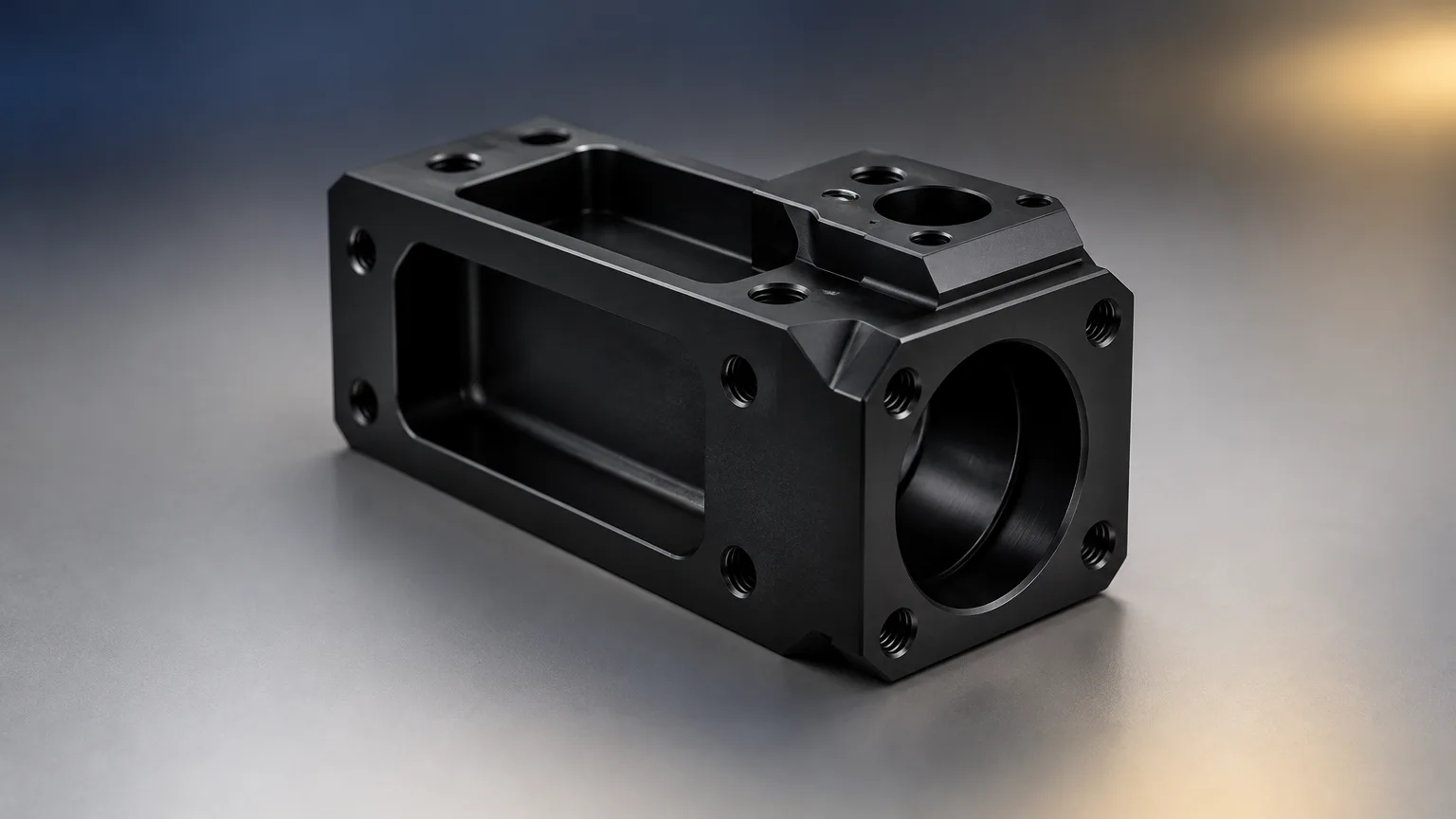
Black anodized aluminum is aluminum given a dyed, sealed anodic oxide layer for corrosion and wear resistance. SR collects quotes from a vetted supplier network, manages quality and inspection, and delivers finishe.
- MIL-A-8625 types
- Type II and Type III
- Masking and dye control
- Inspection reports
- Finish called out on the drawingType, class, thickness and color stated per part
- Thickness and appearance checksVerified against the drawing and finish spec
- Quote turnaround 5-7 working daysBased on drawing, quantity and finish requirements
Black anodized aluminum is aluminum with an electrochemically grown oxide layer that is dyed black and sealed, giving corrosion and wear resistance with a black surface. It suits machined housings, brackets and consumer-facing parts. Thickness, color and dimensional allowance depend on alloy, anodizing type and geometry, so the drawing must state the finish.
What black anodized aluminum finishing is and when to use it
Black anodized aluminum is aluminum that has been anodized, dyed black, and sealed, producing an integral oxide layer rather than an applied coating. Anodizing provides corrosion and wear resistance, and dimensions and color uniformity can vary with alloy and geometry.[11][13] The black color comes from dye absorbed into the porous oxide before sealing.
This service is for engineers, procurement managers, and founders who need aluminum parts with a durable black finish that keeps a metallic look. It is used when the part must resist handling wear, mild corrosion, and fingerprints, or when a black appearance is required for optical, automotive, or consumer products.
When to choose black anodizing
- The substrate is aluminum and the part needs a black, wear-resistant surface.
- The design calls out MIL-A-8625 Type II (decorative, thinner) or Type III (hard, thicker) anodize.[11]
- The part must keep tight dimensions, so the anodic growth allowance is planned on the drawing.
- The application needs corrosion resistance without a painted or powder-coated layer.[11][13]
- Color and gloss must be controlled across a production lot.
Black anodizing process steps
Black anodizing follows a clean, etch, anodize, dye, seal, rinse, and dry sequence. Each step affects final thickness, color, and corrosion performance, so process records matter for critical parts.[11][13]
- 1. Incoming inspection and masking Verify material, grade, and dimensions against the drawing. Mask or rack contact points that must not be anodized, such as threaded holes or sealing surfaces.
- 2. Cleaning and degreasing Remove oils, chips, and handling soils so the surface is uniformly active. Poor cleaning causes patchy color and weak coating adhesion.
- 3. Etch and desmut A controlled etch removes the natural oxide and surface imperfections. Etching can change dimensions slightly, so tight parts need a planned allowance.[10][13]
- 4. Anodize The part is made the anode in an electrolyte bath, and oxide grows from the aluminum surface. Type II and Type III differ mainly in thickness and hardness.[11]
- 5. Dye black The porous oxide is immersed in black dye. Dye uptake depends on pore structure, alloy, and thickness, so color can vary between alloys and geometries.
- 6. Seal Sealing closes the pores to lock in the dye and improve corrosion resistance. Sealing quality affects color fastness and salt-spray performance.
- 7. Rinse, dry, and inspect Parts are rinsed, dried, and checked for thickness, color, and appearance. Thickness can be measured non-destructively per ASTM B244.[11]
Materials and finishes for black anodized aluminum
Aluminum is the substrate for black anodizing, but the alloy and temper affect color, thickness, and surface appearance. Magnesium can also receive anodic treatment, with different preparation.
| Material | Grade | Properties | Typical uses |
|---|---|---|---|
| Aluminum | Unspecified alloy | Commonly anodized; coating thickness depends on anodizing type. | Enclosures, machined parts, aerospace components, architectural parts.[11] |
| Magnesium | Unspecified alloy | Requires substrate-compatible cleaning and conversion or anodic treatment. | Lightweight housings and aerospace components.[10] |
Black anodizing types and classes
- Type II anodize is the common decorative and corrosion-resistant black finish.[11]
- Type III hard anodize is used where wear resistance is the priority.[11]
- Class 1 is non-dyed and Class 2 is dyed; black anodizing is a Class 2 dyed finish.[11]
Black anodized aluminum specs and tolerances
Black anodized aluminum specs depend on anodize type, and typical thickness tolerance can be as low as ±0.0001 in (±2.5 µm), though actual capability is process- and geometry-dependent.[11] Critical dimensional allowance needs a supplier capability study and the drawing requirements.
| Parameter | Typical range | Standard or source |
|---|---|---|
| Type I, IB, IC, or IIB anodize thickness | 0.00002–0.0007 in (0.5–17.8 µm) | MIL-A-8625F summary.[11] |
| Type II anodize thickness | 0.00007–0.0010 in (1.8–25.4 µm) | MIL-A-8625F summary.[11] |
| Type III hard anodize thickness | 0.0005–0.0045 in (12.7–114.3 µm) | MIL-A-8625F summary.[11] |
| Anodize thickness tolerance | As low as ±0.0001 in (±2.5 µm) | MIL-A-8625F summary; actual capability is process- and geometry-dependent.[11] |
| Salt-spray exposure | Project-specific; commonly 96, 240, or 500 hours | ASTM B117 practice; duration and acceptance criteria must be specified.[9] |
| Critical dimensional allowance | Unverified without process, substrate, geometry, and drawing requirements | Supplier capability study and drawing-specific requirements required. |
Design tips to lower black anodizing cost
Design choices that reduce masking, handling, and rework lower the cost of black anodized aluminum. The tips below are practical DFM rules for drawings sent to the supplier network.
- Specify one anodize type and thickness per part instead of mixed requirements on the same drawing.
- Minimize masked areas; every masked hole or surface adds labor and inspection time.
- Avoid deep blind holes and tight crevices that trap dye and rinse water.
- Design rack contact points on non-cosmetic surfaces so marks do not cause rejection.
- State the alloy and temper; unknown alloys force the supplier to quote a wider color and thickness range.
- Call out color target and gloss on a physical sample or agreed master when appearance matters.
- Plan the anodic growth allowance on tight dimensions rather than assuming zero dimensional change.
Typical applications for black anodized aluminum parts
Black anodized aluminum is common where a durable black surface, low weight, and corrosion resistance are needed together. Typical parts include machined enclosures, brackets, heat sinks, and consumer-facing housings.
- Automotive: interior trim brackets, sensor housings, and under-hood mounting plates where black finish and corrosion resistance are required.
- Electronics: enclosures, front panels, and heat sinks that need a uniform black appearance and wear resistance.
- Aerospace and defense: brackets, panels, and housings finished to MIL-A-8625 Type II or Type III.[11]
- Consumer products: camera bodies, flashlight bodies, and wearable housings that must resist handling wear.
- Industrial equipment: machine guards, fixture plates, and control-panel components.
- Architectural and furniture: trim, frames, and hardware that need a black metallic finish.
Good fit for black anodizing
- Aluminum parts with a cosmetic or wear surface
- Parts that must stay lightweight
- Applications needing corrosion resistance without paint
- Production lots that require consistent color
Consider another finish
- Steel or stainless steel parts, which need plating or passivation instead
- Parts that will be bent or formed after coating
- Very tight tolerances without a planned growth allowance
- Parts needing a color other than black or a textured polymer look
What drives black anodizing cost
Black anodizing cost is driven by part geometry, quantity, finish specification, and inspection requirements, not by a single rate. The factors below are the main levers buyers can control.
- Anodize type and thickness: Type III hard anodize takes longer and costs more than Type II.[11]
- Part size and rack density: large parts and low rack density reduce bath throughput.
- Masking complexity: each masked hole, thread, or surface adds labor.
- Color and cosmetic requirements: tight color matching and gloss targets increase inspection and rework risk.
- Alloy and surface condition: castings, welds, and unknown alloys can cause mottling and extra preparation.
- Quantity and lot size: setup and racking are amortized over the lot, so small lots carry a higher unit cost.
- Testing and documentation: salt-spray testing, thickness measurement, and process records add cost.[9][11]
Why order black anodized aluminum through SR
Ordering black anodized aluminum through SR gives you one contact for quoting, quality, and delivery. SR is a manufacturing broker, not a factory: it collects quotes from a vetted supplier network, manages inspection, and delivers finished parts.
- Vetted supplier network: finishing suppliers are selected for process capability and quality records.
- One contact: SR manages the RFQ, supplier communication, and delivery updates.
- Quality and inspection: parts are checked against the drawing and finish specification before shipment.
- Quote turnaround: typically 5-7 working days from receipt of a complete RFQ.
Send drawings, alloy, quantity, finish type, color target, masking notes, and any test requirements to killol@sourcingrepository.com. SR is based at 201 SG Mall, Ahmedabad.
Have a drawing to quote?
Upload it with quantity and material to start a quote.
FAQ
Common questions
Can finishing change part dimensions?
Yes. Coatings such as anodize add thickness, while polishing, blasting, etching, and chemical treatment remove some material. For black anodized aluminum, critical dimensions need process allowances agreed before production and post-finish inspection against the drawing to confirm they stay within tolerance.
Does salt spray predict service life?
No. ASTM B117 standardizes how the test chamber operates, but exposure hours are not a direct prediction of field life. Buyers should set application-specific acceptance criteria, including duration and pass/fail limits, on the drawing or specification.[9]
What information should an RFQ include?
Include material and grade, part drawing, quantity, finish type, thickness, masking areas, color target, dimensional limits, test requirements, and packaging. For black anodized aluminum, also state the anodize type and class, plus any required certifications, so suppliers quote the same scope.
Should the buyer specify a process or performance?
Specify both when necessary. Process requirements control appearance and compatibility, such as anodize type and dye. Performance requirements define thickness, adhesion, corrosion, wear, and dimensional acceptance. Together they let suppliers quote comparable scope and let inspection confirm the finished part meets the drawing.
Related resources
Keep reading
Ready when you are
Request a black anodized aluminum quote
Send your drawing, alloy, quantity, and finish specification. SR will collect quotes from the vetted supplier network and manage inspection and delivery.
Your files stay confidential. NDA available on request.