
Die Casting Services
Aluminum Die Casting Services
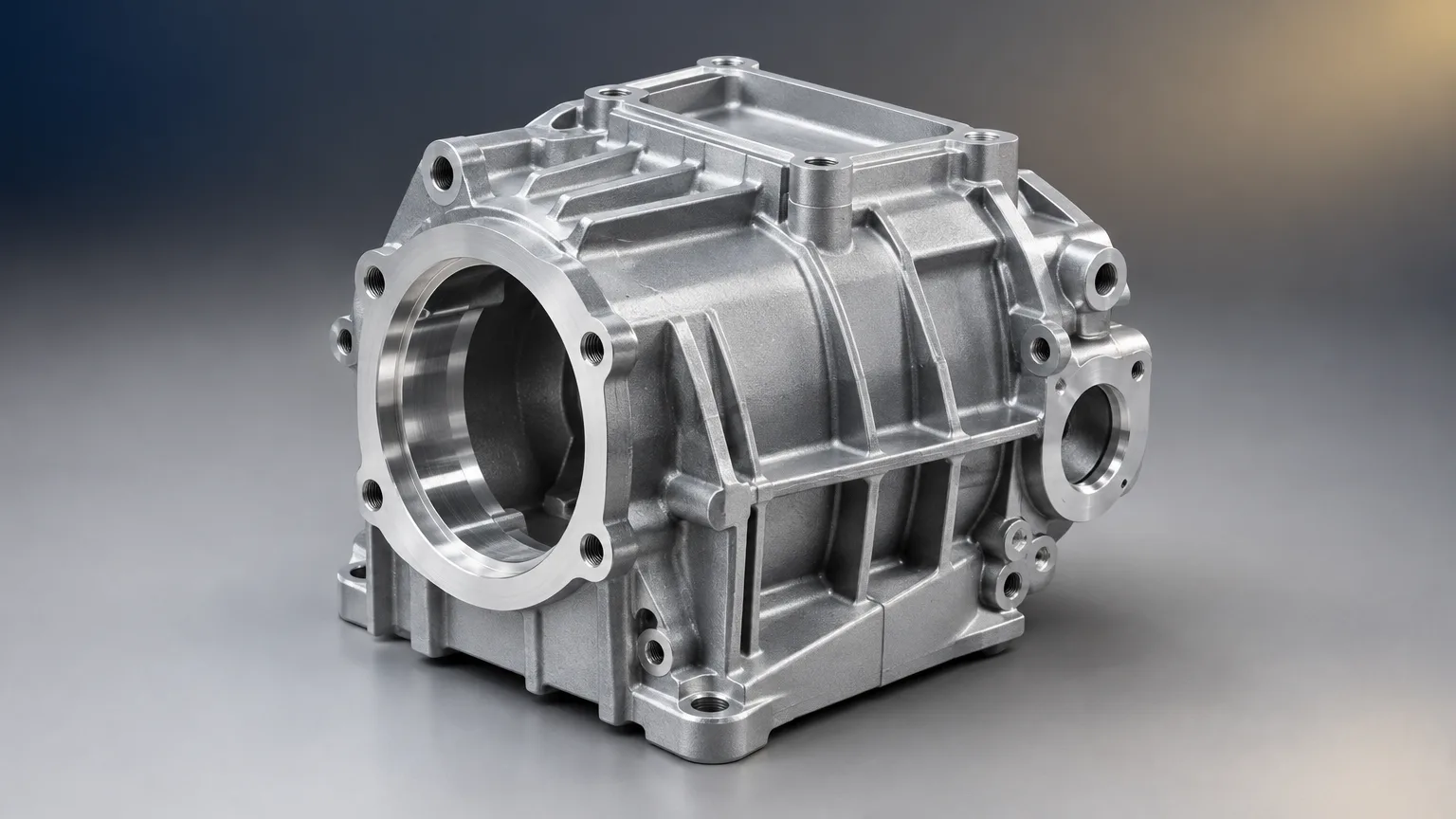
Aluminum die casting injects molten alloy into a reusable steel die under pressure to produce near-net-shape parts. SR sources die cast aluminum parts from a vetted supplier network.
- Automotive first
- One point of contact
- Inspection managed
- Quotes in 5-7 days
- Design reviewFeedback on walls, draft, and tolerances
- Inspection managedDimensional checks before delivery
- Al, Zn, Mg, CuMatching alloy to application
Aluminum die casting is a high-pressure process that injects molten aluminum into a reusable steel die to form near-net-shape parts. Sourcing Repository (SR) is a manufacturing broker: it collects quotes for die cast aluminum parts from a vetted supplier network, manages quality and inspection, and delivers finished parts to the buyer.
What Aluminum Die Casting Is and When to Use It
Aluminum die casting is a metal casting process that injects molten or semi-molten alloy into a reusable steel die under pressure, producing near-net-shape parts. High-pressure die casting is commonly used for repeatable, high-volume aluminum components. It suits engineers and procurement teams who need many identical aluminum parts with good dimensional repeatability.
Use aluminum die casting when annual volumes justify steel tooling and when parts need thin walls, complex geometry, or tight repeatability. Review alternatives such as sand casting or forging when volumes are low or when wrought grain structure matters more than geometric freedom.
Aluminum Die Casting Process Steps
Aluminum die casting follows six steps: design review, die manufacture, melt and shot, solidification and ejection, trimming, and inspection. Most aluminum parts are made by high-pressure die casting (HPDC), which injects molten metal into a reusable steel die.
- 1. Design review and die engineering The part is checked for wall thickness, draft, radii, and parting line. Die steel such as H-10, H-11, or H-13 is selected, with premium or superior H-13 for demanding aluminum tooling.
- 2. Die manufacture The die is machined, heat treated, and fitted to the machine, with cooling channels, ejector pins, and slides added. This step carries the largest upfront cost and schedule risk.
- 3. Melt and shot Aluminum is melted and metered into the shot chamber. The plunger injects it into the die under high pressure.
- 4. Solidification and ejection The part solidifies in the die, then ejector pins release it. Cycle time is typically 15–90 seconds, depending on part size, wall thickness, and alloy.
- 5. Trim and secondary operations Flash, runners, and overflows are trimmed. Machining, tapping, and surface finishing follow if the drawing requires them.
- 6. Inspection and delivery Dimensional checks, visual inspection, and any specified testing are completed before the parts are packed and shipped.
Materials and Finishes for Die Cast Aluminum
Aluminum is the most common material for die cast (also written "diecast") automotive and structural parts because of its low density, good thermal conductivity, and castability. Zinc, magnesium, and copper alloys cover smaller precision parts, lightweight housings, and conductive components.
| Material | Typical grades | Properties | Typical uses |
|---|---|---|---|
| Aluminum | Common die-casting aluminum alloys; specify the applicable NADCA or regional alloy designation | Low density, good thermal conductivity, corrosion resistance, and castability | Automotive housings, structural parts, heat sinks, equipment enclosures |
| Zinc | Zamak and ZA alloy families | Good fluidity, surface finish, dimensional stability, and wear resistance | Small precision hardware, consumer products, locks, fittings, housings |
| Magnesium | Commercial magnesium die-casting alloy families | Very low density, good stiffness-to-weight ratio, electromagnetic shielding potential | Lightweight automotive, electronics, portable-equipment parts |
| Copper alloys | Commercial brass and bronze die-casting families | High thermal and electrical conductivity; higher density and tooling demands than aluminum | Electrical, plumbing, thermal, industrial components |
Finishes and post-processing
- Shot blasting or vibratory finishing for a uniform matte surface
- Machining, drilling, and tapping for features tighter than casting tolerances
- Powder coating or painting for appearance and corrosion protection
- Impregnation to seal porosity when the part must hold pressure or fluid
Aluminum Die Casting Specs and Tolerances
Aluminum die casting holds good dimensional repeatability, but achievable tolerance depends on alloy, part size, feature type, and die design. Confirm every value against NADCA alloy, size, and feature tables before releasing a drawing.
| Parameter | Typical range | Standard or source |
|---|---|---|
| Typical production cycle | 15–90 seconds | DFMA process comparison; application and geometry dependent |
| Typical tolerance | ±0.002–0.005 in (±0.05–0.13 mm) | DFMA comparison; confirm against NADCA alloy, size, and feature tables |
| Miniature casting tolerance | ±0.0008 in (±0.020 mm) up to 1 in (25.4 mm); ±0.001 in (±0.025 mm) per additional inch | NADCA miniature die-casting engineering reference |
| Minimum wall thickness | Approximately 0.04–0.08 in (1–2 mm), application dependent | DFMA comparison; verify with the selected alloy, die design, and NADCA guidance |
| Die steel | H-10, H-11, H-13; premium or superior H-13 for demanding aluminum, magnesium, and ZA tooling | NADCA tooling guidance and NADCA No. 229 recommendations |
| Quote turnaround | Typically 5–7 working days from SR; production lead time confirmed per project | SR quote turnaround |
Tight tolerances, complex geometry, deep cores, and post-casting machining all raise cost and process risk. Where a feature needs more precision than the casting can hold, plan a machining operation instead.
Design Tips That Lower Die Casting Cost
Die casting cost drops when you keep walls uniform, add draft, use generous radii, and hold to a simple parting line. Review these points before the die is cut, because later geometry changes usually mean welding, re-cutting, or a new die.
- Keep walls uniform and near the typical range of approximately 0.04–0.08 in (1–2 mm). Thick sections cool slowly, add porosity risk, and increase cycle time.
- Add draft on all surfaces parallel to the die draw to avoid drag marks, sticking, and extra die maintenance.
- Use generous radii at corners. Sharp internal corners concentrate stress and complicate die machining.
- Design for a single parting line. Slides and complex cores add tooling cost and maintenance.
- Specify casting tolerances only where function needs them. Machine critical bores and sealing faces.
- Avoid undercuts and deep narrow pockets that need extra die components.
- Place bosses and ribs to feed metal smoothly. Isolated thick bosses are a common source of shrinkage porosity.
Typical Aluminum Die Casting Applications
Die cast aluminum parts appear wherever many identical metal components are needed with complex shape and modest weight. Automotive is the largest user, followed by industrial equipment and electronics.
- Automotive: transmission housings, engine brackets, structural nodes, and electric-vehicle enclosures
- Industrial: pump and motor housings, gearbox covers, and equipment frames
- Electronics: heat sinks, chassis, and shielded enclosures
- Consumer and commercial: tool bodies, appliance components, and hardware
- Infrastructure: lighting housings, fittings, and mounting brackets
Good candidates
- Annual volumes high enough to amortize tooling
- Complex geometry with ribs, bosses, and thin walls
- Parts that would need heavy machining if cut from solid
- Enclosures and housings needing integrated features
Think twice when
- Volume is very low and tooling cannot be justified
- Part must be welded as a structural joint
- Wrought grain strength is a hard requirement
- Wall sections are very thick and uniform cooling is difficult
What Drives Aluminum Die Casting Cost
Die casting cost has two parts: one-time tooling and process development, then recurring piece price. Tooling dominates at low volume and fades as annual volume rises.
- Tooling complexity, number of slides, cores, and die steel grade
- Part size, projected area, and required machine tonnage
- Wall thickness and cycle time, which set machine hours per part
- Alloy choice, including metal price and melt energy
- Tolerance and inspection requirements, including CMM or layout reports
- Secondary operations such as machining, finishing, and assembly
- Annual volume and order pattern, which affect setup and scheduling efficiency
- Packaging and logistics requirements
Why Order Die Cast Aluminum Through SR
Ordering die cast aluminum through SR gives you one contact for quoting, quality, and delivery while vetted suppliers make the parts. SR is a manufacturing broker, not a factory. It collects quotes from its supplier network, manages quality and inspection, and delivers the parts.
- Vetted suppliers matched to your alloy, volume, and tolerance needs
- One contact for quoting, production questions, and delivery updates
- Quality and inspection managed on your behalf before shipment
- Quote turnaround typically 5–7 working days
Because SR does not own plants or machines, supplier selection stays flexible. If one shop lacks capacity or the right machine, another qualified source can quote the same part.
Have a drawing to quote?
Upload it with quantity and material to start a quote.
FAQ
Common questions
Is die casting economical?
It is usually most economical at moderate-to-high volume because tooling and process-development costs are spread across many parts. At low volume, sand casting or machining from solid often costs less overall. Compare total cost, including machining and finishing, before choosing a process.
What metals can be die cast?
Common families include aluminum, zinc, magnesium, copper alloys, and zinc-aluminum alloys. Aluminum dominates automotive and structural work; zinc suits small precision parts; magnesium is chosen for very low weight. Alloy selection depends on strength, thermal needs, corrosion exposure, and casting behavior.
What are die casting services?
They may include design review, die manufacture, casting, trimming, machining, finishing, inspection, assembly, and logistics. Scope varies between suppliers, so confirm exactly what is included before ordering. SR coordinates these steps across its supplier network and manages inspection before delivery.
Can die castings be welded?
Some vacuum or specially controlled castings may support welding, but gas porosity and alloy condition must be qualified for the specific process. Standard high-pressure die castings often contain entrapped gas that causes defects during welding. Test the actual production process before designing a welded joint.
Related resources
Keep reading
Ready when you are
Get an aluminum die casting quote
Send your drawing, alloy, annual volume, and tolerance requirements. SR collects quotes from a vetted supplier network, manages inspection, and delivers parts.
Your files stay confidential. NDA available on request.