
Aluminum Extrusion Services
8020 Aluminum Extrusion and 80/20 Framing
T-slot framing profiles, cut lengths and machined extrusions sourced from a vetted supplier network, with one point of contact and inspection before delivery.
- 6063-T5 / 6061-T6
- Cut, machined, assembled
- Inspection before delivery
- Quote in 5-7 working days
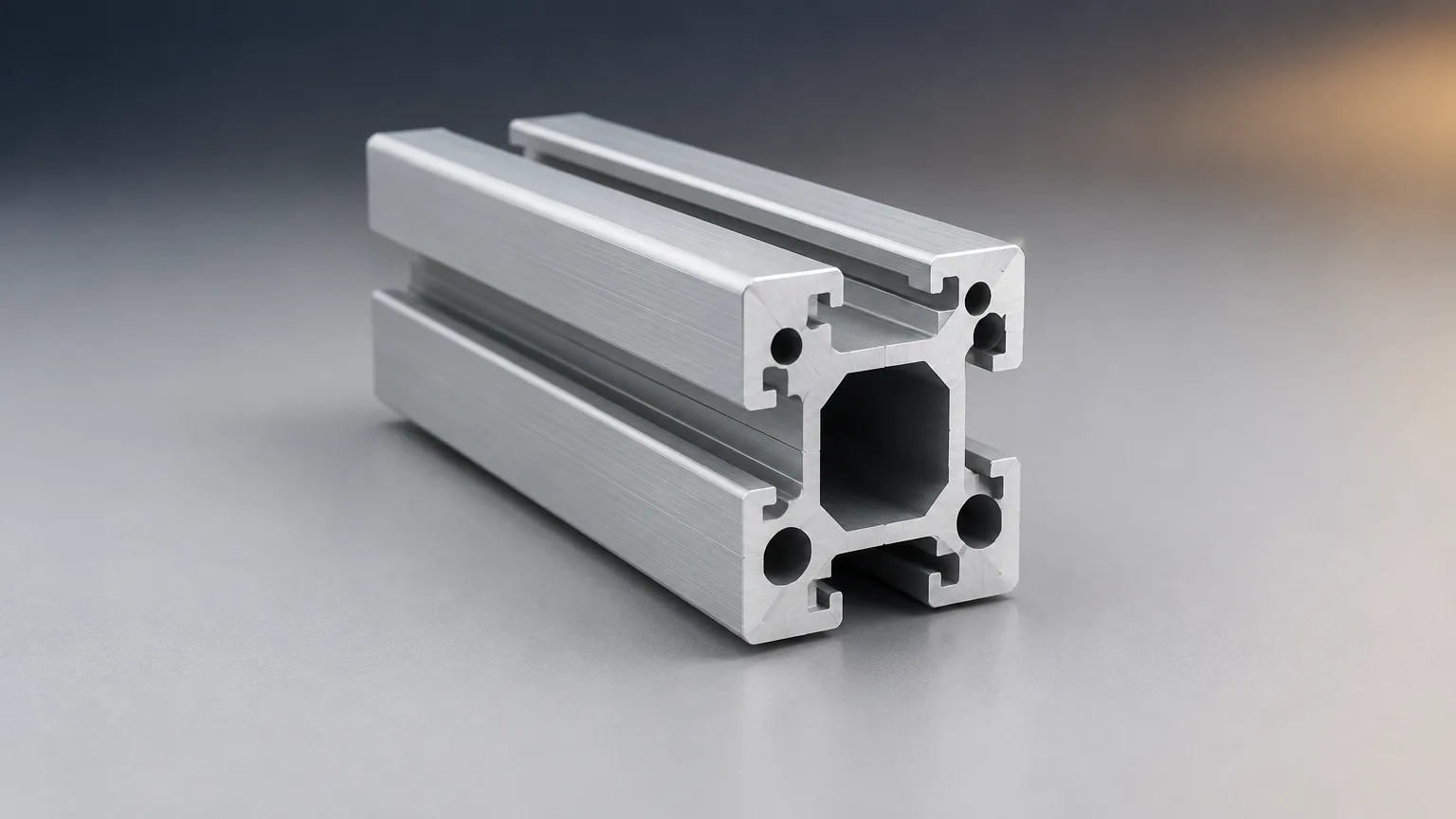
- Profile reviewWall thickness and tolerances checked before quoting
- InspectionDimensional checks against your drawing
- Secondary workSawing, drilling, tapping and assembly coordinated
8020 aluminum extrusion is a T-slot framing system built from 6000-series aluminum profiles with a repeating slot that accepts nuts, brackets and fasteners. Sourcing Repository collects quotes for standard 80/20 framing extrusion and custom profiles from a vetted supplier network, manages inspection and delivers cut, machined or assembled framing kits.
What 8020 aluminum extrusion service covers
8020 aluminum extrusion is a T-slot framing system made from 6000-series aluminum profiles with a repeating slot along the length that accepts T-nuts, brackets and fasteners. Profiles are sold as standard sections or as custom aluminum profiles extruded to a drawing.
The name comes from the 80/20 rule of thumb that roughly 80 percent of a frame can be built from 20 percent of the components. These aluminium extrusion profiles suit engineers, procurement managers and founders who want framing, cut lengths or finished frames without managing several extruders, machine shops and finishers.
8020 aluminum extrusion fits machine guards, workstations, automation frames, test rigs and light structural frames. Custom aluminum extrusions fit where a standard section will not carry the load or integrate the function you need.
When to use standard 80/20 framing extrusion
- The frame uses common square or rectangular T-slot sections and standard connectors.
- You need cut lengths, end taps or simple machining rather than a new die.
- The design may change, so reconfigurable joints help.
When to use a custom 8020 extrusion profile
- The profile must integrate a cable channel, hinge, seal groove or mounting rail.
- A standard section is too heavy, too light or too large for the envelope.
- Combining several functions in one profile reduces part count, and volume justifies new tooling.
How the 8020 extrusion process works
The process runs from profile definition to inspected delivery. Each step below applies to standard 80/20 framing extrusion and to custom profiles.
- 1. Define the profile and application Send a drawing or CAD model, or describe the frame and load case. State whether you need a standard T-slot section or a custom profile, plus alloy, temper, cut length and quantity.
- 2. Review design for manufacturability Wall thickness, corner radii, hollow versus semi-hollow sections and tolerance stack-up are checked against what the extrusion route can hold. Thin walls and tight tolerances raise cost and risk.
- 3. Quote and tooling decision Standard profiles use existing dies. Custom profiles need a new die, so die cost and sample approval are quoted separately. Quotes are returned in 5-7 working days.
- 4. Extrude and heat treat A heated aluminum billet is forced through the die to produce a continuous profile. Hot extrusion is the most common route. The profile is then quenched, stretched and aged to the specified temper such as T5 or T6.
- 5. Cut and machine Profiles are sawed to cut length, then drilled, tapped, milled, punched or bent as required. Machining allowances and distortion controls are agreed before production.
- 6. Finish Mill finish, anodizing, powder coating or other finishes are applied. Finish batch size and color affect scheduling.
- 7. Inspect and deliver Dimensional checks, straightness and finish are verified against the drawing and the applicable standard. Parts are packed to protect the profile and shipped to your delivery location.
Materials and finishes for 80/20 framing extrusion
Most 8020 aluminum extrusion uses 6063 for its extrudability and surface finish. Structural frames and machined profiles often move to 6061, 6005A or 6082 for higher strength. Exact properties depend on temper and product form.
| Alloy | Typical temper | Properties | Typical uses |
|---|---|---|---|
| 6063 | 6063-T5 or 6063-T6 | Excellent extrudability, surface finish, corrosion resistance and moderate strength. | Architectural frames, trim, furniture, lighting, heat sinks and general-purpose profiles. |
| 6061 | 6061-T6 | Higher strength and good corrosion resistance, with lower extrudability and finish quality than 6063. | Structural frames, machine components, transport parts, brackets and machined extrusions. |
| 6005A | 6005A-T5 or 6005A-T6 | Intermediate-to-high strength with useful extrudability for structural sections. | Transport structures, platforms, ladders, frames and load-bearing profiles. |
| 6082 | 6082-T6 | High strength among common 6000-series extrusion alloys; generally less suited to very complex thin-wall shapes. | Structural, automotive, marine, transport and heavy-duty machined profiles. |
| 6005 | 6005-T5 | Good strength and extrudability for medium-duty structural applications. | Frames, rails, ladders and structural extrusions. |
Finishes
- Mill finish: lowest cost, suitable when appearance is not critical.
- Anodizing: a controlled oxide layer that improves corrosion and wear resistance, in clear, black or colored appearance.
- Powder coating: a durable colored coating for visible frames, guards and enclosures.
- Machined finish: cut ends, tapped holes and milled faces left as machined, with deburring as specified.
Specs and tolerances for 8020 extrusion
Tolerances for 8020 aluminum extrusion are not universal; they depend on dimension, alloy, temper, section shape and the product standard you specify. The values below are typical rules of thumb. Confirm final limits against EN 755 or ASTM B221 for your profile.
| Parameter | Typical range | Standard or source |
|---|---|---|
| Linear dimensions | Often approximately ±1% as a rule of thumb; actual limits vary by dimension, alloy, temper, section and standard. | European Aluminium, Extruded Products |
| Wall thickness | Often approximately ±5–10% as a rule of thumb; thinner walls generally require greater percentage allowance. | European Aluminium, Extruded Products |
| Angular geometry | Approximately ±2 degrees as a general rule of thumb. | European Aluminium, Extruded Products |
| Straightness, flatness, twist and corner radii | Profile- and size-dependent; specify acceptance limits using the applicable product standard. | EN 755-3 through EN 755-9; EN 12020 |
| Profile length | Cut-length tolerance is supplier- and order-specific; do not assume a universal value. | Applicable purchase specification and supplier drawing |
Lead time is not universal. It depends on die availability, press scheduling, finish batch size, secondary operations and freight. Standard profiles on an existing die usually move faster than custom profiles that need new tooling. Confirm the schedule in writing on the purchase order.
Design tips that lower 8020 extrusion cost
Most cost in a T-slot frame comes from the profile weight, the die, the tolerances and the secondary operations. These seven design choices reduce cost without weakening the frame.
- Use a standard 80/20 framing extrusion section when it meets the load case. An existing die avoids new tooling cost and shortens lead time.
- Keep walls uniform and avoid very thin walls. Thin sections need greater percentage tolerance and raise scrap risk.
- Design generous corner radii and avoid sharp internal corners. Sharp corners concentrate stress in the die and wear it faster.
- Specify tolerances that match the function. Tightening every dimension on the drawing adds inspection and rework cost.
- Limit the number of alloys and tempers on one order. Fewer billet changes improve press efficiency.
- Combine features into one profile instead of adding brackets and separate parts. Fewer parts reduce assembly labor.
- Choose mill finish or a single anodized color when appearance allows. Special colors and small finish batches add cost.
Typical 8020 extrusion applications
Typical 8020 extrusion applications include machine guards, workstations, automation cells, test rigs and light structural frames. Common parts are cut profile lengths, tapped ends, corner brackets, gussets, panels and complete frames.
- Machine guards and safety fencing for production equipment.
- Workstations, benches, shelving and material handling carts.
- Automation and robot cells, including gantries and sensor mounts.
- Test rigs, fixtures and laboratory frames.
- Display structures, enclosures and light structural frames, using 6005A or 6082 profiles where strength matters.
Industries served
Automotive and transport build fixtures, guards and assembly frames. Industrial automation builds cells and conveyors. Electronics and medical build equipment enclosures. The same 8020 aluminum extrusion system scales from a small bench fixture to a full production line frame.
What drives 8020 aluminum extrusion cost
8020 aluminum extrusion cost is driven by material, tooling, processing and logistics, and no reliable price exists without a specification. The list below shows what moves the number, so you can compare quotes on the same basis.
- Profile weight per foot [per metre] and material yield. Heavier sections use more metal per part.
- Alloy and temper. Higher-strength alloys and T6 tempers cost more than 6063-T5.
- Die cost for custom profiles. Standard profiles avoid it; it is a one-time charge quoted separately.
- Order quantity and production batch efficiency. Small batches carry more setup per part.
- Tolerances and inspection level. Tight limits and full dimensional reports add cost.
- Secondary operations, finish type and color, plus packaging and freight for long profiles.
Why order 8020 extrusion through Sourcing Repository
Sourcing Repository is a manufacturing broker. We do not own factories or machines. We collect quotes for your 8020 aluminum extrusion from a vetted supplier network, manage the quality and inspection steps, and deliver the parts to you.
What you get
- One point of contact for extrusion, machining, finishing and assembly
- Quotes collected from a vetted supplier network
- Design review before quoting
- Inspection against your drawing before delivery
- Quote turnaround in 5-7 working days
What we do not do
- We do not own extrusion presses, dies or machine tools
- We do not hold certifications on your behalf
- We do not replace your engineering approval of the drawing
Deposit and payment terms are confirmed per order. Send your profile drawing, alloy, temper, finish, cut length, quantities and delivery location to killol@sourcingrepository.com or through the quote form. Our address is 201 SG Mall, Ahmedabad.
Have a drawing to quote?
Upload it with quantity and material to start a quote.
FAQ
Common questions
Are standard aluminum extrusion profiles cheaper than custom profiles?
Usually, because an existing die avoids new tooling. Unit cost still depends on alloy, weight, quantity, finish, cutting, machining, freight and supplier minimums. Compare quotes on the same profile, alloy, temper and quantity.
What information should an RFQ for custom aluminium extrusions include?
Include the profile drawing or CAD, alloy, temper, finish, cut length, tolerances, annual and release quantities, packaging, inspection requirements, delivery location and the applicable standard. A complete RFQ shortens quote turnaround.
Can aluminium extrusions be machined?
Yes. Common secondary operations include sawing, drilling, tapping, milling, punching, bending and assembly. Machining allowances and distortion controls should be agreed before production, especially on thin-wall T-slot profiles.
How much do aluminum extrusions cost?
No universal price is reliable without a specification. Supplier-published estimates report approximately $2.50-$8.00 per kilogram [$1.13-$3.63 per pound], but these figures are unverified and should not replace quotations for your profile and quantity.
Related resources
Keep reading
Ready when you are
Send your 8020 extrusion drawing for a quote
Share the profile, alloy, temper, finish, cut length and quantities. We collect quotes from a vetted supplier network and return pricing in 5-7 working days.
Your files stay confidential. NDA available on request.