
Aluminum Extrusion Service
Custom Aluminum Extrusions and Profiles
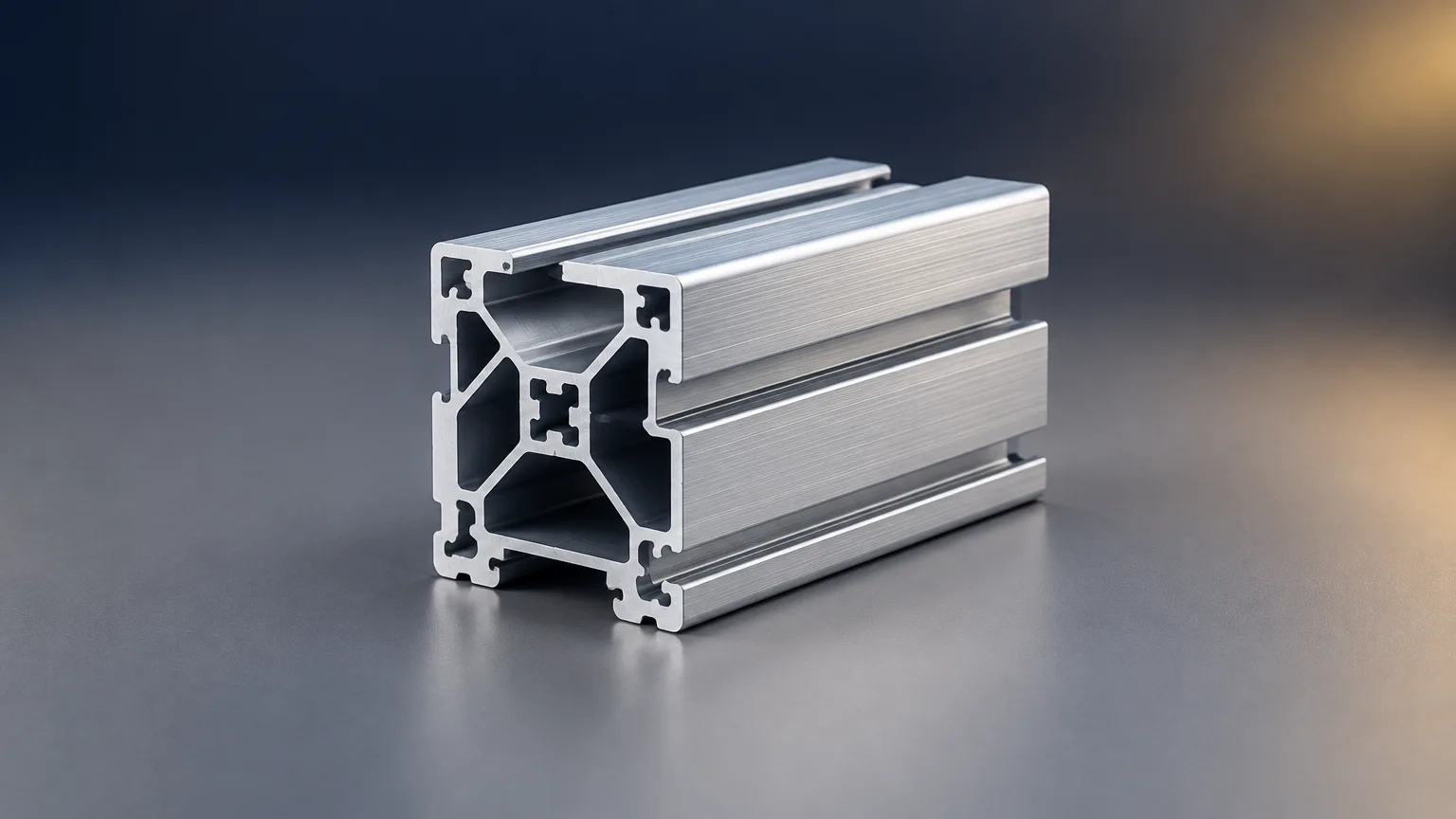
Custom aluminum extrusions are profiles produced by pushing heated aluminum billet through a shaped die made to your drawing. Send the profile, alloy and quantity; we return quotes from vetted extruders.
- Solid, semi-hollow, hollow
- 6063, 6061, 6005A, 6082
- Cut, machined, finished
- First-article inspection
- Quote in 5-7 working daysSend drawing, alloy, temper, finish and quantities
- Die and wall reviewWall thickness and radii checked before tooling
- Inspection before shipmentDimensional and finish checks on the lot
Custom aluminum extrusions are aluminum profiles produced by forcing heated billet through a die machined to a buyer's cross-section. They suit solid, semi-hollow and hollow shapes in 6000-series alloys such as 6063, 6061, 6005A and 6082, and can be cut, machined, finished and inspected before delivery.
What custom aluminum extrusions are and when to use them
Custom aluminum extrusions are profiles made by forcing a heated aluminum billet through a die shaped to your cross-section, producing a continuous length with a fixed profile.
Custom aluminum extrusions are a sourcing route for parts with a constant cross-section that catalog shapes cannot meet. A custom die is cut for each drawing, so the profile can carry ribs, slots and channels, and the order can specify alloy, temper and tolerances.
Extruded aluminum profiles suit engineers and buyers who need a specific cross-section rather than a catalog item.
When a custom profile is the right choice
- The cross-section must integrate ribs, slots, screw ports or sealing channels.
- One extruded length can replace several parts and cut assembly count.
- A standard profile would need repeated secondary machining.
- The part is long and constant in section, so extrusion beats machining from solid.
Custom aluminum extrusion process steps
The process runs from drawing review to inspected delivery at the aluminum extruder. Each step is a control point where the profile, tooling or acceptance criteria can still change before cost is committed.
- 1. Drawing and DFM review The drawing or CAD is checked for wall thickness, corner radii, hollow ratio, tolerances and alloy. Features that raise die cost or risk are flagged before quoting.
- 2. Alloy, temper and standard selection Alloy and temper are fixed against the application, and the standard is named, for example ASTM B221 or EN 755, with EN 12020 for precision tolerances.
- 3. Die design and manufacture A die is designed and machined for the cross-section. New dies require first-article approval before production release.
- 4. Billet heating and extrusion The billet is heated to reduce flow stress, then pushed through the die by a ram (direct extrusion) or the die moves through a relatively stationary billet (indirect extrusion).
- 5. Quenching, stretching and aging The profile is cooled under control, stretched to straighten, and aged where the temper requires it. Temperature control here drives mechanical properties.
- 6. Cutting and secondary operations Lengths are cut to order, then sawed, drilled, tapped, milled, punched, bent or assembled as specified.
- 7. Finishing Anodizing, powder coating, painting or mechanical finishing is applied where the drawing calls for it, with masking and handling agreed in advance.
- 8. Inspection and documentation Alloy and temper are verified with mill certificates and, when required, positive material identification. Dimensions are checked with calibrated gauges, CMM, optical measurement or fixtures.
Materials and finishes for custom aluminum profiles
Custom aluminum profiles are most often made from 6000-series alloys and then finished by anodizing, powder coating or mechanical finishing. Aluminium extrusion profiles in these alloys differ in strength, extrudability and surface quality, and exact properties depend on temper and product form.
| Alloy | Typical temper | Properties | Typical uses |
|---|---|---|---|
| 6063 | 6063-T5 or 6063-T6 | Excellent extrudability, surface finish and corrosion resistance; moderate strength. | Architectural frames, trim, furniture, lighting, heat sinks. |
| 6061 | 6061-T6 | Higher strength and good corrosion resistance; lower extrudability and finish quality than 6063. | Structural frames, machine components, brackets, machined extrusions. |
| 6005A | 6005A-T5 or 6005A-T6 | Intermediate-to-high strength with useful extrudability for structural sections. | Transport structures, platforms, load-bearing profiles. |
| 6082 | 6082-T6 | High strength among common 6000-series alloys; generally less suited to very complex thin-wall shapes. | Structural, automotive, marine and heavy-duty machined profiles. |
| 6005 | 6005-T5 | Good strength and extrudability for medium-duty structural use. | Frames, rails, ladders, structural extrusions. |
Finishes and secondary operations
- Anodizing for wear resistance, color and corrosion protection.
- Powder coating, painting or brushing for color, exterior durability and appearance.
- Sawing, drilling, tapping, milling, punching, bending and assembly as secondary operations.
Specs and tolerances for custom aluminum extrusions
Tolerances for custom aluminum extrusions are not universal. They depend on dimension, alloy, temper, section shape and the standard named on the purchase order, so acceptance limits belong on the drawing.
| Parameter | Typical range | Standard or source |
|---|---|---|
| Linear dimensions | Often approximately ±1% as a rule of thumb; limits vary by dimension, alloy, temper, section and standard. | European Aluminium, Extruded Products |
| Wall thickness | Often approximately ±5–10% as a rule of thumb; thinner walls generally need more percentage allowance. | European Aluminium, Extruded Products |
| Angular geometry | Approximately ±2 degrees as a general rule of thumb. | European Aluminium, Extruded Products |
| Straightness, flatness, twist, corner radii | Profile- and size-dependent; specify acceptance limits using the applicable product standard. | EN 755-3 through EN 755-9; EN 12020 |
| Profile length | Cut-length tolerance is supplier- and order-specific; do not assume a universal value. | Applicable purchase specification and supplier drawing |
Design tips that lower the cost of custom aluminum extrusions
Most cost is locked in at the drawing stage. These design choices reduce die complexity, scrap and secondary operations.
- Keep walls as uniform as possible. Abrupt thickness changes distort flow and raise scrap.
- Avoid very thin walls unless the alloy and section support them; thinner walls need a larger percentage tolerance.
- Use generous corner radii instead of sharp internal corners, which concentrate stress in the die.
- Limit hollow sections and deep tongues; they need mandrels or ports and add tooling cost.
- Design around standard cut lengths and stock sizes to reduce remnant waste.
- Place screw ports, slots and ribs so they can be extruded rather than machined later.
- Specify tolerances only where the function needs them; tighter limits raise inspection and rejection cost.
- Confirm the alloy early. 6063 extrudes and finishes better, while 6061 and 6082 trade finish for strength.
Typical applications for custom aluminum profiles
Custom profiles appear wherever a long, constant cross-section carries load, guides motion, dissipates heat or closes a gap. Automotive and transport work is the most common request we handle.
- Automotive and transport: structural rails, battery enclosure frames, roof and floor sections, brackets.
- Machinery: machine frames, guard profiles, linear motion rails, mounting channels.
- Building products: window and door sections, curtain wall profiles, trim and handrails.
- Electronics and lighting: heat sinks, LED channels, enclosures and housings.
- Furniture and fixtures: frames, legs, edge profiles and display systems.
- Energy and infrastructure: solar mounting rails, cable trays and support sections.
Example parts
- Hollow structural beams with internal ribs.
- Semi-hollow channels with a screw port along one face.
- Solid trim and edge profiles with a cosmetic anodized finish.
- Machined extrusions with drilled and tapped holes on a fixed pitch.
What drives the cost of custom aluminum extrusions
The cost of custom aluminum extrusions is built from material, tooling, processing and inspection. No single rate applies across alloys, shapes and volumes, so treat any published figure as an estimate only.
- Profile weight per foot (per metre) and material yield, which set the metal content of each piece.
- Alloy and temper: higher-strength alloys can be harder to extrude and may reduce yield.
- Die cost and complexity, including hollow sections, thin walls and tight radii.
- Order quantity and run length, since setup and die cost spread over more pieces.
- Secondary operations, finishing type, color and masking requirements.
- Inspection scope, documentation, packaging, freight and delivery location.
Why order custom aluminum extrusions through Sourcing Repository
Sourcing Repository is a manufacturing broker. We do not own factories or machines; we collect quotes from a vetted supplier network, manage quality and inspection, and deliver the parts.
What you get
- One contact for quoting, tooling, production and delivery.
- Quotes collected from vetted extruders against your drawing and standard.
- DFM feedback on walls, radii and hollow sections before tooling is cut.
- Inspection and documentation managed on your behalf.
- Quote turnaround in 5-7 working days from a complete RFQ.
What we need from you
- Profile drawing or CAD with tolerances.
- Alloy, temper and applicable standard.
- Finish, cut length and secondary operations.
- Annual and release quantities.
- Packaging, inspection and delivery requirements.
Have a drawing to quote?
Upload it with quantity and material to start a quote.
FAQ
Common questions
Are standard aluminum extrusion profiles cheaper than custom profiles?
Usually, because a standard profile uses an existing die and avoids new tooling cost and lead time. Unit cost still depends on alloy, weight, quantity, finish, cutting, machining and freight, so compare quotations on the same specification before deciding.
What information should an RFQ for custom aluminium extrusions include?
Include the profile drawing or CAD, alloy, temper, finish, cut length, tolerances, annual and release quantities, packaging, inspection requirements, delivery location and the applicable standard, such as ASTM B221 or EN 755. A complete package lets suppliers quote accurately.
What is the difference between aluminium and aluminum extrusion?
They describe the same process and material. Aluminium is the spelling common in international usage, while aluminum is standard in United States usage. Both terms refer to forcing a heated billet through a shaped die to make a continuous profile with a fixed cross-section.
Can aluminium extrusions be machined?
Yes. Common secondary operations on extruded profiles include sawing, drilling, tapping, milling, punching, bending and assembly. Machining allowances and distortion controls should be agreed before production, and the drawing should state which features are machined after extrusion.
Related resources
Keep reading
Ready when you are
Send your profile drawing for a quote
Share the cross-section, alloy, temper, finish and quantities. We collect quotes from vetted extruders and return pricing in 5-7 working days.
Your files stay confidential. NDA available on request.