
CNC machining materials explained
What material choice controls in precision machining.
CNC Machining Guide
Choosing among CNC machining materials decides machinability, tolerance capability, finish and cost. This guide compares common metals and plastics, typical tolerances and design rules.
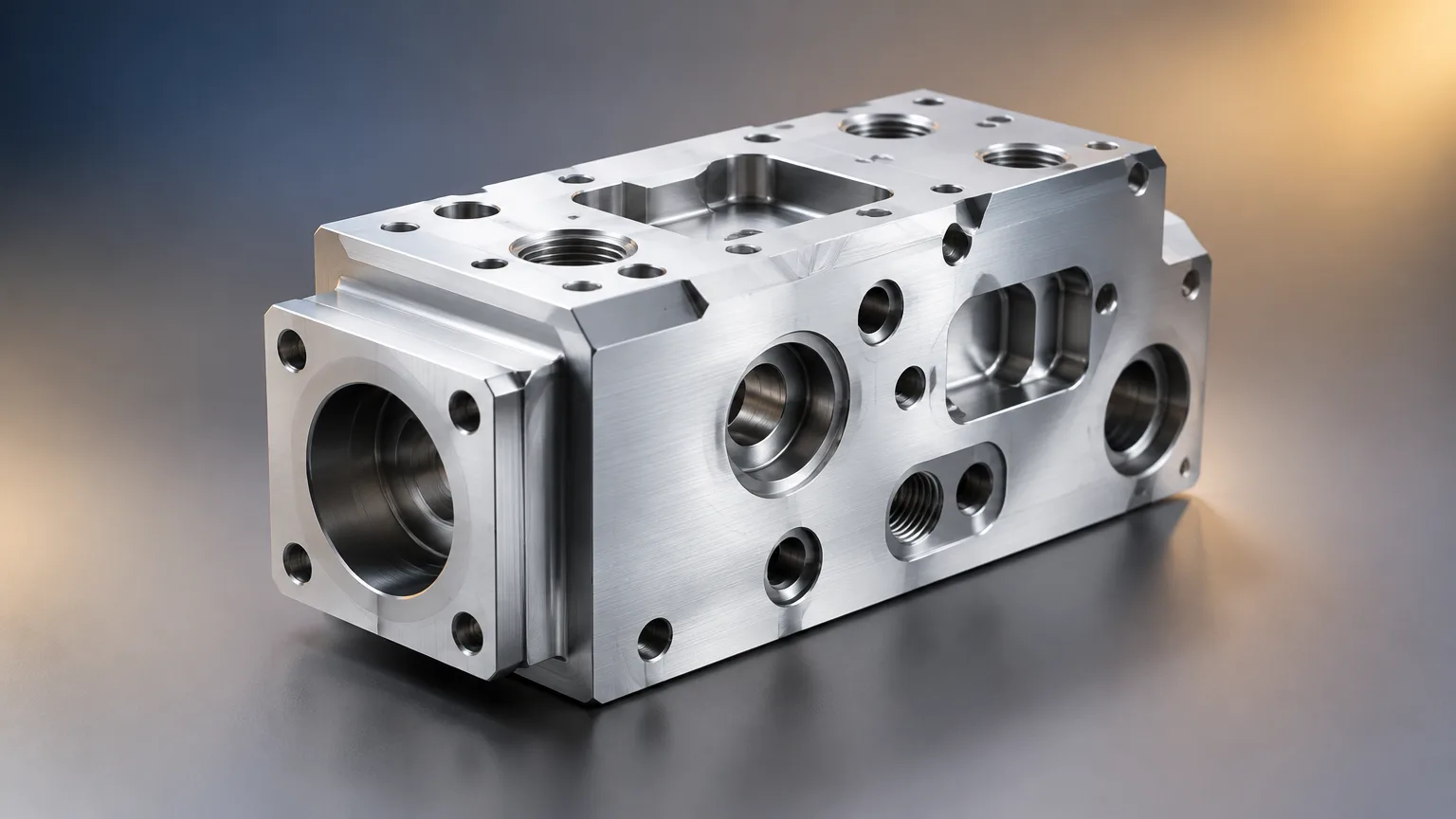
What material choice controls in precision machining.
Five steps from function to confirmed capability.
Milling, turning, mill-turn, drilling and wire EDM compared.
Aluminum, stainless steel, carbon steel and POM/Delrin.
Balanced trade-offs by material and geometry.
Practical rules for drawings and tolerances.
Where each material family is typically used.
Cost drivers and how to request quotes.
CNC machining materials are the metals and plastics cut by computer-controlled milling, turning and drilling. Aluminum 6061-T6, stainless steel 304 and 316, carbon steel 4140 and POM/Delrin cover most custom parts. Material choice sets machinability, achievable tolerance and cost, so specify grade and condition on the drawing.
CNC machining materials are the workpiece metals and plastics shaped by computer-controlled material removal. Precision comes from controlled programming, fixturing, tooling, temperature management and inspection, not from the material alone. Required accuracy must be defined on the drawing rather than assumed.
Material selection drives three outcomes: how easily the part machines, how tight the tolerance can realistically be held, and what the finished part costs. Aluminum cuts fast and holds general tolerances easily. Stainless steel resists corrosion but work-hardens, which raises machining difficulty. Plastics machine quickly but respond differently to heat and clamping.
Material identity matters as much as material family. Grade, temper and condition change strength, corrosion behavior and machinability, so the drawing should state them explicitly. Verify material identity, grade, condition and certificates before production.
Material selection works by matching part function to a machinable grade, then confirming the process route and tolerance can deliver it. The sequence below is typical for custom parts.
CNC machining types differ by motion and geometry, and each route favors different materials and features. The table compares the main routes with their strengths and limits.
| Route | Pros | Cons |
|---|---|---|
| CNC milling | Suitable for prismatic parts, pockets, contours, holes and multi-axis features. | Requires workholding access; deep cavities and thin walls increase cost and distortion risk. |
| CNC turning | Efficient for rotational parts such as shafts, bushings and threaded components. | Less suitable for non-rotational geometry; long slender parts may deflect. |
| Mill-turn machining | Combines turning and milling with fewer setups and improved feature alignment. | Machine and programming costs are generally higher. |
| CNC drilling and tapping | Fast production of standardized holes and threads. | Hole location, chip evacuation and deep-hole access can limit capability. |
| Wire EDM | Can produce narrow slots and hard-material features with reported ±0.0002–0.0004 in (±0.005–0.010 mm) capability. | Requires electrically conductive material and is generally slower than milling. |
Precision work uses tighter feature requirements, more controlled setups, specialized inspection and potentially slower feeds and additional finishing passes. Standard work targets general tolerances and faster cycle times. Prototype work prioritizes speed and flexibility, while production work emphasizes repeatability, process control, fixtures and optimized cycle time.
Common CNC machining materials are the metals and engineering plastics, such as aluminum 6061-T6, stainless steel 304 and 316, AISI 4140 and POM/Delrin, that cover most custom parts. The table lists their typical properties and uses.
| Material | Grade | Properties | Typical uses |
|---|---|---|---|
| Aluminum | 6061-T6 | Lightweight, corrosion-resistant and generally machinable. | Brackets, housings, prototypes, fixtures and aerospace parts. |
| Stainless steel | 304 | Corrosion resistance, toughness and broad availability; work-hardening can increase machining difficulty. | Food, chemical, medical and general industrial components. |
| Stainless steel | 316 | Improved corrosion resistance relative to 304, especially in chloride environments. | Marine, chemical-processing, medical and sanitary hardware. |
| Carbon steel | AISI 4140 | Strength and toughness; machinability varies with heat treatment. | Shafts, tooling, fixtures and mechanically loaded parts. |
| Engineering plastic | POM/Delrin | Low friction, dimensional stability and good machinability. | Bushings, wear parts, guides and electrical-mechanical components. |
Metal and plastic differ in stiffness, thermal expansion, cutting behavior, workholding, tool selection and dimensional response. Metals generally tolerate higher cutting forces; plastics need sharper tools, lighter passes and attention to heat buildup. Supplier-specific limits must be verified for each material.
Material properties and grades should be verified against the applicable ASTM, EN or producer datasheet before release to production.
CNC machining offers broad material choice and precise finished surfaces, but each material brings trade-offs in cost, speed and distortion risk.
Compared with 3D printing, machining removes material and generally provides broad material choice, strong properties and precise finished surfaces; 3D printing builds parts and may reduce tooling for complex prototypes.
Good design rules reduce cost and distortion regardless of material. Apply them before releasing the drawing.
Material choice follows the application environment. Aluminum 6061-T6 suits lightweight brackets, housings, fixtures and aerospace parts. Stainless steel 304 serves food, chemical, medical and general industrial components, while 316 adds chloride resistance for marine and sanitary hardware.
Carbon steel AISI 4140 fits shafts, tooling, fixtures and mechanically loaded parts where strength and toughness matter. POM/Delrin suits bushings, wear parts, guides and electrical-mechanical components where low friction and dimensional stability are needed.
Automotive and industrial programs often combine several of these materials in one assembly, which makes consistent drawing practice and material traceability important across the build.
Cost is driven by material price and machinability, tolerance level, part geometry, setup count, inspection requirements and quantity. Tighter tolerances can require slower cutting, extra passes, controlled environments and more inspection.
Sourcing Repository collects quotes from a vetted supplier network, manages quality and inspection, and delivers finished parts. Typical quote turnaround is 5-7 working days. Send your CAD file and controlled drawing to start.
Upload it with quantity and material to start a quote.
FAQ
Relax noncritical tolerances, simplify setups, use standard tools and threads, avoid deep cavities, select machinable materials and consolidate compatible features. Each change reduces cutting time or inspection effort, which is where most of the cost sits.
Compare verified process capability, material traceability, inspection equipment, certifications, capacity, lead time, corrective-action practice and comparable sample work. Ask for evidence on the specific material and tolerance your part requires, not general marketing claims.
Provide a native or neutral CAD file plus a controlled drawing specifying material, grade, tolerances, datums, finish, threads, quantity and inspection requirements. The drawing controls the build; the CAD model alone does not define acceptance criteria.
Tighter tolerances can require slower cutting, extra passes, controlled environments and more inspection. One supplier reports non-linear cost increases below ±0.005 in (±0.13 mm), so tightening only the features that need it keeps cost predictable.
Related resources
Ready when you are
Send your CAD file and drawing. Sourcing Repository collects quotes from a vetted supplier network, manages quality and inspection, and delivers parts. Typical quote turnaround is 5-7 working days.
Your files stay confidential. NDA available on request.