
Automotive rubber parts sourcing
Rubber Suspension Bushings & Automotive Rubber Bushes
SR sources custom rubber suspension bushings, automotive rubber bushes and related suspension parts from a vetted supplier network, managing quoting, quality and inspection for you.
- Vetted supplier network
- Inspection managed
- Quotes in 5-7 days
- Automotive first
- Send drawing or sampleCAD, drawing or physical sample accepted
- Inspection managedDimensional and material checks arranged
- One point of contactSR handles suppliers and follow-up
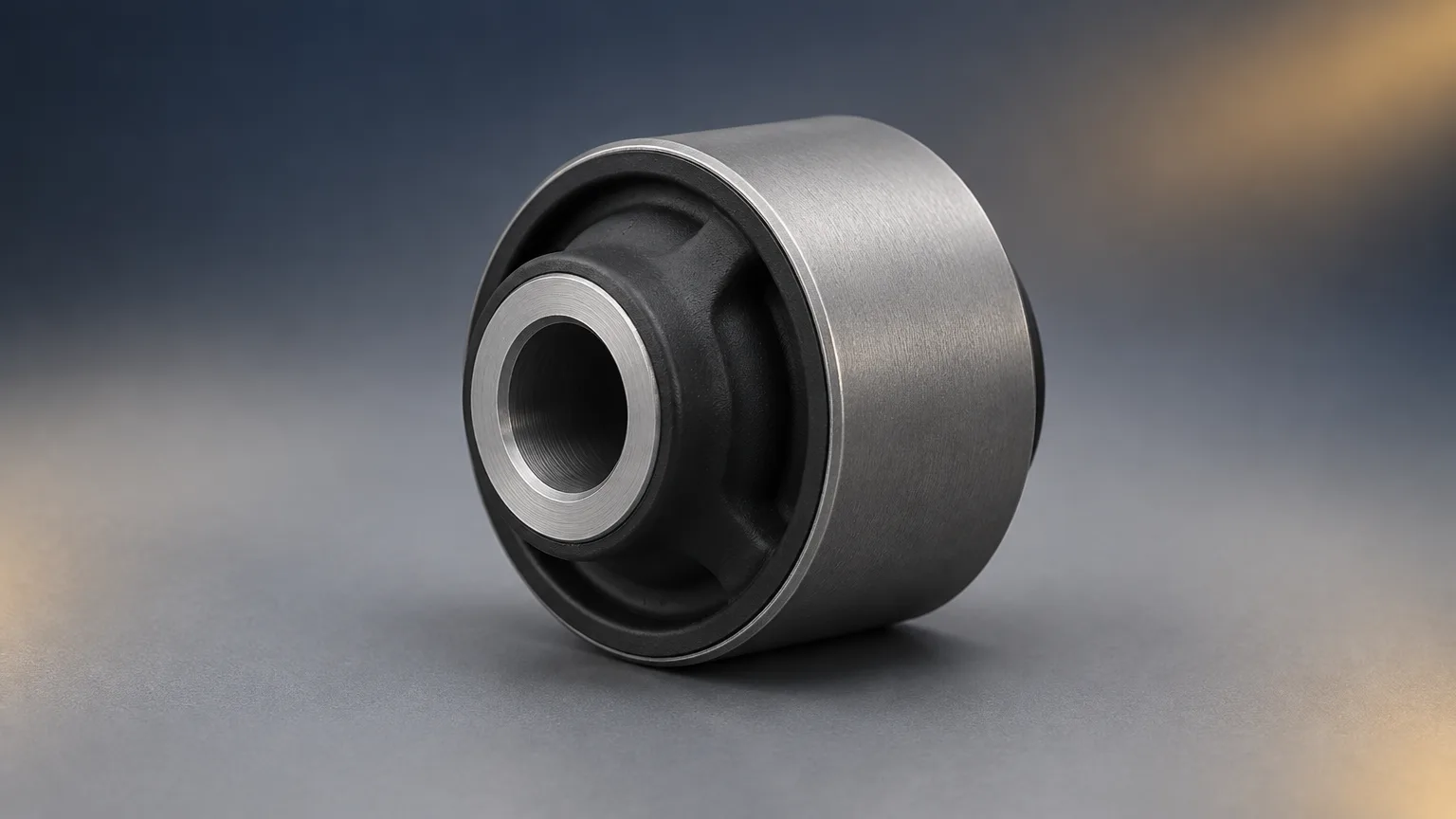
Rubber suspension bushings are elastomer components that isolate vibration and allow controlled movement between suspension and chassis parts. SR is a manufacturing broker: it collects quotes from a vetted supplier network, manages quality and inspection, and delivers custom automotive rubber bushes without owning factories or machines.
What rubber suspension bushings sourcing through SR is
Rubber suspension bushings are elastomer components that isolate vibration and allow controlled movement between suspension and chassis parts. A bushing is a sleeve or cushion that sits between two components to absorb shock, reduce noise and limit metal-to-metal contact. SR sources these parts as a manufacturing broker: it does not own factories or machines, it collects quotes from a vetted supplier network, manages quality and inspection, and delivers finished parts.
This service fits engineers, procurement managers and founders who need custom automotive rubber bushes, replacement suspension parts or low-volume production runs. Use it when you have a drawing, a worn sample or a defined function but no in-house molding or bonding capability.
How the rubber bushing sourcing process works
Sourcing rubber bushings runs in seven steps from RFQ to delivered parts, with SR as the single point of contact. SR manages each step, while vetted automotive component manufacturers perform the manufacturing.
- 1. Send your RFQ Provide a drawing, CAD model or physical sample, plus material, quantity, delivery location and inspection needs. If a drawing is missing, SR can discuss reverse engineering or model development with a supplier, with requirements agreed in writing.
- 2. Requirements review SR reviews the application: load direction, deflection, temperature, chemical exposure and any automotive or customer-specific standard. Open points are returned to you before quoting.
- 3. Supplier matching and quoting SR routes the RFQ to vetted suppliers whose process routes fit the part, then consolidates quotes. Typical quote turnaround is 5-7 working days.
- 4. Quote review and order You compare process route, tooling approach, inspection plan and delivery. Terms are confirmed in writing before production starts.
- 5. Tooling and first article Where tooling is required, the supplier builds it and produces a first article. SR coordinates sample submission and dimensional or material evidence for your review.
- 6. Production and inspection Production runs under the supplier's control plan. SR manages inspection: dimensional checks, material verification and agreed functional checks.
- 7. Delivery Parts are packed, documented and shipped to the agreed destination, with inspection records and traceability documents where specified.
Materials and finishes for automotive rubber bushes
Material selection for rubber suspension bushings is driven by working environment, load and required service life. The table lists material families used across auto parts manufacturing and car parts manufacturing, including metal sleeves, brackets and housings around the elastomer; exact grades must be specified on the drawing.
| Material | Grade | Properties | Typical uses |
|---|---|---|---|
| Aluminum alloys | Unverified; grade must be specified by drawing | Low density, corrosion resistance, machinability, and castability | Brackets, housings, wheels, engine and transmission components |
| Carbon and alloy steel | Unverified; grade must be specified by drawing | High strength, fatigue resistance, hardness, and weldability vary by grade | Stampings, shafts, gears, suspension, fasteners, and structural parts |
| Magnesium alloys | Unverified; grade must be specified by drawing | Very low density and good castability; corrosion protection is often required | Lightweight housings, brackets, seat frames, and instrument-panel structures |
| Zinc alloys | Unverified; grade must be specified by drawing | Good die-castability, dimensional repeatability, and surface finish | Handles, latches, housings, and small hardware |
| Polypropylene | Unverified; grade must be specified by drawing | Low density, chemical resistance, and good processability | Trim, ducts, covers, containers, and molded interior parts |
| Polyamide | Unverified; grade must be specified by drawing | Good strength, wear resistance, and temperature capability; moisture affects dimensions | Gears, clips, brackets, connectors, and under-hood parts |
| ABS | Unverified; grade must be specified by drawing | Impact resistance, dimensional stability, and attractive molded surfaces | Interior trim, bezels, housings, and instrument-panel parts |
Finishes and secondary operations
- Rubber-to-metal bonding: the elastomer is bonded to a steel or aluminum sleeve or pin during molding.
- Surface preparation: metal inserts are cleaned and treated so the bond survives load and aging.
- Corrosion protection: coatings or plating on exposed metal inserts, as specified on the drawing.
- Deflashing and trimming: molded flash is removed to meet dimensional and appearance requirements.
- Marking and traceability: part numbers, batch codes or date codes where required.
Specs and tolerances for rubber suspension bushings
Tolerances for rubber suspension bushings depend on process, size, material and the drawing. In automotive parts manufacturing, numerical limits must come from your drawing and a supplier capability study, as the table below shows.
| Parameter | Typical range | Standard or source |
|---|---|---|
| Dimensional tolerance | Unverified; depends on process, size, material, and drawing | Part drawing and supplier capability study required |
| Geometric tolerancing | Unverified; specify datum scheme and GD&T callouts | ASME Y14.5 or applicable ISO GPS standard; exact edition unverified |
| Surface roughness | Unverified; specify Ra or other required parameter | Drawing requirement; applicable surface-texture standard unverified |
| Hardness and strength | Unverified; defined by material and heat-treatment specification | Material specification and test method required |
| Capability | Cp/Cpk targets are customer- and feature-specific | IATF 16949, control plan, SPC, and customer-specific requirements |
| Part approval | Submission level and evidence vary by customer | AIAG PPAP and applicable customer-specific requirements |
Size limits and lead time
Size limits depend on the process route, tooling and press capacity at the supplier, so no universal limit applies to vehicle parts manufacturing. Production lead time is confirmed per project once tooling and inspection requirements are agreed.
Design tips that lower rubber bushing cost
Design decisions made before tooling have the largest effect on cost. These DFM tips apply to rubber suspension bushings and other automotive rubber bushes.
- Specify material by grade and hardness on the drawing; vague callouts force suppliers to quote conservatively.
- Keep wall sections as uniform as the function allows; abrupt thickness changes drive molding defects and scrap.
- Design for the process route: injection molding suits repeatable plastic parts, while die casting suits near-net-shape metal parts.
- Avoid unnecessary undercuts and deep narrow features that require complex tooling or manual operations.
- Tolerances: request only what function requires, and identify critical features so inspection effort is focused.
- Use standard insert sizes and hardware where possible to avoid custom metal preparation.
- Plan the inspection method early; features that cannot be measured repeatably add cost and risk.
- Consider prototype routes first: CNC machining and additive manufacturing suit prototypes and low volumes before production tooling.
Typical applications for rubber suspension bushings
Rubber suspension bushings and automotive rubber bushes appear wherever vibration, noise and controlled movement must be managed. The examples below reflect the application areas in the approved research brief.
| Example part | System or area | Industry |
|---|---|---|
| Control arm and trailing arm bushings | Braking, steering, and suspension systems | Automotive OEM and aftermarket |
| Anti-roll bar and sway bar bushes | Braking, steering, and suspension systems | Automotive OEM and aftermarket |
| Subframe and engine mount isolators | Body, chassis, and structural parts | Automotive OEM and aftermarket |
| Shock absorber and strut mounts | Replacement, service, and performance parts | Aftermarket and performance |
| Brackets and housings with bonded rubber | Body, chassis, and structural parts | Automotive and light industrial |
OEM programs usually require validated processes, traceability and customer approval, while custom aftermarket work often prioritizes flexibility and low-volume economics. SR routes each RFQ to suppliers whose process route matches the application.
What drives the cost of custom rubber suspension bushings
No reliable universal price exists for custom rubber suspension bushings. Cost depends on geometry, material, process, tooling, quantity, tolerance, finishing, inspection and logistics. The factors below explain what moves a quote up or down.
- Material type, grade, availability, and buy-to-fly ratio.
- Part geometry, size, wall thickness, and tolerance requirements.
- Process route: CNC machining is precise and flexible for prototypes or low volumes, but material waste and cycle time can be high.
- Tooling: stamping requires dedicated dies, injection molding tooling cost and design lead time can be substantial, and die casting carries tooling cost and porosity control.
- Forging provides strong, fatigue-resistant metal parts, but tooling, material flow, and machining allowances increase cost.
- Additive manufacturing suits prototypes and complex low-volume parts, though production rate, surface finish, and material qualification may limit use.
- Quantity: higher volumes spread tooling and setup cost across more parts.
- Inspection and documentation: capability studies, PPAP evidence and traceability add engineering time.
- Finishing and assembly: coating, plating, bonding, welding or overmolding add operations and validation.
Why source rubber suspension bushings through SR
Sourcing rubber suspension bushings through SR gives you one contact instead of many suppliers. SR is a manufacturing broker, not a factory: it collects quotes from a vetted network, manages quality and inspection, and delivers automotive components.
What SR does
- Routes your RFQ to suppliers whose process routes fit the part
- Consolidates quotes so you can compare like for like
- Manages quality and inspection on your behalf
- Coordinates first article, production and delivery
What SR does not do
- Own factories or machines
- Perform manufacturing operations itself
- Replace supplier process controls, which stay with the suppliers
- Change part approval requirements, which follow the customer specification
To start an RFQ, contact killol@sourcingrepository.com or write to 201 SG Mall, Ahmedabad.
Have a drawing to quote?
Upload it with quantity and material to start a quote.
FAQ
Common questions
How much do custom auto parts cost?
No reliable universal price exists. Cost depends on geometry, material, process, tooling, quantity, tolerance, finishing, inspection, and logistics. Send a complete RFQ and SR will consolidate comparable quotes from the vetted supplier network.
What information is needed for a quote?
Provide CAD, drawing, revision, material, finish, tolerances, quantity, delivery location, inspection needs, and the intended application. For rubber suspension bushings, add load direction, deflection and temperature exposure so suppliers can select the right compound.
Can a supplier make a part without a drawing?
A supplier may reverse-engineer or develop a model, but requirements, ownership, tolerances, materials, and approval responsibilities must be agreed in writing. A physical sample plus application details is the usual starting point.
What tolerance should be requested?
Request the tightest tolerance needed for function, not the tightest possible tolerance; the supplier should confirm capability for each critical feature. Dimensional tolerance depends on process, size, material and drawing, so a capability study is required before production.
Related resources
Keep reading
Ready when you are
Request a quote for rubber suspension bushings
Send your drawing, CAD model or sample with material, quantity and inspection needs. SR will route the RFQ through the vetted supplier network and return consolidated quotes, typically within 5-7 working days.
Your files stay confidential. NDA available on request.