
Processes for automotive parts manufacturing
CNC, molding, stamping, casting, forging and additive compared.
Automotive Sourcing Guides
This automotive parts manufacturing guide explains the processes, materials, tolerances and quality documents behind custom vehicle components, and how to brief a supplier so quotes come back comparable.
Low-volume and prototype buildsvsMass production
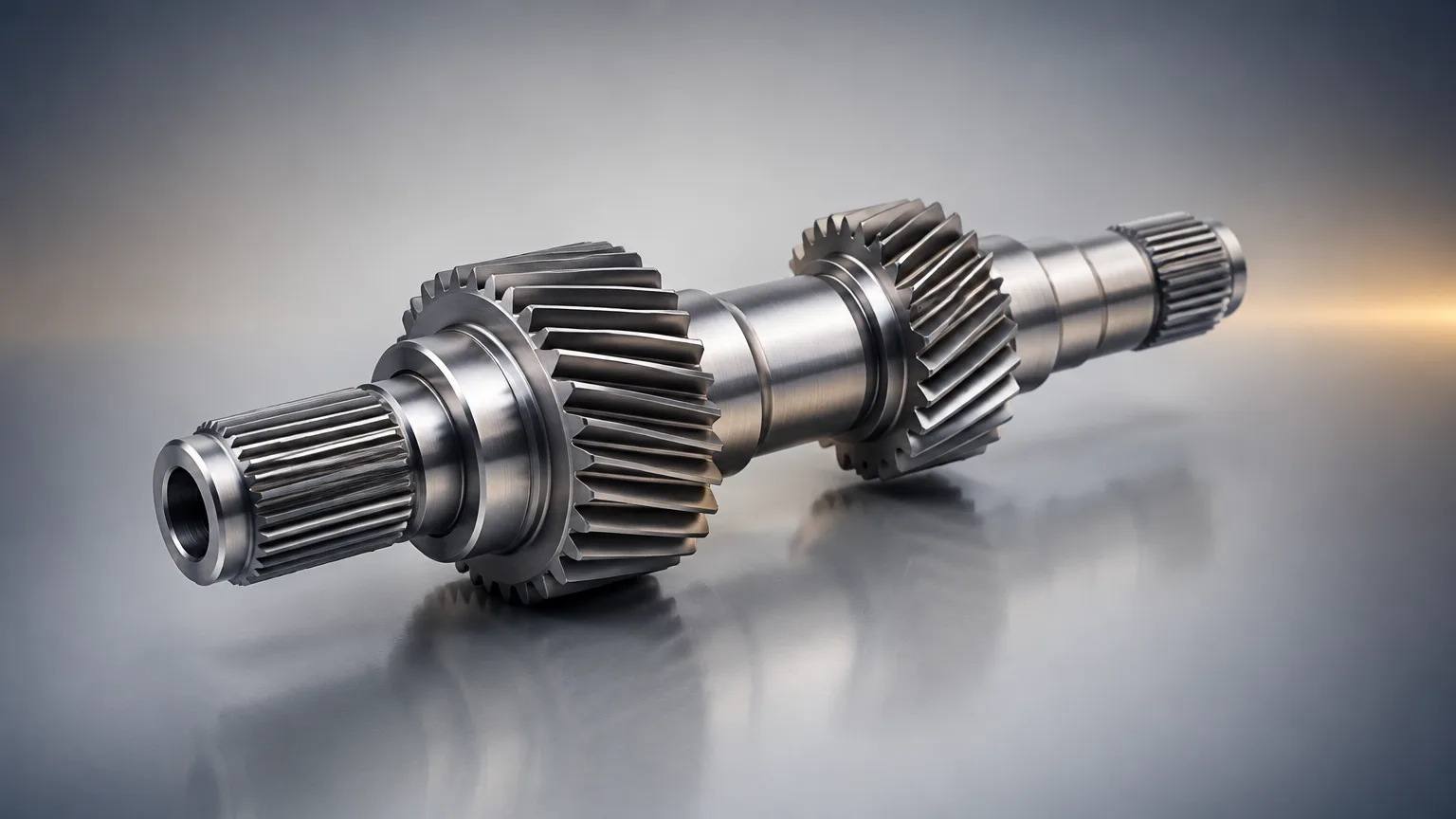
CNC, molding, stamping, casting, forging and additive compared.
Alloys, steels and thermoplastics with typical uses.
Datums, tolerance classes and surface finish calls.
What moves price: process, volume, complexity, finish, inspection.
Capability, quality documents, traceability and change control.
How to brief suppliers and get comparable quotes.
Automotive parts manufacturing is the design, tooling, production, finishing and inspection of components for cars, trucks, vans and electric vehicles. A workable automotive parts manufacturing guide covers process selection, material grade, tolerance class, cost drivers and supplier quality evidence, so each part can be specified and quoted on the same basis.
This automotive parts manufacturing guide is a working reference for engineers, procurement managers and founders who need custom automotive components built to a drawing. It covers the automotive components list by system, the main manufacturing processes, material grades, tolerance and design rules, cost drivers, supplier checks, and how to issue a request for quotation.
Nothing here assumes a specific factory. Sourcing Repository is a manufacturing broker: it does not own plants or machines. It collects quotes from a vetted supplier network, manages quality and inspection, and delivers parts. Every rule below applies whether a part ends up on a CNC machine, a molding press or a stamping line.
Each chapter below answers one sourcing question, from process choice to supplier selection. Read them in order for a full picture, or jump to the section that matches your current decision.
| Chapter | Summary |
|---|---|
| Processes | How CNC machining, injection molding, stamping, die casting, forging and additive manufacturing differ on tooling, volume and finish. |
| Materials | Grade-level overview of aluminum alloys, ductile iron, forged steel, HSLA and stainless steels, and engineering thermoplastics. |
| Design and tolerances | Feature-by-feature tolerancing, datum strategy, surface finish calls and drawing content that suppliers can quote without questions. |
| Cost | The drivers that actually move a custom automotive part price: volume, process, material, complexity, finish and inspection burden. |
| Choosing a supplier | A checklist covering process capability, quality system evidence, documentation, capacity, tooling strategy and change control. |
| Next steps | How to build a request for quotation that produces comparable bids, plus packaging, inspection and delivery options. |
The related chapters on the automotive hub, including process deep dives and the request-for-quote workflow, sit alongside this guide and use the same terminology so cross-references stay consistent.
The key automotive parts manufacturing processes are CNC machining, injection molding, metal stamping, die casting, forging and additive manufacturing, and the choice is usually decided by volume, geometry and tooling budget. CNC machining and additive manufacturing carry low tooling and suit prototypes and low volumes, while molding, stamping and casting need dedicated tooling that only pays off as annual volume rises.
This automotive parts manufacturing guide explains how buyers choose a process, material and inspection plan for custom components. It covers six common processes, six material families and the RFQ details suppliers need to quote accurately.
| Process | Pros | Cons | Typical route |
|---|---|---|---|
| CNC machining | Low tooling; suitable for prototypes and low volumes. | Higher unit cost and material waste at high volume. [2][5] | CAD/CAM, cutting, deburring, finishing, inspection. |
| Injection molding | Complex plastic geometries and low unit cost at volume. [3][9] | High tooling cost and longer launch preparation. | Mold design, tool manufacture, molding, trimming, inspection. |
| Metal stamping | Fast repeatable production for sheet-metal parts. | Dedicated dies make low volumes less economical. | Coil preparation, die forming, piercing, trimming, finishing. |
| Die casting | Complex lightweight aluminum, zinc and magnesium shapes. [3][6] | Tooling cost; defects may require secondary machining. | Melt metal, inject into die, trim, machine, inspect. |
| Forging | High strength and fatigue performance for gears and shafts. [6] | Higher tooling and forming loads. | Heat billet, form under pressure, trim, heat-treat, machine. |
| Additive manufacturing | Minimal tooling and flexible geometry for low volumes. [5] | Material, surface and fatigue properties depend on process. | Slice CAD model, print, remove supports, finish, inspect. |
A separate OEM versus aftermarket distinction matters in any automotive parts manufacturing guide: OEM parts follow vehicle-program requirements, while aftermarket parts may use independent fit, performance and regulatory requirements.
Material choice sets strength, weight, corrosion behavior and cost before a single cut is made. This automotive parts manufacturing guide lists six material families; for safety-critical parts, confirm grade applicability with a controlled datasheet rather than a generic grade name.
| Material | Grade | Properties | Typical uses | Volume fit | Watch points |
|---|---|---|---|---|---|
| Aluminum alloy | A356; A380 | Low density, castability, thermal conductivity. | Engine blocks, transmission cases, housings. [6] | Medium to high in cast form | Porosity and machining allowance |
| Ductile iron | ASTM A536 65-45-12 | Strength, machinability, damping. | Crankshafts and differential cases. [6] | Medium to high | Section thickness and mold cost |
| Forged steel | SAE 8620; SAE 4340 | Fatigue strength and hardenability. | Gears, shafts and connecting rods. [6] | Medium to high | Heat-treat distortion |
| HSLA steel | DP600; DP800; CP1000 | High strength-to-weight ratio and formability. | Body structures and chassis. [6] | High for stamped parts | Springback and tool wear |
| Stainless steel | 409; 304; 17-4PH | Corrosion and heat resistance. | Exhaust systems and fasteners. [6] | Low to high | Galling, tool life, cost |
| Engineering thermoplastics | PP; PA; PC; ABS; POM; TPE | Low density; grades vary in strength, heat, wear and chemical resistance. | Trim, housings, brackets and molded components. [3] | High for molded parts | Grade-specific data required |
Tolerances should follow function. Specify each critical feature by the fit or motion it must achieve, then apply a general tolerance note only to the remaining non-critical dimensions.
| Parameter | Typical range | Standard or source |
|---|---|---|
| General CNC dimensional tolerance | ±0.010 mm [±0.0004 in] reported for standard automotive CNC work | Manufacturer technical claim; verify by drawing and capability study. [2] |
| Tight CNC tolerance | As low as ±0.001 mm [±0.00004 in] reported | Manufacturer technical claim; process-, material- and geometry-dependent. [2] |
| Custom molded-part tolerance | Up to ±0.127 mm [±0.005 in] reported | Manufacturer technical claim; verify by material and feature. [1] |
| Surface roughness | Below Ra 0.4 µm [16 µin] reported for specified bearing journals | Supplier process claim; verify against drawing and measurement method. [6] |
| Annual low-volume threshold | Below 1,000 parts/year cited | Process-selection article; not an industry-wide definition. [5] |
| Tolerance class | Fine, medium, coarse or very coarse | ISO 2768 classification is relevant; exact class must be specified on the drawing. [7] |
Part complexity, tolerances, surface finish and inspection burden repeatedly appear among the largest cost drivers. Tooling is the other swing factor: it is low for machining and additive work, and high for molding, stamping and casting. [3][5]
| Driver | Direction | What changes it |
|---|---|---|
| Process | Large spread | Machining carries low tooling; molding, stamping, casting and forging need dedicated tooling. |
| Volume | Unit cost falls as volume rises for molded and stamped parts | Amortization of tooling and setup across more parts. [5] |
| Material | Moderate to large | Alloy grade, mill form, stock size and scrap rate. |
| Complexity and tolerances | Moderate to large | Feature count, tight limits, extra operations and fixturing. |
| Surface finish | Small to moderate | Extra passes, polishing, coating or plating. |
| Inspection burden | Moderate | CMM time, documentation, certificates and traceability depth. |
| Tooling | Up-front, volume-dependent | Longer lead time to first approved part for molded and stamped programs. |
| Program type | Variable | Prototype, service, motorsport and limited-production builds carry different lot sizes. [13] |
A supplier is only a fit if its process capability matches your feature list and its quality system can produce the records your program requires. Sourcing Repository collects quotes from a vetted supplier network and manages quality and inspection, but capability must still be confirmed against each part.
Upload it with quantity and material to start a quote.
FAQ
CNC machining, additive manufacturing, flexible assembly and limited-tooling methods are commonly considered below 1,000 parts/year. [5][13] The below-1,000 figure comes from a process-selection article and is not an industry-wide definition, so treat it as a planning guide rather than a rule.
Provide controlled CAD, 2D drawings, material, finish, tolerances, annual volume, inspection requirements and revision status. [15] Add any packaging or marking instructions. Suppliers quote more accurately when nothing is left to interpretation, and it reduces back-and-forth before the first run.
Yes, but verify process capability, tooling strategy, capacity, quality systems and change-control procedures first. A supplier may prototype by machining and then tool for molding, which changes the process route. Confirm which equipment will run production and how the prototype data carries over.
Specify functional tolerances feature by feature; do not rely only on a general tolerance note. Reported CNC figures are typically ±0.010 mm [±0.0004 in], with tighter limits possible. [2] ISO 2768 classification can cover the remaining dimensions, but the exact class must be stated on the drawing. [7]
Related resources
Ready when you are
Send your drawings, volume and inspection requirements. Sourcing Repository collects quotes from a vetted supplier network, manages quality and inspection, and delivers parts.
Your files stay confidential. NDA available on request.