
Automotive prototyping explained
Why prototypes exist, and how they differ from production parts
Definition and framework
Automotive sourcing guide
Automotive prototyping makes functional or fit-check parts before production tooling is committed. This guide covers processes, materials, tolerances, cost drivers and the path to production.
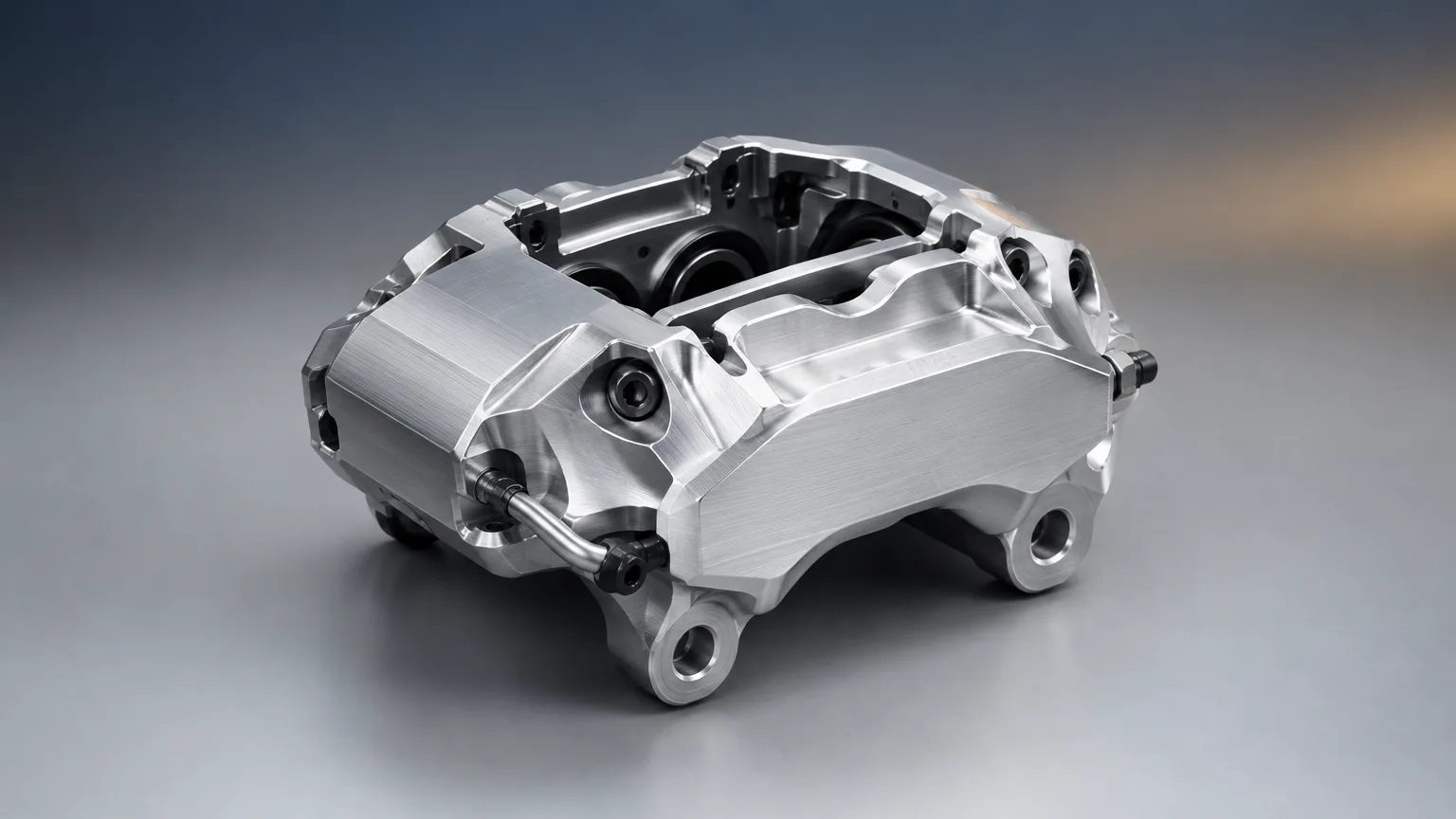
Why prototypes exist, and how they differ from production parts
From prototype objective to validated production part
Machining, additive, stamping, molding, casting, forging
Aluminum, steel, magnesium, zinc and engineering plastics
What prototyping proves and what it cannot prove
Ten rules for buildable, measurable prototypes
Body, chassis, powertrain, interior and tooling uses
Cost drivers and how to request automotive prototype quotes
Automotive prototyping is the process of producing functional or fit-check vehicle parts before production tooling is committed. It uses CNC machining, additive manufacturing, stamping, molding, casting or forging depending on volume and geometry. Prototypes validate fit, function and manufacturability, then the part moves to a validated production process such as PPAP under IATF 16949 requirements.
Automotive prototyping is the stage where a design is proven as a physical part before production tooling, fixtures or automation are committed. The prototype may only need to check fit and clearance, or it may need to survive the same loads, temperatures and fluids as the production part. What it is tested for decides which process and material are appropriate.
Prototyping sits inside the wider field of automotive parts manufacturing, which covers metal forming, casting, forging, machining, plastics processing, joining, finishing and inspection. Suppliers in this industry commonly operate under IATF 16949 and applicable customer-specific requirements. That quality system applies to production and service parts, and it shapes how prototype findings are carried into production.[1][2]
A prototype part and a production part are not the same deliverable. A prototype route minimizes tooling and lead time so the design can be tested early. A production route optimizes repeatability, cycle time, process capability and total cost. The engineering work is to choose a prototype method that answers the real question without adding cost that the program does not need.
Automotive prototyping works by defining what the prototype must prove, choosing the lowest-cost process that can prove it, then building and measuring the part against a controlled specification. Each step ends with a decision: proceed, revise the design, or change the intended production process.
The main types of automotive prototyping are CNC machining, additive manufacturing, stamping, injection molding, die casting and forging. The right choice depends on whether the prototype must imitate the production process or only validate geometry and function.
| Process | Best for | Main limitation | Typical stage |
|---|---|---|---|
| CNC machining | Precise, flexible prototypes and low volumes; metal or plastic | Material waste and cycle time can be high | Prototype and bridge production |
| Additive manufacturing | Complex low-volume parts, prototypes and tooling | Production rate, surface finish and material qualification may limit use | Prototype and tooling |
| Stamping | High-volume sheet-metal parts | Requires dedicated dies and is less suitable for complex 3D forms | Production |
| Injection molding | Repeatable plastic parts at volume | Tooling cost and design lead time can be substantial | Production |
| Die casting | Near-net-shape aluminum, zinc or magnesium parts | Porosity, tooling cost and alloy limits require control | Prototype tooling and production |
| Forging | Strong, fatigue-resistant metal parts | Tooling, material flow and machining allowances increase cost | Production |
Prototype materials are selected to match the production intent as closely as practical, because strength, mass and corrosion behavior change the test result. Aluminum, steel, magnesium, zinc and engineering plastics cover most automotive prototype work.
| Material | Grade | Key properties | Typical uses |
|---|---|---|---|
| Aluminum alloys | Unverified; grade must be specified by drawing | Low density, corrosion resistance, machinability and castability | Brackets, housings, wheels, engine and transmission components |
| Carbon and alloy steel | Unverified; grade must be specified by drawing | Strength, fatigue resistance, hardness and weldability vary by grade | Stampings, shafts, gears, suspension, fasteners and structural parts |
| Magnesium alloys | Unverified; grade must be specified by drawing | Very low density, good castability; corrosion protection often required | Lightweight housings, brackets, seat frames, instrument-panel structures |
| Zinc alloys | Unverified; grade must be specified by drawing | Good die-castability, dimensional repeatability and surface finish | Handles, latches, housings and small hardware |
| Polypropylene | Unverified; grade must be specified by drawing | Low density, chemical resistance and good processability | Trim, ducts, covers, containers and molded interior parts |
| Polyamide | Unverified; grade must be specified by drawing | Strength, wear resistance and temperature capability; moisture affects dimensions | Gears, clips, brackets, connectors and under-hood parts |
| ABS | Unverified; grade must be specified by drawing | Impact resistance, dimensional stability and molded surface quality | Interior trim, bezels, housings and instrument-panel parts |
Material type, grade, availability and buy-to-fly ratio are cost drivers as well as technical decisions. A prototype in a substitute grade can pass a fit check and still fail a durability test, so state the intended production grade on the drawing even when the prototype is machined from plate or bar.
Automotive prototyping reduces program risk by proving design, fit and function before expensive tooling exists. Its limits appear when the prototype process is so different from production that the results do not transfer.
| Parameter | Typical range | Standard or source |
|---|---|---|
| Dimensional tolerance | Unverified; depends on process, size, material and drawing | Part drawing and supplier capability study required |
| Geometric tolerancing | Unverified; specify datum scheme and GD&T callouts | ASME Y14.5 or applicable ISO GPS standard; exact edition unverified |
| Surface roughness | Unverified; specify Ra or other required parameter | Drawing requirement; applicable surface-texture standard unverified |
| Hardness and strength | Unverified; defined by material and heat-treatment specification | Material specification and test method required |
| Capability | Cp/Cpk targets are customer- and feature-specific | IATF 16949, control plan, SPC and customer-specific requirements[1][2] |
| Part approval | Submission level and evidence vary by customer | AIAG PPAP and applicable customer-specific requirements[1][2] |
Good prototype design is production-aware: the part should be buildable by the intended process, measurable with available equipment, and specified tightly enough to be judged. These rules apply whether the prototype is machined, printed, molded or cast.
Automotive prototyping is used anywhere a design decision is cheaper to test as a part than to commit to tooling. That covers new vehicle programs, facelifts, trim changes and repair or performance solutions for existing vehicles.
The common thread is interface risk. If a prototype part must fit an existing vehicle, a mating assembly or a customer fixture, the critical dimensions should be measured and documented before the design is frozen.
Automotive prototyping cost is driven by geometry, material, process, tooling, quantity, tolerance, finishing, inspection and logistics. No reliable universal price exists, and a prototype price is usually not the production price because the two use different processes and different levels of validation.
To move from design to parts, send CAD, drawing and revision, material, finish, tolerances, quantity, delivery location, inspection needs and the intended application. Sourcing Repository is a manufacturing broker: it does not own factories or machines. It collects quotes from a vetted supplier network, manages quality and inspection, and delivers parts. Quote turnaround is typically 5-7 working days. Start with the automotive prototype parts service to get pricing for a specific part, or use the hub for automotive parts manufacturing.
Upload it with quantity and material to start a quote.
FAQ
No reliable universal price exists. Cost depends on geometry, material, process, tooling, quantity, tolerance, finishing, inspection and logistics. A simple machined bracket and a cast housing at the same quantity can differ by an order of magnitude. Send a drawing to get a quote against your actual specification.
Provide CAD, a controlled drawing with revision, material, finish, tolerances, quantity, delivery location, inspection needs and the intended application. Note whether the part is for fit check, functional testing or production intent, because that changes the process and inspection plan.
Usually not. Prototypes may use machining or additive manufacturing, while production may require molds, dies, fixtures, automation and part approval. Prototype unit cost is typically higher at low quantity. Treat the two quotes as separate cost models with different tooling and validation assumptions.
PPAP is an automotive submission process used to demonstrate that a production process can consistently meet approved requirements. It documents production readiness and customer approval. Exact submission levels, evidence and timing vary by customer and are defined by AIAG PPAP and applicable customer-specific requirements.[1][2]
Related resources
Ready when you are
Send your CAD, drawing and quantity. Sourcing Repository collects quotes from a vetted supplier network, manages quality and inspection, and delivers parts. Typical quote turnaround is 5-7 working days.
Your files stay confidential. NDA available on request.